Telegram scams have been increasing recently, and the bad actors are targeting users via romance fraud, phishing links, fake investment, cryptocurrency schemes, etc.
Scammers often initiate contact using dating apps, gaming communities, online marketplaces, and discussion forums. They persuade people to continue their activities and conversations on Telegram, as they know it’s a low monitoring platform.
After successfully doing it, the fraudster combines multiple techniques to scam people. In order to protect yourself and your personal information, knowing about the most popular Telegram scams is crucial for users. Let’s review these frauds and how criminals carry them out.
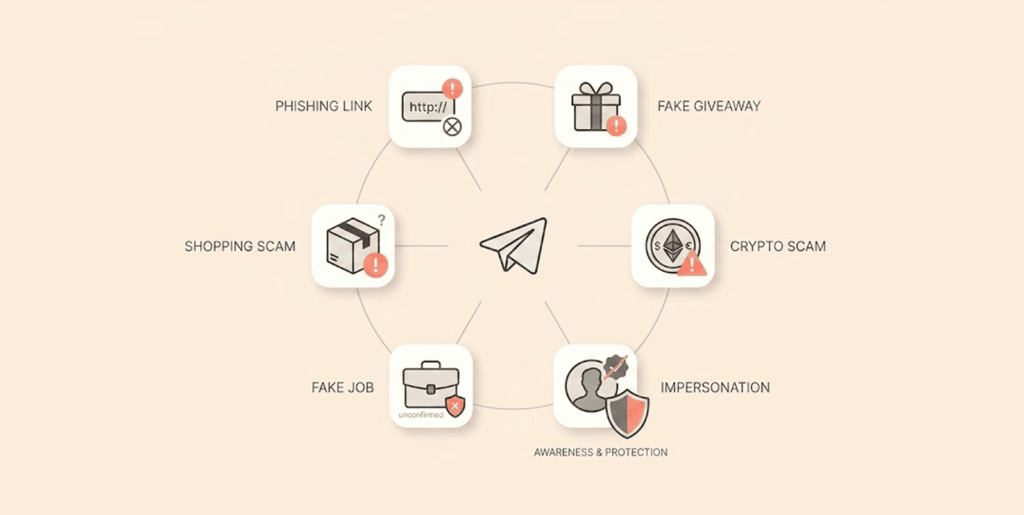
Types of Telegram scams – Quick list
- Online marketplace scams: A common but popular scam because the activities affect buyers and sellers directly.
- Job scams: These are designed specifically for targeting job seekers.
- Investment scams: Scammers position themselves as cryptocurrency traders or investments gurus who promise enormous returns on investments without any form of risk.
- Tech support scams and fake admins: This type of scams is common on the Telegram platform & functions optimally for stealing of personal information, account hijacking and defrauding users.
- Romance and friend-in-need scams: Scammers create fake profiles on dating platforms to defraud unsuspecting victims.
- Fake prizes and giveaways: Someone can impersonate celebrities, popular brands and influencers all in the bid to execute fraud.
- Fake bot surveys: This includes suspicious bots that act to be Telegram officials using survey tools, quizzes and competition platforms.
- Charity and fundraiser scams: Exploits generosity of people especially when there are incidents like natural disaster, humanitarian crises and emergency situations.
- Extortion scams: It uses peoples fear, and threats. Then blackmails them to pressure victims into sending money.
- Deepfake/AI voice mimicry scams: This scheme uses artificial intelligence in cloning the voice of a colleague, friend and family member.
- URL shortener phishing: Attackers use shortened URL links to hide malicious websites and trick users into clicking them.
- Fake customer support groups: These are scam groups that impersonate official support teams.
- Phishing for logic credentials: Fraudsters send messages to users, and the message has links that look like real Telegram login pages, security updates, or account verification forms.
Why do scammers use Telegram?

In the contemporary internet world, Telegram has become one of the most notable messaging platforms. Its rapid growth has attracted cybercriminals who use various tactics to scam users.
Here are the reasons why criminals use the platform:
- Easy account creation and anonymity: Telegram lets users create accounts with minimal personal information. This makes it a great spot for individuals who are into Telegram scams. Also, the privacy setup and usernames make it easy to hide real identities.
- Large groups and channels: Due to its enormous number of group members, having up to 200,000, scammers can easily carry out malicious activities.
- Bots and automation: Due to these, fraudsters can disperse phishing messages, distribute malware, and also impersonate Telegram support teams.
- Hidden chat features: Disappearing messages and hidden chats make it easier for cybercriminals to cover their tracks.
- Cryptocurrency targeting: Telegram is a major host to many communities of cryptocurrency, thereby creating opportunities for counterfeit investments and giveaway scams.
- Account takeover attacks: Scammers can trick people into sharing their verification codes, making it easy for them to take over accounts and exploit them.
- Cross-border challenges: It is difficult for authorities to track and investigate fraud and other nefarious activities ongoing on the platform.
As a user, once you encounter fraud, you need to submit the report to Telegram and the authorities immediately without delay.
Types of scams on Telegram – Detailed list
1. Online marketplace scams
Scammers on Telegram often find and target people on online marketplaces, social media groups, or classified ads. After chatting for a while, they convince them to move the conversation to Telegram, where they can easily trick them and scam them.
The reason for choosing Telegram is that it serves as a safe haven for limited monitoring and bypassing security checks. This will increase their chances of success in defrauding online merchants.
Common tactics used
- Creation of pseudo storefronts and reselling channels that advertise products that do not exist.
- They offer rentals, hotel bookings, flight bookings, and other essential services, usually at very low prices.
- Advertising and sales of high-demand products such as gaming consoles, smartphones, and electronics at ridiculous discounts.
- Pressuring techniques to force victims to pay using irreversible platforms like bank transfers and cryptocurrency.
- Sending of doctored payment confirmations or screenshots to deceive sellers into shipping goods not paid for.
Ways to mitigate these scams
- You need to learn how to identify a fake Telegram account via checking the profile details, malicious traits, and account history.
- Only do transactions with safe marketplace platforms that have a good reputation if there is a need to trade.
- Ensure to avoid deals that look good and offer high profit returns.
- Always make payments through secure platforms that have buyer protection.
- Shipping and delivering of goods on order should be executed only when there is payment confirmation from your bank or payment platform.
- Quickly report suspicious users and add them to your personal Telegram scammer list for future referencing.
2. Job scams
This scam targets online job seekers. Here, scammers frequently pose as job recruiters offering remote jobs that pay high salaries, with little or no job experience, and flexible schedules. These are baits they use to attract victims.
These scammers claim to represent reputable organisations and then reach out to victims via direct messages, groups, and channels on Telegram apps.
How these scams operate
The activities begin with a fake recruiter giving simple online tasks like reviewing products, liking social media posts, and writing ratings. Often, the victims receive little tokens as payment to make them trust the scammers who are acting like legitimate companies.
On convincing the victims successfully, the scammers start to demand payments, asking them to make deposits or purchase gift cards in order to unlock higher-paying tasks or withdraw their earnings.
In most incidents, the scammers access the victims’ phone numbers, personal information, email addresses, and identification documents to execute identity theft.
Actionable mitigation tips
- Verify the recruitment through the official company websites prior to accepting job offers.
- Avoid paying upfront payment fees for job placement, training, and equipment.
- Avoid sharing one’s sensitive personal information with strangers.
- Ignoring any kind of request asking for cryptocurrency, gift cards, or unusual payments.
3. Investment scams
These scams have deceived thousands of users who are desperate for quick financial returns. The mode of operation of scammers involves positioning themselves as cryptocurrency traders, investment master, and financial advisers who promise victims enormous returns on investments.
How they operate
These fraudsters usually make contact with users through Telegram groups or direct private messages. They promote expensive investment privileges with unusually high profits. In the bid to convince victims, they may go the extra mile, showcasing fake trading results, fake testimonials, and successful screenshots of withdrawals that look genuine.
Sometimes, scammers also claim to offer forex investments, cryptocurrency trading, or mining programs that can triple or double the returns within a few days of investment.
To build trust, victims initially receive small cashouts. These small payouts will encourage them to invest larger amounts. Once there is a significant deposit from many victims, the scammers may disappear or make demands for extra taxes, fees, or payment verifications before allowing the victims to make withdrawals.
Ways to avoid this scam
- Always be suspicious of investment opportunities promising satisfactory high returns on investment.
- Verification of investment companies via the official government regulatory authorities before sending money.
- Avoid sending cryptocurrency or your money to strange individuals.
- Do thorough research on investments, personally on your own, rather than depending on the testimonials from the scammer.
4. Tech support scams and fake admins
This type of scam is common on the platform and functions mainly for stealing personal information, account hijacking, and defrauding users.
Tech support and fake admin scammers rely solely on faking as someone else. They use social engineering tactics to make victims believe they are communicating with genuine ambassadors of the Telegram administrative team.
Mode of operation
The scammers usually contact users via direct messages, posing as Telegram support staff. They also contact potential victims with claims that there is a compromise of their account, a security breach, and suspicious activities.
To make the situation seem urgent, scammers send scary messages and fake security alerts, so that the user gets panicked and acts quickly without thinking. The next move is to provide fake login portals, malicious links, and infectious malware files in disguise as security updates.
Most times, they encourage users to download counterfeit Telegram applications in order to steal the personal data and login details of the victim.
The other mode of their invasion is scammers disguising themselves as administrators of special channels or groups on the platform. They make a demand for membership fees in exchange for enabling the user access to premium content, opportunities, and other private communities.
Most times, after receiving payments, the cybercriminals either disappear into thin air or add the victims to inactive groups that have no value.
Mitigation measures
- Make sure you verify any individual claiming to represent the Telegram support team or an administrator.
- No matter the pressure, never share verification codes, your passwords, or two-factor authentication (2FA) codes to unknown persons or parties.
- Downloading of Telegram applications should be only from official app stores and sources that are genuine.
- Always avoid clicking on suspicious links sent through messages to you.
- Thorough checking of official titles and labels before trusting any administrator from any group will save you stress.
5. Romance and friend-in-need scams
Scammers create fake profiles on the dating platform and gradually build trust with the targeted victim. Then, they move the discussion to the Telegram platform.
The motive is to have a secure place where their fraudulent actions can be executed without tracking them. As days go by, the scammers who have built solid communication with their victim will come up with an emergency situation, such as travel expenses or medical bills, then request money.
As soon as the payments are credited to them, they vanish, leaving no trace of their whereabouts. The major feature of friend-in-need scams is reliance on impersonation.
Ways to mitigate these scams
- Verify identities independently: Before you proceed to honour any request from a friend, make sure you contact the person through their known phone number before rendering any assistance.
- Be cautious of fast-moving relationships: Internet scammers easily build trust quickly and often express emotions early in conversations. To avoid falling victim, take enough time to profile who you are communicating with.
- Never send money to someone you have not met in person: Decline any request for financial assistance from anyone you have yet to meet one-on-one.
- Conduct a scammer check online: Always cross-check for profile photos, phone numbers, and malicious messages to determine whether other users have made a report against the account communicating with you.
6. Fake prizes and giveaways
Cybercriminals who operate on this scheme always impersonate celebrities, cryptocurrency exchanges, popular brands, or influencers to convince victims that they can win prizes such as cash gifts, smartphones, and cryptocurrency.
Often, fraudsters also run counterfeit cryptocurrency airdrops, promising free tokens in exchange for completing tasks or linking to a crypto wallet.
Mode of operation
- Fake accounts by scammers posing as celebrities, tested brands, or crypto projects.
- Dispersing of messages that claim they have won a prize or a giveaway.
- Scammers always come up with a request for fee payment, and the payment covers shipping, processing, and verification of the rewards they claim the victim had won.
Mitigation procedures
- Conducting a Telegram scammers checklist online when you keep receiving unwarranted notifications.
- Avoid sharing your wallet passwords, credentials, or Telegram scam code verification with strangers.
- Continuous checking and rechecking of the account verification report and status, especially when you encounter suspicious profiles.
7. Fake bot surveys
Fake bot survey scams target users via automatic chat systems. Scammers create suspicious bots that impersonate Telegram officials using survey tools, quizzes, and competition platforms.
These automated bots promise victims enormous rewards such as gift cards, cash, and access to special services in order to gain trust from users.
Mode of operation
- Scammers design automated bots that appear to be giveaways, quizzes, and surveys.
- The bots demand the users’ sensitive personal details, such as date of birth, phone numbers, email addresses, or bank details.
- Later, there will be redirection of victims to phishing websites or other hidden subscription traps.
- Scammers will use victims’ stolen data for phishing campaigns, identity theft, or sold to underground communities for more nefarious actions.
Mitigation procedures
- Resist from sharing your passwords, banking details, or any verification codes sent to your contact.
- Be careful of any bot seeking payment or your credit card details for verification.
- Block any suspicious bots immediately without hesitation.
8. Charity and fundraiser scams
Charity and fundraiser scams exploit the generosity of people, especially when there are incidents like natural disasters, humanitarian crises, and emergency situations.
Fraudsters create counterfeit Telegram channels and groups that bear semblance of genuine charity organisations. They usually copy their official profile pictures, logos and content to appear trustworthy to the eye of viewers.
Then they post emotional articles about disaster victims, children who are sick and request for urgent relief donations to assist them to start up life again.
Unlike other genuine charity organisations that provide transparent details of payment. They have multiple payment channels but the scammers frequently request for donations through cryptocurrency payment channels, so they can avoid tracking them.
Measure of resolving their activities
- Ensure you make verification regarding the fundraising campaigns on the charity organisation’s official website before you donate.
- Be careful when dealing with accounts bearing fake usernames or unofficial labels.
- Avoid making donations through cryptocurrency-only payment options.
- Report suspicious charity groups to Telegram administrators.
9. Extortion scams
These scams are the most dangerous. It’s because their modus operandi depends on intimidation, fear, blackmail, and pressuring victims to send money.
In most cases, scammers claim that they possess the victim’s sensitive information such as personal data, private photos, and compromising messages that will be used against the individual’s reputation.
Then the scammers request money, and if the victim reneges on paying, they threaten to publish the information of their victim in public space, all in the bid to coerce the victim.
In some other scenario, they claim they have hacked into the victim’s device and accessed their Telegram accounts. They even use passwords they got from old data breaches to make their threats appear more formidable.
Mitigation measures
- Ignore any form of threats or demands for payment from unknown sources.
- Change your passwords immediately if you observe any breach on your account and activate two-factor authentication (2FA).
- Make a report of the threat to Telegram App representatives and law enforcement agencies.
- Preserve any screenshots and document evidence of all your communication with the scammer.
10. Deepfake/AI voice mimicry scams
Deepfake voice scams have maintained sophistication in their operation within the scams networks. The scammers who deploy this scheme use artificial intelligence in cloning the voice of a colleague, friend and family member.
They use the cloned voice in sending convincing voice notes, making demands for money, sensitive information and account access. This type of scam is now on the rise.
Methods of operation
- The scammers send familiar voice messages, but the contents are strange and unusual speech patterns.
- They present the situation as an emergency and request immediate feedback.
- The person who is mimicking the familiar voice reneges on video calls or live voice calls.
- The background of the call sounds too artificial and unnatural, unlike real-life calls.
Protection tips
- Verify the request using a different communication channel, reaching out to someone close.
- Ask familiar questions that only the real person is privy to in a normal situation.
- Don’t send money on the account of the voice message sent to you; wait to be sure.
11. URL shortener phishing
URL shortener phishing scam serves to hide suspicious websites. Fraudsters usually deploy short URL links via private chats, channels, and groups. This medium makes it difficult for users to identify the actual destination the links emanate from.
A single click on the links redirects victims to malware downloads, counterfeit login websites, cryptocurrency wallet drainers, and credential-stealing websites.
Signs of the activity
- Short links are sent to you without explanation or context.
- You receive messages from profiles looking suspicious, new, and inactive.
- They always give you promises of bonuses, giveaways, free downloads and tools inclusive.
- URL previews that are not functional, and the website destination is hidden.
- They ask for your login details, or you receive a scam code requesting verification.
Mitigation tips
- Avoid clicking any short URL links from strange accounts.
- Always ensure you use preview tools or expansion links before opening the URL.
- Install security features in your device that alert you about websites that are dangerous.
- Report phishing attempts through Telegram’s reporting system and block the account immediately.
12. Fake customer support groups
This scam functions primarily to defraud cryptocurrency traders and users. On the Telegram app, scammers create groups that they use to impersonate the support teams of wallets, exchanges, and online services.
They are always monitoring these groups, looking out for users seeking help and without hesitation respond with assistance offers. Their main objective is stealing of users account credentials, private keys, recovery phrases and other personal sensitive information.
Mode of operation
- They disguise themselves as official links or cryptocurrency company affiliates.
- They also make requests for your private keys and cryptocurrency seed phrases.
- These scammers keep mounting pressure on victims to shift their conversations from public groups to private chats.
Mitigation tips
- Subscribe to only official support channels on the company’s website.
- Refrain from sharing your seed phrases, code verification and password to any unknown person.
- Avoid the character of posting your sensitive information and details on public groups.
13. Phishing for login credentials
Phishing for login credentials is another major threat to users on Telegram. The operational angle of this scam entails fraudsters sending messages across to users, and the message has links that look like real Telegram login pages, security updates, or account verification forms.
Once the target victim enters their details like passwords, the scammers immediately gain access to their accounts and often use those accounts in furtherance of their app fraudulent activities.
Mode of operation
- Close observation of those links, you will notice they do not match Telegram’s official website or domain.
- You receive messages claiming that they deleted your account or restricted your access.
- Scam bots or scammers that request you to verify your account through an external link.
- They also forward urgent messages in the form of an alarm in the quest to create panic and force you into immediate action.
Mitigation tips
- Resist from entering login details via any link sent in a message format.
- Enable two-factor authentication; this will help to arrest any upcoming damage.
- Always go through Telegram’s official website or app to access your settings.
How to identify a scammer on Telegram
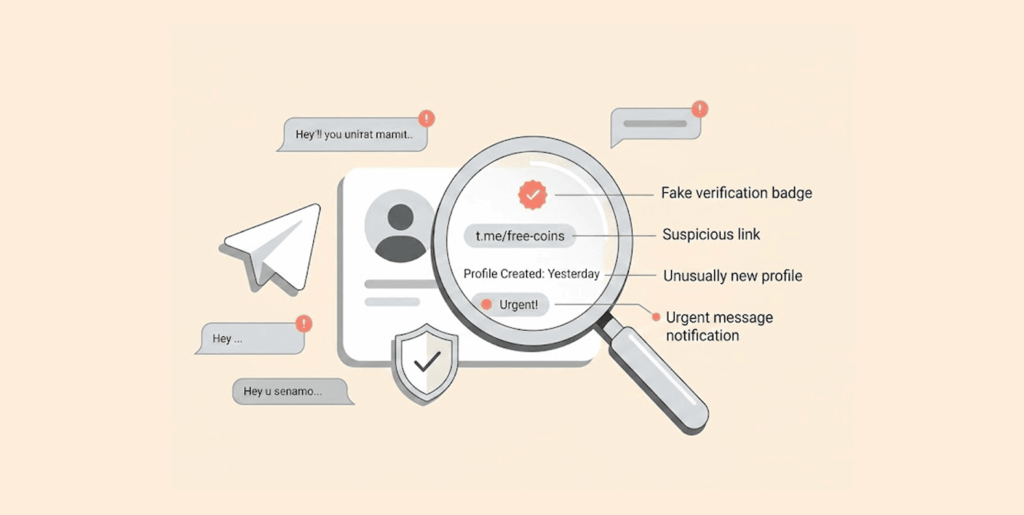
The need to learn the identification of fake Telegram accounts is necessary when you navigate the Telegram app.
Many Telegram scams activity begins with a convincing fraudulent profile. These outlined red flags below can aid you in recognising common Telegram Scams before you fall victim or lose your information and money to fraudsters.
Warning signs
- Contacting you first: They bombard you with many disturbing direct messages, especially the ones having links, files and requests to continue your discussions with them on another platform.
- Engaging new or low-activity profiles: Scammers are always on the lookout for accounts with zero mutual contacts, photos that bear AI designs, and low posting history so they can hack and deploy them for their nefarious activities.
- Manufacture emergency scenario: Scammers leverage on fake romance stories, unreal emergencies, and short-term offers to push victims into responding, before you settle to verify their claims, they have successfully executed their scam actions on you.
- Refusal to verify identity: Frequent excuses to avoid video or voice calls is a pointer that who you are communicating with is an impersonator.
- Mimicking of usernames and skipping verification: Closely examine changes on the usernames of your contact like extra letters, underscores and dashes. Among the features of fake profiles is lack of verification details of the organisation they claim to represent.
- Sending of documented replies: Repetition of same messages and instantaneous replies connotes scam bots or serial fraud operation is ongoing and must be closely checked.
- Sharing of suspicious files and links: Any prompt for external download, short URLs, attachments having phishing pages, malware, or Telegram verification codes are also warning signs for scammers.
- Demands for secrecy: The format of wanting to push you into secret chats or VIP groups is another tactic to avoid public accountability and scrutiny.
- Promising you unrealistic rewards: Any messages promising massive investment returns, free cryptocurrency, jobs with high pay are all features of many popular Telegram scams including giveaway frauds.
- Strictly cryptocurrency payments: Most of the scammers insist on making payments on cryptocurrency platforms, gift cards or other non-reversal payment platforms. Always watch out for such demands, they are schemes of fraudsters.
What to do if you’ve been scammed on Telegram
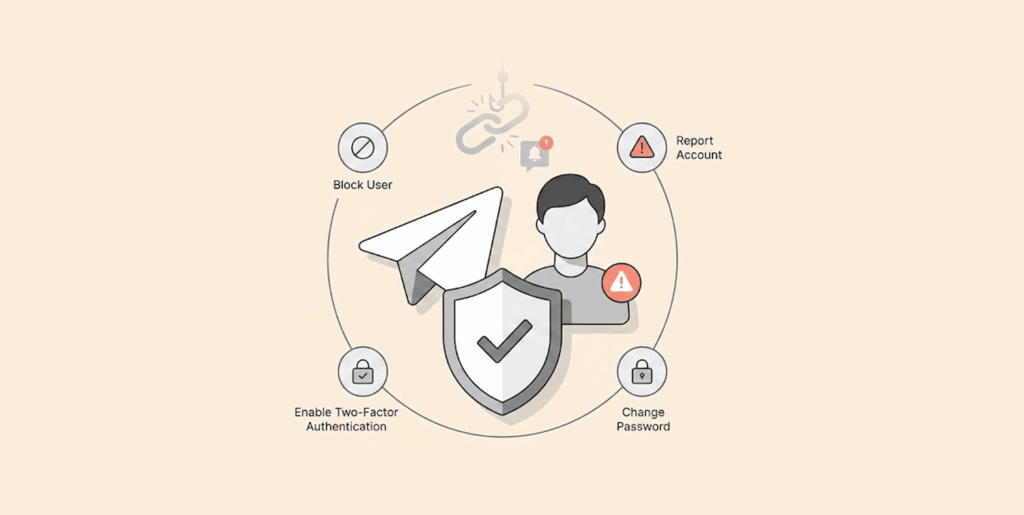
Over time, Telegram scams have changed into more complex stages, making it hard to easily detect scammers on the app.
Users can easily become prey to these scams, and to avoid becoming a victim, swift action is required to help prevent the chances of loss and protect your personal information.
Follow these steps when you observe suspicious scam activity, for those who have been repeatedly targeted or simply want a fresh start, permanently deleting your Telegram account may be the safest option:
- Documentation of the incident: Make sure you save the screenshots of all your conversations with the scammer, including saving the usernames, payment receipts, wallet addresses, and any malicious links sent to you. This evidence will be crucial for investigations, and the Telegram scams report is included.
- Securing your accounts: Swiftly change the password for your account as well as your email account. Follow this prompt, go to settings > Device, and delete all active sessions with strange devices. Also enable two-factor authentication (2FA) if it’s inactive.
- Visit your financial institution: During communication, if you eventually reveal your banking information, visit your bank to notify and request that the card affected should be frozen, then monitor any further suspicious transactions.
- Protecting your cryptocurrency assets: If there is a connection of your wallet to any suspicious website, make sure to revoke token approvals and quickly transfer any assets left to a safe wallet without delay.
- Warn your contacts: Make a public announcement informing your close friends, colleagues, and family members, informing them that your account is compromised. This move helps to hinder the scammers from reaching them via your identity.
- Conduct a Telegram scammer check online: Search the web for reports linked to the scammer’s wallet address, username, or phone number.
- Reporting the scam incident: You need to go further in submission of a scam report via the Telegram reporting tool, updating the administrators about the incident.
- File a police report: Submit a report of the scam to your local law enforcement agency and provide all the evidence at your disposal to enable them to start an investigation.
Undertaking proactive actions will determine your chances of reducing the damage and protecting your account after a scam incident.
How to report someone on Telegram
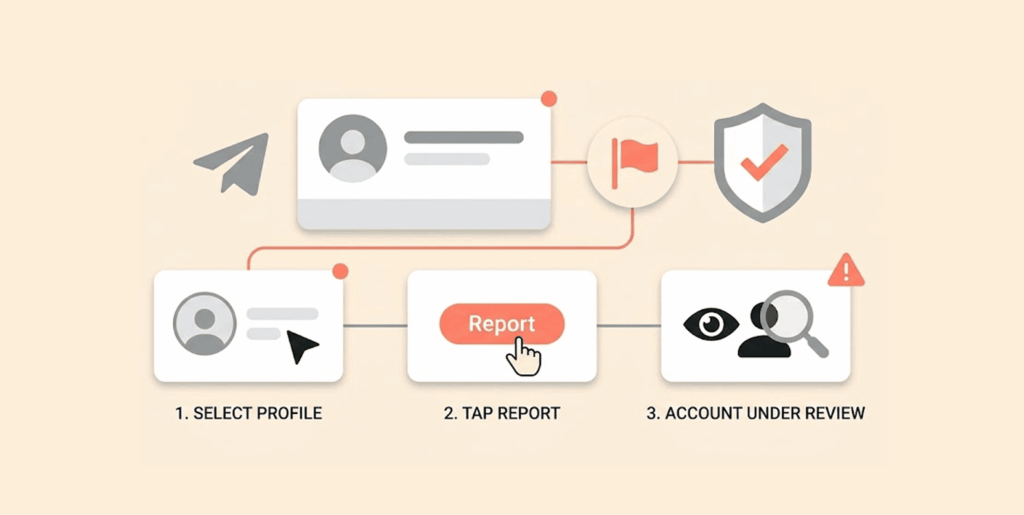
Swift reporting of any suspicious activity is paramount to end scams on the platform. When you encounter phishing campaigns, impersonation, and any other common scams, take proactive actions in reporting to the official Telegram reporting channels. Below are the channels to leverage:
- Use in-app reporting: Go to your profile in the app and open the suspicious group or channel. Tap the three-dot symbols on the menu and select “Report”. Options on display will be fake accounts, spam, or scams. Make sure you also add necessary details. This is the quickest way to report a Telegram scam and watch out for intervention.
- Send a message to the anti-scam bot: When you are done reporting, it’s also necessary that you forward all suspicious messages, channels, links, and profiles to @notoscam, the Telegram app’s official anti-scam bot. This will help in identifying and removing fraudulent accounts active in the Telegram app.
- Email Telegram support: Apart from sending messages to the Telegram bot to help in the identification of scammers on the app, you should also send evidence detailing the Telegram administrators of the extortion. Evidence includes usernames, screenshots, and links to abuse@Telegram.org for further investigation into the scam activity.
- Notifying cryptocurrency exchanges: In the event that you send funds to scammers using cryptocurrency channels, it’s important that you report the wallet address to exchanges like Coinbase and Binance. So that they can freeze the assets in case the scammers attempt to cash out.
- Report to authorities: When you are through reporting to all these channels, it’s also advisable that you file your complaint to agencies such as the FTC at reportfraud.ftc.gov or your local cybercrime and finance unit.
How to protect yourself from Telegram scams
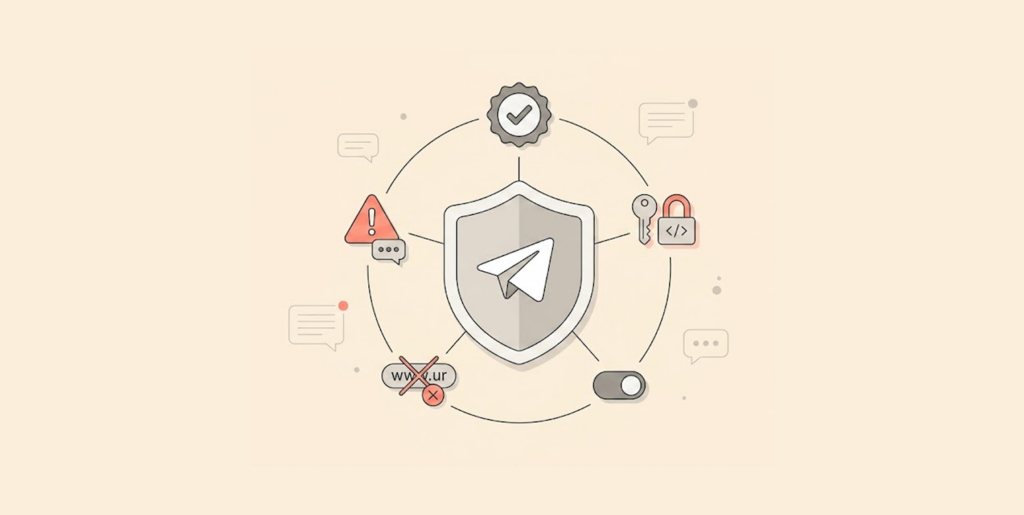
Having an understanding of how to protect one’s account can help in reducing exposure to common scams and other known forms of Telegram app fraud. Below are the tips that will protect you while navigating the platform:
- Enable Two-Factor Authentication (2FA): Two-factor authentication adds an extra layer of security beyond your password. The extra code makes it harder for attackers to access your account, even if they steal your password.
- Use strong and unique passwords: This also prevents unsafe access to your accounts.
- Privacy settings adjustment: The procedure to achieve this adjustment is to go to settings on your Telegram app, then click privacy and security to hide your phone numbers, control who adds you to a group, and your profile photo.
- Keep updating your apps: Regularly updating your apps helps to close in on security flaws that scammers may leverage. Using the official Telegram app is equally important; Telegram now flags users of unofficial apps with a security warning to protect against potential vulnerabilities.
- Sensitive data protection: No matter the pressure, don’t share your passwords, crypto seed phrases, 2FA, and payment details to any strange individual asking for them on your Telegram app. Make sure you always keep them secret.
- Verifying unknown contacts: You must always confirm the identities of the contacts communicating with you, either through video calls, voice notes, or any other alternative platforms, especially in Telegram scams, dating, or money-requesting conditions.
Conclusion
The Telegram app is a global legitimate messaging platform, but its covert design makes it an attractive spot for criminals. As the platform continues to evolve from one phase to another, it has become more sophisticated, and users should be on alert whenever they are using the application. To help you navigate these risks, our complete guide answers the question, is Telegram safe in 2026?
There is a strong need to verify every contact communicating with you, and to mount a formidable guard against a security breach. Most of the scam incidents are as a result of deception, human trust, and urgency, and once you are aware yourself about this, you will have your strongest defense against these cybercriminals.
FAQs
Telegram scams are nefarious and fraud-related activities that take place on the Telegram messaging platform. These can be in various forms, such as criminals deploying counterfeit profiles, investment schemes, romance scams, giveaways, and impersonation schemes to steal personal information, account credentials, and cryptocurrency from users.
Identification of a fake account on Telegram is not a hard exercise. Watch for generic profiles, few contacts, and usernames impersonating legitimate organizations, as these often signal fake Telegram accounts.
Yes, the legitimacy of Telegram is recognised globally, specifically for its privacy and security features. Many users have also abused Telegram to carry out cybercrime, just as they do on other messaging platforms.
Yes, one of the primary functions of scammers is stealing users’ accounts. They deploy that through fake login pages, phishing attacks, malware, and sending fake Telegram codes to you.
Protect yourself by enabling two-factor authentication, verifying suspicious contacts, and keeping Telegram updated. Also, avoid suspicious links and downloads, and never share your personal information with anyone on the app.