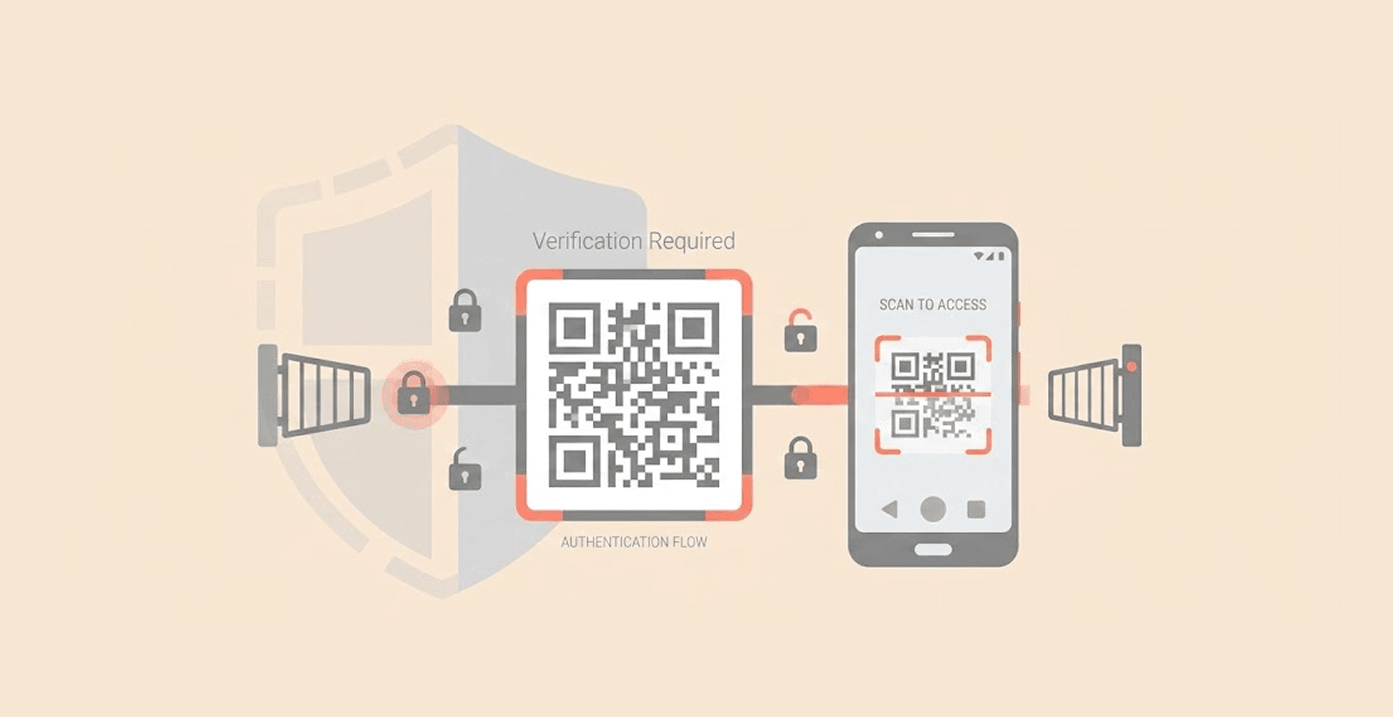
Google has rolled out a new security system called Cloud Fraud Defense, the next version of reCAPTCHA. Now, instead of picture puzzles, you get a QR code when a site wants to make sure you’re not a robot.
However, this change is actually a problem for folks using privacy-focused Android phones. If you ditched Google services for better security, you might get locked out of millions of websites.
Goodbye picture puzzles, Hello QR Code
Google officially launched Cloud Fraud Defense on April 22, 2026. The company calls it “the next evolution of reCAPTCHA” and a “trust platform for the agentic web.” But for ordinary users, the change is simple. The old puzzles, where you pick out storefronts or crosswalks, are disappearing.
When Fraud Defense detects risky web activity, it now shows a QR code. You scan that code with your Android phone to pass the test. But here is the requirement: your phone must have Google Play Services installed and running. No Play Services means no pass.
Support pages and old web records confirm this change has been active since last October. That means Google ran this system for seven months before making a formal announcement at its Cloud Next conference.
Privacy phones get treated as threats
Any phone running on /e/OS, GrapheneOS, or CalyxOS purposely strips out Google services to give users better privacy. People go for these phones to sidestep Google tracking every move.
Now those same users are paying a price. Fraud Defense treats any phone without Google Play Services as risky. When a website using this system sees such a phone, it blocks access. The user has two choices: install Google Play Services or stay locked out.
Not every tech giant is taking this approach. Take Microsoft for example. Microsoft is adding a Cloudflare-powered VPN to its Edge browser, giving users more privacy tools instead of forcing them into a walled garden.
Millions of websites now treat these privacy phones this way. And here is the kicker: existing reCAPTCHA customers became Fraud Defense customers automatically. No migration needed. No action required. The change happened silently under the hood.
A scrapped Google plan comes back to life
This feels similar to when Google proposed something called Web Environment Integrity. It’s abandoned for good. That idea would let websites check if your device was trustworthy using Google software.
Developers and privacy groups criticized it heavily. To them, this felt like Google’s sneaky attempt to herd everyone back into their ecosystem. The outcry was huge, and eventually Google scrapped the whole QR code idea.
But Cloud Fraud Defense does something very similar. It just uses a simpler method. Instead of changing browser standards, Google added a QR code. Website owners who use this system are now blocking people who choose to remove Google from their phones for better privacy.
What Google says about its new system
Google announced Fraud Defense at its Cloud Next ‘26 conference. Jian Zhen, Group Product Manager, wrote the official blog post. The company says the system addresses new threats from AI agents and automated bots.
Fraud Defense includes three main capabilities, according to Google. First, an agentic activity measurement dashboard. Second, an agentic policy engine for granular control. Third, an “AI-resistant challenge” is the QR code.
Google says it designed this QR code to render automated fraud economically unviable. The company also claims the system protects 50 percent of Fortune 100 companies and over 14 million domains globally. That is a huge footprint.
The blog post mentions “Web Bot Auth” and “SPIFEE” as industry standards it integrates with. It also says reCAPTCHA will remain the core feature that the broader Fraud Defense platform uses to defend against malicious bots. Existing customers saw no change to pricing or site keys.
The real cost for privacy users
People who chose privacy phones did not do anything wrong. They simply wanted to keep Google out of their pockets. But now websites block them for that very choice.
Google says Fraud Defense “accelerates business growth” by removing friction. The company claims it helps welcome legitimate users, including AI shopping assistants. But for privacy phone users, it adds a new kind of wall.
The old puzzles were annoying but worked for everyone. They did not care what operating system you used. The new QR code works only if you play by Google’s rules.
If you use GrapheneOS or similar systems today, you face a real problem. You can add Google Play Services and lose your privacy protection. Or you can stay locked out of millions of websites that use Fraud Defense.
Neither option feels good for someone who values digital privacy. And that is exactly the choice Google’s new system creates without ever calling it a choice.
For a different take on fighting fraud, Europol’s dismantling of an $815 million dark web crypto fraud ring shows that law enforcement collaboration can achieve massive results, without forcing users to sacrifice their privacy.
