Peer-to-peer virtual private networks are gaining popularity as more people turn to P2P file sharing. They also restore trust in P2P networks by offering built-in security and privacy.
But, how do P2P VPNs work? How are they different from the conventional VPNs? Read on to learn everything about P2P VPNs.
What is a P2P connection?
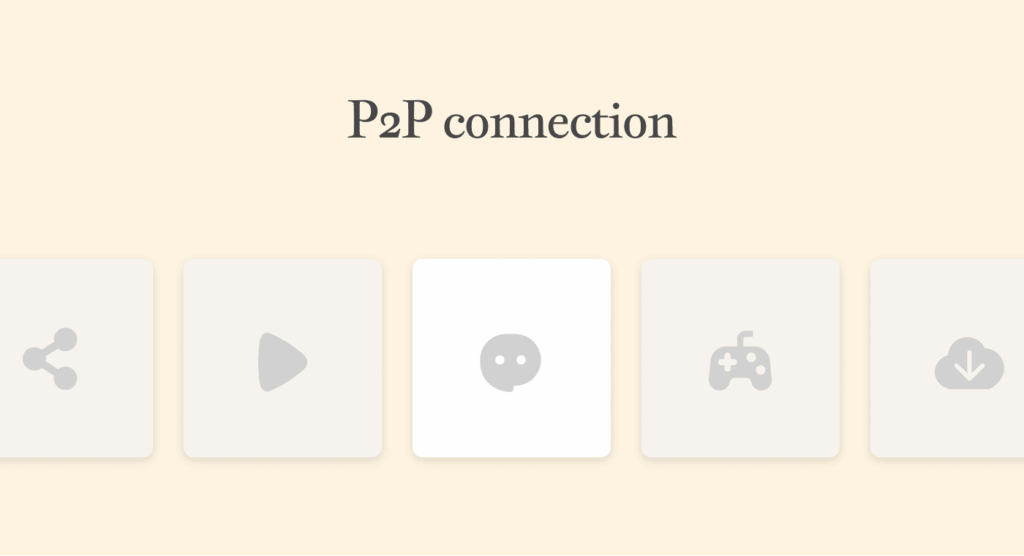
Before getting into P2P VPNs, you need to understand what a P2P connection is. A peer-to-peer connection is a decentralized setup where devices, or ‘peers’, communicate directly without using a central server.
Each peer can share resources like data, bandwidth, or processing power, making P2P systems more resilient, efficient, and cost-effective.
Here are some of the common uses of P2P connections:
- File sharing (torrenting): Users exchange large files directly without relying on a central server.
- Decentralized streaming: Peers deliver live or on-demand video, easing server load.
- Real-communication: Peer-hosted VoIP and video calls bypass central relays.
- Online gaming: P2P multiplayer sessions and direct host connections.
- Content distribution/CDN offload: Applications and websites use peers to cache and share content.
- Distributed storage and backup: Data is synced and stored across multiple participant nodes.
- dApps and blockchain: Decentralized apps and cryptocurrency networks run on peer networks.
- Mesh networking: Devices connect directly to form local networks.
What is a P2P VPN?

A P2P VPN is a type of VPN that uses P2P technology to establish secure, direct connections between devices. As a result, you get reduced network traffic and smooth large file sharing. It also provides robust security by encrypting your sensitive data, including your Internet Protocol (IP) address, during peer-to-peer connections.
P2P VPNs are also known as dVPNs (decentralized VPNs) because they operate on peer-to-peer networks. Different P2P VPNs offer varying levels of security and privacy.
So, what’s the distinction between a P2P VPN and a traditional VPN lies in P2P support. When a VPN supports peer-to-peer connections, it’s considered a P2P or P2P-friendly VPN.
However, not all consumer VPNs include port forwarding, and some limit P2P use to specific servers or dedicated IP addresses. Therefore, check what features a VPN offers before committing to a long-term plan, or pick one from these best VPNs for torrenting.
Unlike traditional centralized VPNs that use fixed networks of dedicated servers, dVPNs route traffic through a mesh of user-operated nodes. While both types offer encryption and IP masking, they differ in trust model, privacy implications, and performance.
dVPNs VPNs depend on independently run nodes, which introduces privacy risks and inconsistent performance. In contrast, centralized VPN providers operate private server networks, usually backed by strict no-logs policies and third-party audits.
Are P2P VPNs safe?
P2P VPNs protect your connections through encryption, but the level of security depends on the implementation and how you use them. For example, it won’t protect you against cyberattacks because it only encrypts your data.
Although a P2P VPN may prevent hackers from intercepting your data, it won’t protect you from threats like malware, malicious files, or phishing attempts. So, you must adhere to standard security protocols and best practices when using peer-to-peer networks.
There are concerns that P2P networks are illegal. The verdict varies from case to case, but here are some of the things you should know.
- A P2P connection isn’t illegal, and anyone can create it.
- P2P networks can be used maliciously, such as sharing unlicensed or copyrighted material.
- VPNs are legal to use in most countries worldwide except in a few regions like Russia, China, North Korea, Turkmenistan, and Iraq.
- Even though a P2P VPN offers privacy and data protection, you shouldn’t use it for illegal activities like copyright violation or cybercrime.
Benefits of a P2P VPN
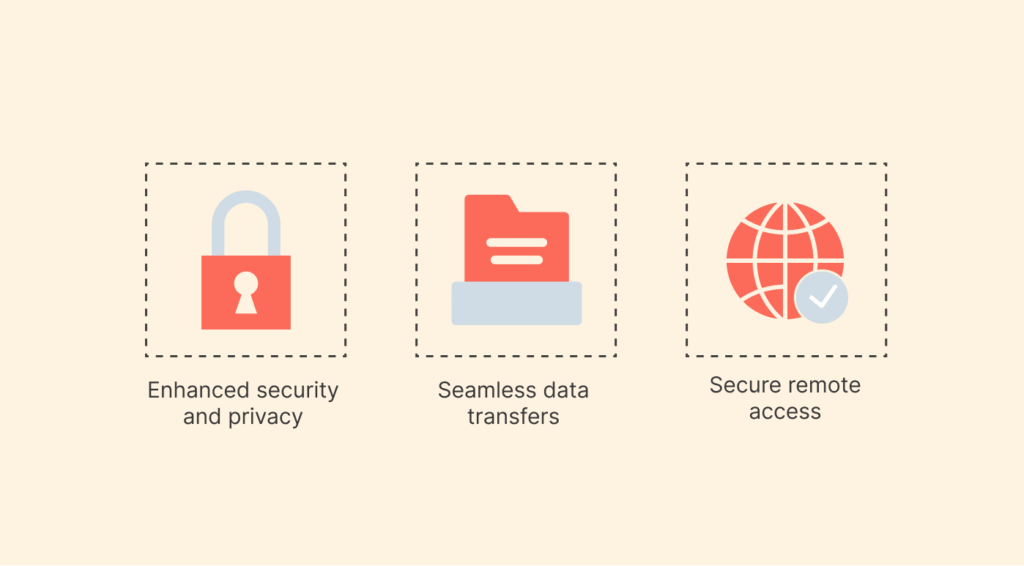
Here are some of the advantages of using a P2P VPN:
Enhanced security and privacy
Direct device-to-device connections remove third-party servers, minimizing the risk of inception. A VPN strengthens the protection by masking the identities of all parties while they use its servers.
Seamless data transfers
Since the data doesn’t have to route through a central server, P2P VPNs are faster and more efficient for specific use cases. Thankfully, these VPNs offer P2P-optimised servers that deliver fast speeds, letting you transfer data smoothly across the network.
Secure remote access
A P2P VPN will enable you to access remote devices safely without needing a centralized infrastructure. It hosts the entire necessary infrastructure locally to avoid external routing.
Better privacy
On a P2P connection, traffic moves between peers, making it harder for third parties to track what you do online. P2P VPNs hide your data, including your traffic, origin, and destination. However, attackers can exploit weaknesses in your devices or peers.
Bypassing censorship
Unlike conventional VPN, P2P VPNs spread traffic across many nodes, which makes blocking more difficult. However, some advanced deep packet inspection (DPI) tools can still detect and block P2P VPN traffic.
Luckily, P2P VPNs run locally rather than on the provider’s server list. Peer-to-peer connections also draw less attention from systems that monitor VPN traffic.
Difference between a P2P VPN and a commercial VPN
| Feature | P2P VPN | Commercial VPN |
|---|---|---|
| Working mechanism | Routes traffic through multiple user-run nodes. | Routes encrypted traffic through company-managed servers |
| Security and privacy | Masks IP addresses. However, it can be risky if one of the nodes is malicious | Encryption and consistent protection. Most services have no-logs policies. |
| Performance | Depends on the quality and availability of nodes | Premium services like NordVPN are fast and reliable |
| Servers | Limited to active peers | Premium services offer many servers and a bigger coverage |
| Usability | Often requires technical configurations | Most services offer user-friendly apps |
| Customer support | Limited or no official support | Many top-notch services offer 24/7 customer support |
FAQs
Most P2P VPNs pass traffic through multiple nodes, preventing any single node from knowing both ends of the connection, which makes tracking users harder.
Usually, a P2P VPN will slightly slow your connection, which can affect download speed. Additionally, P2P VPNs can be slower because they depend on node hardware and availability.
Yes. You’ll need a P2P application or client to connect and share with other peers. Examples include BitTorrent clients, dVPN software, and decentralized storage apps.
A P2P VPN hides your IP from peers, but leaks can still happen if the VPN isn’t properly configured or if you disable key privacy settings.
No. Some VPN providers limit P2P traffic to specific servers, while others don’t support it at all. So, confirm the provider’s features before subscribing.