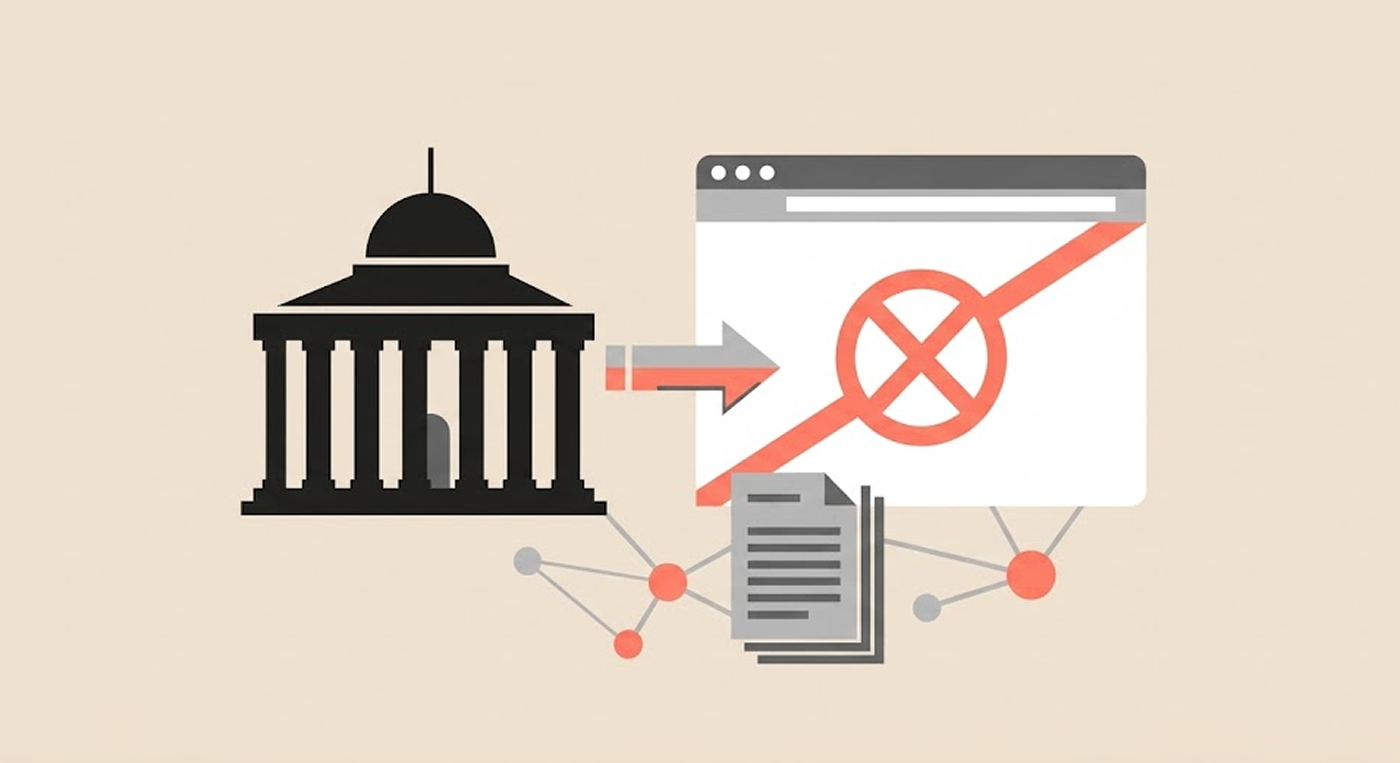
Recently, legislators in Poland presented to President Andrzej Duda a bill that raises serious controversies related to Internet regulation. If approved, the bill would allow the chief telecom regulators to block websites. Such decisions can come from various agencies, such as the police, tax inspectors, & end-users. Detractors argue that the new regulations enable Internet censorship and threaten freedom of speech.
However, officials say the proposal creates essential safeguards against scams and fraud. They insist that various authorities will help prevent online crimes. At the same time, opposition representatives criticize the initiative as a way to undermine key legal protections for media bodies. Meanwhile, local citizens and technology experts watch the executive branch closely.
Sweeping powers for telecommunications regulators and fast domain registry blocking
The legislative proposal empowers central telecommunications regulators to issue immediate blocking orders. Web administrators who refuse compliance requests face placement on a secret register.
Consequently, local internet service providers must remove targeted domains from DNS servers within 48 hours. This swift action disconnects blocked websites from the internet almost immediately.
Moreover, the state officials have totally removed the central monitoring registry from the reach of public control. The aforementioned list will not be subject to the laws of information freedom.
This statutory secrecy makes it impossible for investigators to check the level of governmental censorship. In addition, affected site owners now have just 24 hours to respond to written requests. Hence, site owners have too little time to prepare their defense or gather evidence.
Shifting oversight from judicial courts and eliminating appeal rights
Lawmakers transferred political affiliation cases away from traditional judges directly to state regulators. Removing court oversight allows administrative agencies to issue immediate shutdown directives quickly. As a result, administrative directors can target political content without facing judicial checks. They no longer need approval from legal judges to block online portals.
The law clearly states that the affected website owners cannot challenge the decision in any court. The absence of a judicial remedy means that publishers are deprived of the opportunity to confront any unjust account blocking.
Thus, this gives rise to the situation when the administrative government bodies become fully independent in the regulation of online activities. This swift development raises a lot of criticisms among some legal intellectuals in terms of fairness in the legal sector.
Repeated executive vetoes and ongoing political confrontations
The legislative conflict marks a second attempt at implementation of a tough regulatory regime by the government. President Karol Nawrocki had earlier vetoed an earlier version of the measure in January.
During that initial confrontation, executive officials compared the process of the oversight to a Ministry of Truth. They argued that state censorship has no place in a modern democratic society.
Despite facing considerable opposition from the executive branch, the ruling majority in the legislature set out blocking powers as a lone bill. They submitted the new package to the presidential office immediately to get approval.
As a result, the executive leadership is under growing pressure to veto the new legislative package once again. Civic organizations insist that the government respect democratic principles – they also expect them to refrain from excessive exercising of power.
Broader impact on digital infrastructure and network operations
Local internet service providers face massive technical challenges under the strict new rules. Network engineers must update central domain name system lookup tables around the clock. Manual updates increase operational costs for smaller regional internet companies across the country. Regulation violations, such as not taking actions on blocking requests within a 48-hour timeframe are punishable by law.
Furthermore, cybersecurity experts believe that domain blocking leads to unanticipated technical difficulties for ordinary users. These excessively formulated blocking regulations might restrict legitimate websites hosted on the same server.
In addition, with technical mistakes on valid online platforms, small business entrepreneurs may suffer income losses. Digital trade associations, thus, constantly ask for clear regulations to safeguard clean, honest businesses.
International observers are also worried that such legislative initiatives may extend throughout the EU. They are observing the developments in Poland closely as a litmus test for further regulations. Similar debates over website blocking are emerging in the United States, where a bill could require VPNs and DNS providers to block piracy websites.
Further, privacy groups insist on the need for transparent models of governance that protect the rights of the users. The authorities must make trade-offs between the needs of law enforcement and sufficient judicial safeguards to ensure the freedom of public discussion. Finally, the presidential decision will determine whether Poland maintains an open digital environment or adopts web censorship.
