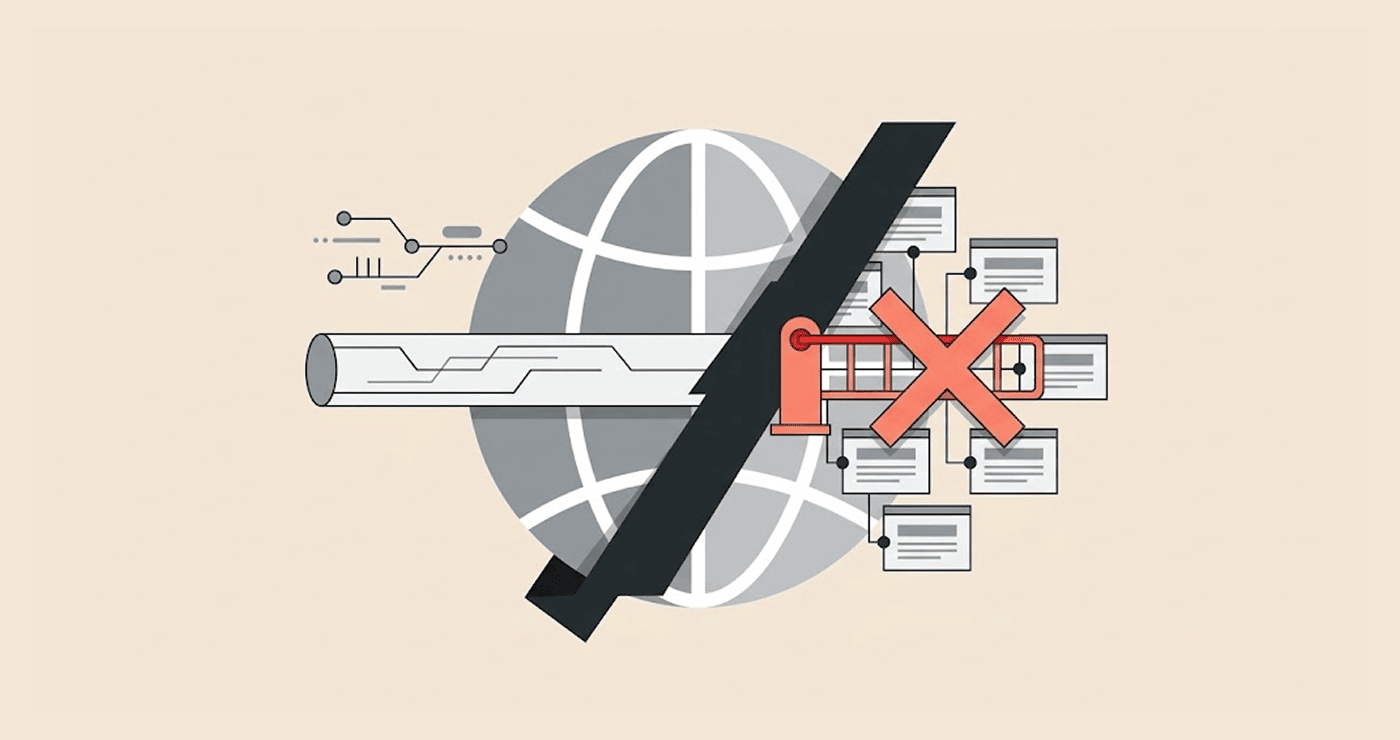
The proposed law, called the American Copyright Protection Act of 2026, is expected to give courts additional powers to instruct online services to block access to websites charged with copyright infringement. It specifies VPN providers and DNS resolvers as the main players for this purpose. Thus, the rule initiates further discussion on piracy enforcement.
This legislative initiative, championed by Congressman Darrell Issa, has faced criticism from the digital rights community. Many are concerned about the issue of privacy and the level of restrictions on online content access.
Bill brings VPNs into website blocking debate
The bill would expand the definition of a service provider to cover several types of internet infrastructure. That definition includes broadband providers, DNS resolution services and virtual private networks.
VPNs have usually served a different purpose from internet access providers. They connect users and remote servers through encryption and they provide privacy, safety, and service access for users while travelling.
The proposed approach could change that role if courts begin ordering VPN providers to block particular websites. A court order could therefore reach a service that users often rely on to avoid network-level restrictions.
DNS resolvers could also face new obligations. DNS – which means the Domain Name System – is responsible for transforming website names into IP addresses. When anyone types the name of a website, a DNS resolver is involved in locating the server associated with that name.
In case of a blocking order, the DNS resolver might not return the specific IP address. The user would then struggle to reach the targeted website.
The US already has copyright enforcement rules that allow certain court remedies against online service providers. However, the current framework has limits on the form of blocking orders available to qualifying providers. The US Copyright Office explains those existing protections and remedies under Section 512 of the Digital Millennium Copyright Act.
The new proposal would add another layer to that system. It would specifically bring VPNs into the group of services that could face court-directed blocking requirements.
Supporters point to online piracy
The proposal follows years of discussions about how the United States should address online piracy. Copyright holders claim that illegal streaming and distribution could lead to big financial losses for the producers, broadcasters and other rights-holders.
Rep. Issa has already supported stricter measures against online piracy in the past. The latest proposal follows other efforts in Congress that have sought new ways to target websites distributing copyrighted material.
The issue has appeared in congressional hearings before. Lawmakers have examined DNS blocking, IP blocking and other technical methods for restricting access to websites. A House Judiciary hearing explained that DNS blocking can stop a resolver from providing the IP address associated with a targeted domain.
The US Copyright Office has also examined website blocking as a copyright enforcement tool. Its earlier work noted that authorities have used existing legal powers to obtain court orders affecting domain names linked to criminal activity.
However, technical experts have long questioned how precise these methods can be. A website may share an IP address with many unrelated services. Blocking that address can therefore affect websites that have nothing to do with the alleged infringement.
The same issue can occur with DNS blocking. A domain may contain both infringing and lawful material. A domain-level restriction may affect everything hosted there rather than only the disputed material.
Spain offers a recent example
Spain provides a current example of the problems that can arise from large-scale website blocking. LaLiga has used court-backed IP blocking measures to fight illegal football streams during live matches.
LaLiga says the measures target IP addresses connected to illegal broadcasts. It argues that the blocks protect intellectual property and help reduce losses caused by piracy. However, independent measurements have found wider effects. The Open Observatory of Network Interference, known as OONI, studied blocking links to LaLiga broadcasts in Spain.
According to the analysis, it examined 9.2 million different domains. OONI has found that more than 554,000 domains were blocked during the period of study. Many were unrelated to football or piracy. The problem comes partly from shared internet infrastructure. Large providers such as Cloudflare, Amazon and Microsoft can host or support many unrelated websites through shared networks.
As a result, blocking one IP address can affect many other services. OONI identified thousands of affected IP addresses across dozens of infrastructure providers. Its findings included government, news, humanitarian, and other legitimate websites.
The experience has renewed questions about whether broad blocking methods can accurately target piracy without disrupting lawful websites. LaLiga disputes some criticism of its system and says its dynamic blocking process targets specific infrastructure linked to illegal streams.
Privacy and internet access concerns
The proposed US legislation has also drawn concern from digital rights advocates. Their argument centers on what could happen if blocking powers expand beyond internet service providers.
VPNs function such that they route the traffic of users through another network to create an extra layer of anonymity. If the courts could require VPN service providers to block certain websites, users might face restrictions even when using the service in a legal environment.
VPN providers have also faced legal questions over whether they should be responsible for users who bypass online restrictions. The issue was addressed in EU court rules VPN providers are not liable for users bypassing geo-blocks, which examines a European court ruling on the responsibility of VPN services.
DNS blocking raises a separate technical concern. The Internet Society notes that DNS blocking and IPS blocking can be rather ambiguous and have collateral damage. Moreover, it mentioned that users can often go around those methods by changing their DNS resolvers or using VPNs.
Meanwhile, DNS filtering can affect the way internet addressing works. The Internet Society has warned that blocking at this level can interfere with consistent and reliable access to online services.
Supporters of site blocking may argue that courts should have effective tools when websites repeatedly distribute illegal material. Critics, however, are eager to see limits set against any legislation that could impede lawful enterprises.
The prospects for the legislation depend on how it makes its way through Congress. Right now, it has initiated a debate about how far copyright enforcement goes into the basic infrastructure of the internet.
The central issue is not simply whether piracy should be addressed. It is also how enforcement can target unlawful content without creating wider problems for privacy, security, and legitimate online activity.
