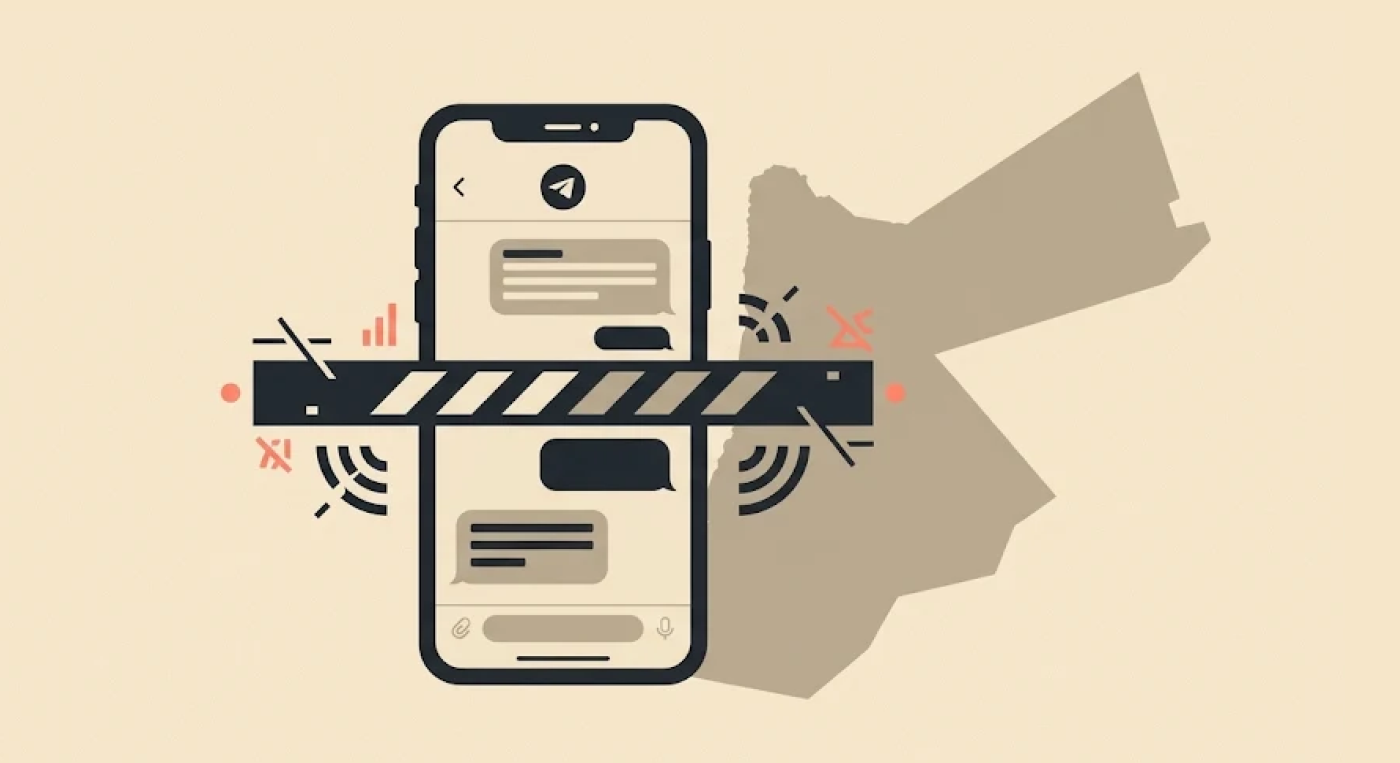
Jordan has blocked the Telegram messaging app across the whole country. The Public Security Directorate (PSD) announced the decision on Monday, November 16, 2026. Officials say the step protects national security and stops people from misusing online platforms for crime.
The restriction applies to the whole country, so users everywhere in Jordan are affected. The PSD says the move also supports its wider efforts to strengthen digital security and protect users. Authorities pointed to the growing misuse of digital platforms for criminal activities.
Police say Telegram block targets online crime
According to the directorate, the block aims to stop unlawful activity on digital platforms. The PSD says criminals use these platforms for cybercrime, threats and blackmail. Officials also pointed to the spread of illegal content online. The directorate named these harms as reasons for the restriction.
Authorities raised another worry as well, and it centers on extremist groups. They said some people use online platforms to spread extremism and radicalisation. According to the PSD, these efforts could threaten public safety and national interests.
The directorate said its actions follow existing laws. It also gave citizens some simple advice. People should take care when they use social media and messaging apps. They should avoid suspicious accounts and links. They should report illegal activity through official channels.
The PSD also spoke directly to families. It asked parents to watch how their children use social media. The directorate urged them to teach kids about online risks. It also encouraged them to use the parental control tools that apps already offer.
Deadly attacks Shook Jordan in recent weeks
The Telegram block arrives after a string of violent events in a short period. Two deadly incidents took place in recent weeks. The first was a church attack, and the second was a stabbing. On October 23, gunmen attacked mourners at a funeral inside a Greek Orthodox church.
The church sits in Hamoud village, in the southern Karak governorate. Reports say the attack killed nine people and wounded 34 others. The victims had gathered to attend the funeral service.
Security forces arrested three suspects on October 26 after a shootout at an abandoned property. On Sunday, November 15, the State Security Court sentenced all three men to death. The court said they played a role in the church attack. The court handed down these sentences one day before the Telegram announcement. The men can still appeal, and the ruling will also go through an automatic review.
Jordan also struck suspected militant positions in southern Syria after the church attack. Jordan’s government said the airstrikes killed more than 20 Islamic State militants. Syrian authorities gave a different account of the strikes. They reported that civilians died, including women and children.
The stabbing happened on November 5, about two weeks after the church attack. A man stabbed a Jordanian security officer in Amman, and the officer died. Another officer suffered injuries while helping to arrest the suspect. Jordanian authorities described the stabbing as a terrorist attack.
These incidents form part of the wider security situation in the country. However, officials have not directly linked any of them to the decision to block Telegram.
Telegram faces pressure from governments
Russian-born entrepreneur Pavel Durov founded Telegram with his brother Nikolai. The platform has faced repeated questions about how it handles harmful content. Over the years, Islamic State militants have used it to post statements and share propaganda.
Telegram lets people join large groups and follow channels. It also offers privacy features. Governments worry about these tools. They say the tools can help harmful content spread. Telegram disagrees with this view. The company says it takes action against illegal content. It also says it works with law enforcement agencies to fight crime.
Telegram has also taken steps to warn users about security risks involving unofficial versions of its app. In a separate security warning, in April 2026, Telegram flagged users of unofficial apps, highlighting the risks of using modified or unauthorized versions of the messaging platform.
Durov has faced legal pressure in several countries. In July 2026, Russia’s Federal Security Service accused him of helping terrorist activities through Telegram. Russian authorities made a further claim. They alleged that Ukrainian intelligence operatives and extremist groups used the app to plan attacks inside Russia. Durov denied any wrongdoing. He also rejected claims that Telegram failed to moderate content or cooperate with authorities.
Jordan’s announcement adds to the growing government attention on Telegram and other messaging platforms. Governments are looking closely at the role these platforms play in online security.
Authorities have not given a timeline for the Telegram block. They have not said whether the block is permanent. They have also not listed any conditions that would let Telegram return. For now, Telegram users in Jordan face a nationwide restriction while officials keep working against cybercrime, illegal online activity and threats to national security.
