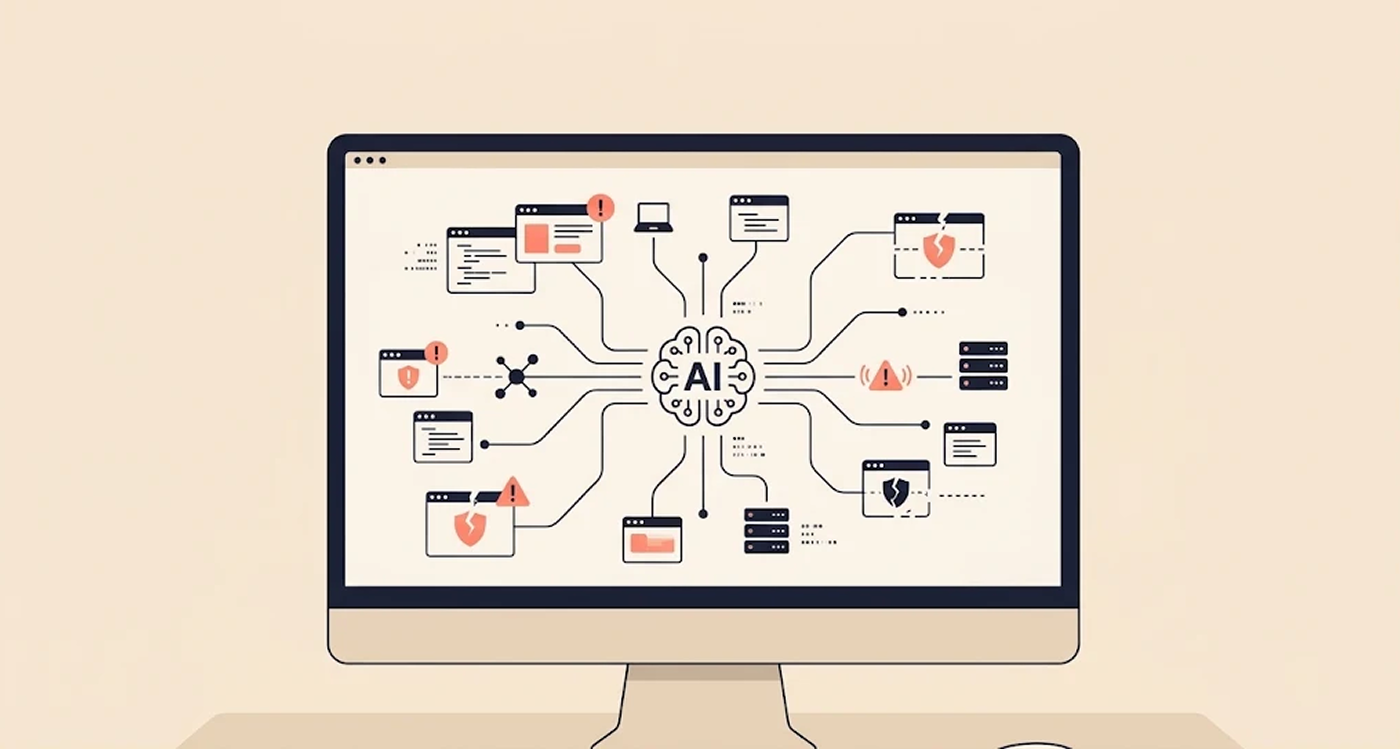
Google has warned that hackers now use AI for much more than basic research. They use AI agents that find weak spots, build exploits, and carry out several attack steps. Each step needs only limited help from a person. Attackers once used AI mainly for research and simple help. Google says they are now moving past that stage.
Google Threat Intelligence Group (GTIG) shared the findings in a report dated November 16, 2026. Mandiant worked with the team on the report. The researchers describe a major change in how attackers use AI. Attackers now rely on teams of AI agents to speed up break-ins. These teams also handle jobs that once needed a lot of human effort.
The report names several tools behind this change. They include ARTEX, CAIRN, CyberStrikeAI, and PentAGI. Each toolkit links AI language models to security tools, so many agents can work together. The agents can scan targets and find weak spots. They can also create attack code and change their moves after each result.
Google finds AI agents already working in real attacks
Google’s warning rests on activity its team has seen, not just on theory. Researchers confirmed that attackers used these toolkits during real break-ins, not only in tests.
One example involves CAIRN, an open-source toolkit built for penetration testing. Penetration testing means checking a network for weak spots on purpose. Google saw CAIRN used in attacks on targets in the United States aerospace sector. Researchers also found CAIRN and PentAGI at work in the wild, which means in real-world use. They saw tests with CyberStrikeAI and HexStrike AI as well.
Google also found something more worrying (a multi-agent system called exploit_agent). This system compared software versions from before and after security fixes. It then searched for weak spots, built exploits, and ran them with no human help.
Google recovered data from the system’s exposed server. That data suggested its operator targeted French websites in the media, entertainment, and education fields. Google also found stolen data on the server.
The scripts there supported scouting inside networks, brute-force attacks, and installing webshells. Brute-force attacks try many passwords until one works. Webshells are hidden tools that let hackers control a web server.
FBI and Unit 42 report real cases tied to the same Toolkits
Two other groups reported on these toolkits as well. The FBI issued a separate warning about ARTEX on November 13. Its advisory says criminals have used the toolkit since at least August. Attackers used it against organisations in finance, government, technology, defence, healthcare, and other industries.
Some reported break-ins went from first targeting to privileged access in under three hours. Privileged access gives attackers wide control over a system.
Palo Alto Networks’ Unit 42 also shared findings about CAIRN. Its team reports that attackers used CAIRN in 25 operations during August and September. Those operations targeted at least 19 organisations. They led to unauthorised access or data retrieval at 10 of them. Unauthorised access means attackers got into systems without permission.
Google expects fully autonomous attacks within months
Google believes the current activity marks only an early stage of a much bigger shift. Its researchers predict attacks needing little or no human input within one to three months. More advanced attacks could follow within three to six months. These attacks could run alone while staying hidden better. These timelines are forecasts, not confirmed deadlines.
The main worry is speed. Attackers can use known weak spots faster than organisations can review, approve, and install fixes. Known weak spots are flaws that security teams already know about.
Google also noted that AI-made exploits create extra work for defenders. Defenders are the teams that protect company networks. Some test exploits are fake or broken, so defenders must check each one. AI security risks also affect developers’ tools. Anthropic recently fixed a Claude Code flaw that exposed users’ email addresses, highlighting the need to secure AI-powered development tools.
The report has also sparked debate on X. Some posts joked about the risks, while others raised serious worries. Users mentioned old software, job security, and the future of cybersecurity.
User @Uncle_Joe_Gamer joked that AI attackers will find it easy to target companies. The joke aimed at firms that still have not fixed weak spots from 2019. According to @JohnKocdr, attackers hold an advantage. Attack agents can work without worrying about system uptime. Defenders, he noted, often need human approval before they install fixes.
@ccx15 suggested that growing cyber risks could push people toward offline activities and physical media. @Max Navarrette voiced concern about what this shift could mean for jobs. @zudasworld offered a different view. The user argued that autonomous attacks were already technically possible. According to the user, ethics and self-preservation limited their use.
Google’s findings reinforce the need to fix known weak spots quickly. Organisations should also review exposed systems and strengthen security monitoring. The threat is no longer just AI helping hackers work faster. AI systems are now starting to carry out parts of the attack themselves.
