As online surveillance intensifies, the demand for tools that guarantee genuinely private and anonymous browsing has never been higher. Many are now looking beyond Tor for solutions that are also fast and practical for daily use. While Tor remains a powerful tool for anonymity, its slow speeds, usability challenges, and security limitations have led many to explore better-performing options.
In 2026, several alternative options to Tor offer stronger privacy controls, faster browsing, and improved ease of use (without compromising security). This guide examines the top Tor Browser alternatives available in 2026 and helps you select the ideal privacy tool for your specific needs.
Top alternatives to the Tor Browser – Quick list
Finding the best Tor alternatives for anonymous browsing means balancing speed, ease of use, and ironclad privacy. Here are the frontrunners.
- Virtual Private Network (VPN): Best for bypassing geo-blocking, using global servers to mask your location while delivering fast speeds.
- DuckDuckGo: Ideal for private searches, preventing tracking by search engines and limiting ISP visibility.
- Opera Browser: It offers built-in VPN protection while blocking ads, trackers, phishing, and malicious activity through an easy-to-use interface.
- Brave Browser: Best overall, blocking ads and protecting user data by default, with a built-in VPN for added security.
- 12P: Best for encrypted communication, favored by activists, journalists, and whistleblowers to share data securely.
- Epic Privacy Browser: Best for privacy, blocking crypto miners, ads, trackers, cookies, and third-party widgets from collecting your data.
- Hyphanet: Best for darknet anonymity, using a highly secure peer-to-peer (P2P) network that makes tracking extremely difficult.
- Firefox: Best for customizable security, allowing users to tailor protection settings through an easy-to-use interface.
- Tails: A free, privacy-focused operating system that routes all activity through Tor to keep your communications anonymous, secure, and untraceable.
- 1Browser: Perfect for multi-account use, with encrypted connections and IP masking to help avoid bans.
Why do you need a Tor alternative?

Once, the king of the mountain was anonymous; there was no serious contender to Tor. No other browser came close. The world saw it as the most secure and private browser out there. That was until the FBI finally cracked down on the platform in an infamous Operation Onymous. For Tor enthusiasts, sticking with the platform after the crackdown felt like playing with fire.
This made people lose confidence in the platform and, hence, the search for Tor network alternatives. Staying under the radar was tough. Tracking was likely, and no one wanted the government’s attention.
So, Tor alternatives became a necessity. However, it’s tough getting one with the quality of encryption that was provided by Tor. Some came close but provided other advantages over the Tor browser. Go through them and carefully select the one that suits your needs.
Best Tor alternatives today – Detailed list
Every day, over three million people use the Tor network to browse the internet anonymously. But as you know Tor web browser isn’t the only tool for protecting your privacy and bypassing censorship.
The best Tor substitute for you depends on your priorities. Below, we break down ten leading options along with some reasons why they stand out.
1. Virtual Private Network (VPN)
If you want to enjoy surfing the web, hidden without compromising on speed, then vpns are the way to go. Unlike the Tor onion route with numerous relays. VPNs usually connect to just one server. VPNs have some interesting selling points.
Let’s look at the pros before getting to the cons. The servers to connect are in locations different from that of the subscriber. This aids in masking the IP address and makes any tracker or Internet provider think the user is in the region where the server is.
You can bypass geo-restrictions with ease. You can also access content banned in your region by connecting through a server in an approved location.
Why it stands out
- Public WiFi: Even on public WiFi, you can stay anonymous and safe from hackers using phishing malware, thanks to masking protocols a VPN provides.
- Ads: With its ability to stop unwanted ads, pages are loaded faster. This helps with the speed aspect of the network.
- AES 256-bit encryption: Famous VPNs protect your data with AES 256-bit encryption that keeps it safe from unwanted interference.
- Kill switch: The feature ensures no digital footprints are left behind when the user logs out. Without them, hackers are lost.
Pro Tip: For maximum security, some users combine a VPN with the Tor Browser. This advanced setup can add an extra layer of encryption and hide Tor usage from your ISP. Choosing the right VPN for this is critical; we analyze the top candidates in our guide to the best VPNs for Tor Browser.
2. DuckDuckGo
Admittedly, the name sounds kind of funny. This is another alternative to Tor browser that is big on privacy. As today’s Internet is filled with entities that monitor people’s traffic and data, DuckDuckGo has become increasingly popular.
Are you worried about the Google tracking code? Don’t fret. DuckDuckGo has its own search engine. People often labeled as “conspiracy theorists” claim Google search results are “doctored.” Most such users say they can’t get straight answers on controversial topics. This browser eliminates such concerns.
Since the creation of the network, the platform has expanded its features to include lots of digital products, a VPN, a browser, and browser extensions. The DuckDuckGo search engine has gained traction over the years, with more than 100 million searches every day. To put icing on the cake, the network doesn’t even track the data of its users. Anonymity guaranteed.
Why it stands out
- No ads: They block interested entities from monitoring your data, which also stops ads tailored to your interests. The result is a smoother, cleaner, and more convenient browsing experience.
- Secured data privacy: When users engage the search engine, their data and search results are safely stored in the browser, the only record, and can be deleted by the user. Sweet.
- Search history can’t be tracked: When using the browser or its search engine, you don’t need to turn on “private browsing” to hide your search history, as it gets deleted automatically within a few hours anyway. So convenient.
- Strongly encrypted searches: This is our favourite part. While using their search engine, your Internet provider may know you are using this browser, but won’t be able to track what you are searching for.
3. Opera Browser
In contention with Brave browser for the overall best alternatives for Tor, this network boasts of an integrated VPN, giving the user fake locations and keeping their IP address anonymous.
The platform has gained momentum for less technical people, with simplicity as the focus for the interface, very user-friendly.
Let us not forget other bundles of joy, like protecting subscribers from annoying ads, sites with malicious intent, phishing, and being tracked…helping pages to load faster without interruptions.
Why it stands out
- Highly compatible: The platform runs smoothly on popular operating systems like iOS, Android, Windows, Linux, and macOS (thanks to its Chromium foundation).
- Integrated VPN: With this addition, the user can bypass geoblocking restrictions, including masking the original IP address, making it difficult for trackers and unwanted surveillance entities to keep up.
- Strong privacy protocols: it keeps annoying ads and interested entities from keeping up with the users’ data, ensuring a smooth sailing cyber experience. Helps to speed up page load, too.
- Easy-to-use interface: The interface designers kept it simple, making it easy to understand and use. Navigation on the network is intuitive and lacks complexity.
4. Brave Browser
Brave is a Chromium-based open source browser created by Brendan Eich. Ring a bell? That’s the brain behind Mozilla and JavaScript. The most convenient thing about Brave is its effortless setup. It feels and acts like a fast, regular browser, but with privacy shields activated by default.
Unlike Tor and most other browsers that bombard you with different prompts and setups from settings, with a Brave browser, you simply download, and in less than two minutes, you are ready to enjoy the browser.
Not only does it provide privacy, but Brave stops trackers and ads, which is a great relief. Nobody likes the annoying pop-up ads.
Why it stands out
- Connection to Tor: Brave browser has an in-built connection to the Tor network, helping you to surf the Internet somewhat hidden without needing to download and install a different app.
- Security: The ability to keep phishing and malicious viruses at arm’s length is thanks to the NoScript and HTTP protocols. Of course, the user will enjoy moving around without worries, knowing their data is not open to thieves.
- No tolerance for trackers: The browser makes sure nobody can track users, and since ad agencies can only work when they follow up with your data to know your interests, this protocol gives them no chances, as it removes ads, giving the user an enjoyable time on the web.
- Faster time to load pages: Because ads are kept at bay, pages tend to load faster, too, without the annoying interruptions of ads.
5. I2P
While Tor is the king of anonymous web browsing, I2P (the Invisible Internet Project) is its powerful, peer-to-peer counterpart. Think of Tor and I2P as the two major architectures for anonymity: Tor is optimized for exiting to the regular web, while I2P is a self-contained, decentralized network ideal for hosting services and internal communication.
I2P scrambles your traffic to thwart surveillance. It’s also a dedicated network often used to access the dark web and its hidden services through its own encrypted tunnels, separate from the standard internet. (For a specialized look at tools designed for this purpose, including I2P, see our ranked list of the 10 best dark net browsers.)
So, the users in this platform become the network, decentralising it. The 12P network is present across the world with more than 50,000 devices scattered. Good luck to hackers tracking this one down.
The routing system of 12P scatters your messages into smaller traffic across the web and finally assembles them upon reaching their destination. This routing process is called “garlic routing”. Don’t know what’s with them and cooking recipes.
Why it stands out
- Strong privacy: The encryption system makes it extremely difficult for companies that wish to monitor your data, find your interests, and advertise your interests to you. Your Internet provider could be selling your data to these companies. With 12P, that’s history.
- Garlic routing system: This garlic routing provides layered encryption, creating a secure tunnel for your traffic like Tor, but with a different architecture that further scrambles the path.
- Packet switching: Traffic spreads evenly across peers, keeping the network balanced and preventing any single peer from being overwhelmed. When one peer has issues, the others step in to take its place.
6. Epic Privacy Browser
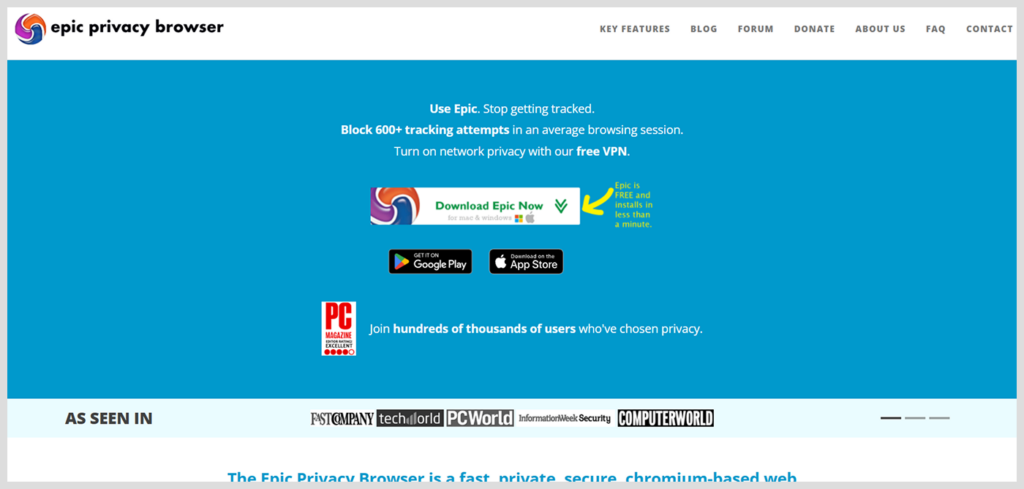
As the name implies, this is another good alternative to the Tor browser, with privacy at the forefront of its objectives. It boasts of a clean, user-friendly interface, which naturally appeals to most people. Let’s get to the privacy part.
One of Epic’s standout features is that the platform is always in private mode by default. The cool part is how it deletes browser data upon exit, making sure no digital footprints are left when not in use.
The browser is built on Chromium, and the platform claims to have removed Google’s tracking code. A highly encrypted proxy secures and routes your traffic, hiding your location as you browse. A welcome bonus. This unique proxy has seven nodes, which are located in:
- Germany
- France
- Singapore
- Netherlands
- UK
- Canada
- US
Why it stands out
- Speed: Thanks to its reliance on proxy servers, Epic browsers is one of the fastest private networks out there. This is a fresh breath from the Tor disappointing speed.
- Integration with VPN: With this protocol, the user is granted access to data or content that’s banned in their region.
- Ultrasounds are not allowed: with the ability to do surveillance of its own on websites, it can block ultrasound frequencies from getting to the user’s device, leaving no digital residue that can be tracked.
7. Hyphanet
You think I2P and Tor were the top choices for the dark web? Think again. We’re talking about a platform that was built specifically for the dark web.
First, it can get the user connected to the dark web without access to the normal Internet. There are two modes, opennet and darknet. In the opennet mode, Hyphanet is pretty similar to Tor onion routing in many ways, as it links the user to random peers.
Isn’t it mad that a platform could be more secure in the darknet? That’s exactly how Hyphanet works in darknet mode. Here, you only connect to trusted friends on the dark web (because you’ve already shared node references or public keys with them).
Another factor that makes Hyphanet so secure in the darknet is the ability to completely block off outside access to data used within any darknet group. It’s airtight.
Why it stands out
- Disclaimer: The users often have no clue about the encrypted data stored in their hard-earned drive, so they can deny knowing anything about the content.
- Arguably the strongest privacy protocol: The encryption of traffic between friends to friends in the darknet is second to none. Offers maximum security, privacym and “cloak”. The risk of a user’s data being compromised in the darknet is almost zero. Fortress.
- A platform for freedom of speech: Due to its high security and privacy protocol, the network offers a conducive environment for subscribers to air their opinions without fear of a backlash. No wonder activists running away from authoritarian governments are usually seen here. The other usual suspects include journalists and whistleblowers. This platform takes the word “safe” to another level.
- Decentralised: Not controlled by one entity, which ensures difficulty in tracking user data.
- Resilience of data: One of the cool features of Hyphanet is the ability of content to remain available even when the user who uploaded the content is no longer online. The network has a way of replicating content that is popular to ensure it is available.
- No censorship: As the platform is decentralised and lacks central servers, it’s impossible for the government to shut down the network.
8. Firefox
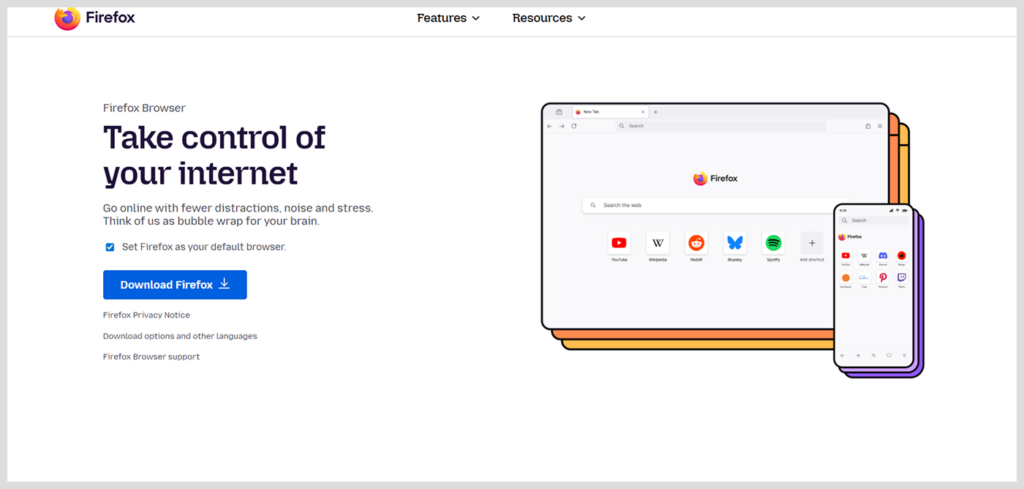
Just like the Tor browser, this alternative puts privacy as its main objective. For instance, a feature known as “Lockwise” helps the subscriber to manage their passwords by storing them in a secure manner.
Firefox prioritizes privacy by minimizing data collection and offering enhanced tracking protection. Its features are designed to help thwart browser fingerprinting by making users’ configurations more uniform to trackers, adding a crucial layer of defense.
Another standout feature of Firefox is a feature that lets the user know if their emails have been breached or monitored by other interested parties. That’s a good one.
Let’s not forget about speed. With the help of the Quantum engine, set up to manage multi-core processors and modern hardware effectively, leading to pages loading faster and a generally smooth browsing experience.
Why it stands out
- Security: Firefox allows the user to set up security preferences of their choice and sharing options. Adding to that, the settings can easily be monitored.
- Data protection: Your data is not monitored. Privacy is assured. No shady data collection or surveillance.
- Customization: Firefox provides the feature of adding or removing add-ons, including customizing the themes of the interface to suit the user’s style or taste.
- Bookmarks: The bookmark management and toolbar are pretty impressive. All your bookmarks will be saved without being limited to a certain number of bookmarks. No complaints here.
9. Tails
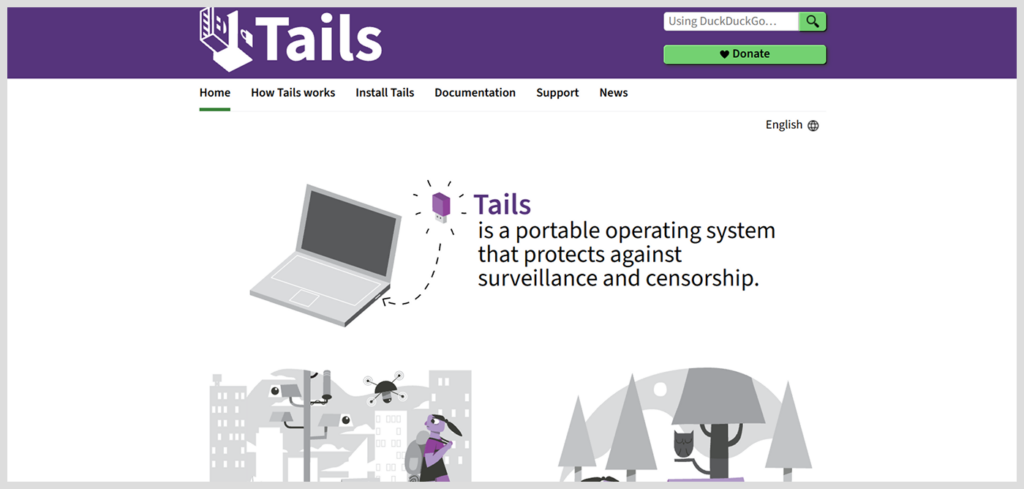
Let’s say chatting with family, friends, or participating in group discussions is your thing—Tails can be a solid privacy-focused option. Built around anonymity and security, Tails routes all communications through the Tor network, helping keep your conversations private and untraceable. Whether you’re exchanging messages or using secure communication tools available within the system, your data stays protected from surveillance.
And the best part? Tails is completely free. You get access to powerful privacy and security features at no cost, making it a top choice for users who prioritize anonymity without paying a premium.
Why it stands out
- Anonymity: Most messaging platforms rely on phone numbers or personal identifiers. Tails doesn’t require any phone number or personal account. Instead, it’s designed to keep your identity hidden by routing all connections through the Tor network, making it extremely difficult to trace your activity back to you.
- No central servers: Tails does not depend on centralized servers to store user data. All network traffic is anonymized through Tor, meaning there’s no single authority or company that can be pressured to hand over user information or shut the system down.
- Strong encryption: Tails comes with built-in encryption tools and secure applications that use battle-tested cryptographic standards, ensuring your communications and stored data remain protected from interception and surveillance.
- Free and open-source platform: Tails is completely free and open source. Anyone can use, modify, and inspect the code, allowing public scrutiny that strengthens trust and security.
- Privacy-first design: Unlike mainstream platforms that rely on central control, privacy is the core foundation of Tails. From network connections to local storage, everything is designed to minimize data traces and protect user anonymity.
- Useful built-in tools: Tails includes a range of privacy-focused tools such as secure messaging via Tor, encrypted email, file encryption, and anonymous browsing—making it a complete operating system for secure communication.
10. 1Browser
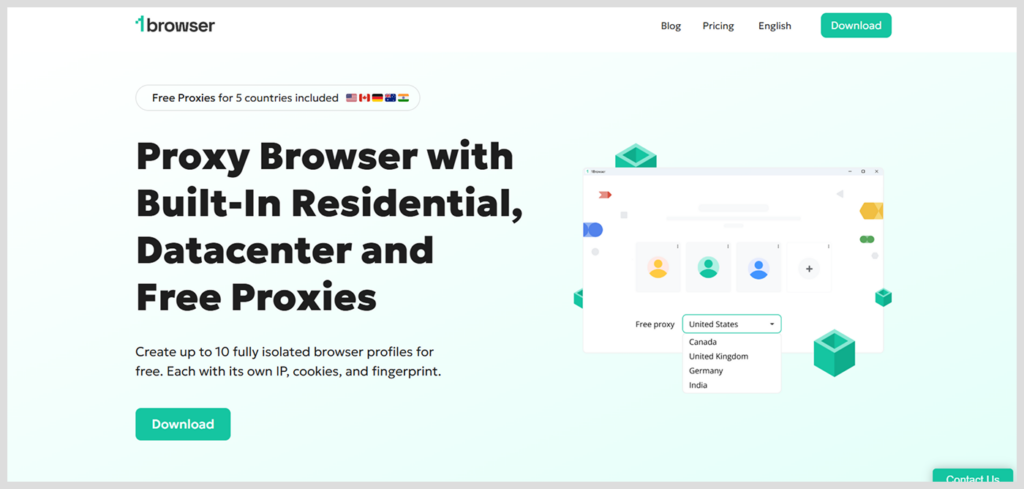
Regarded as a leading alternative, 1Browser can route your internet traffic through a built-in proxy server, granting you benefits similar to a VPN, like hiding your IP.
Users enjoy the usual perks that include hiding their IP address and appearing to browse from a different location, which unlocks geo‑blocked content. And since proxy servers are known for speed, there’s no slowdown to complain about.
Why it stands out
- It is fast: The platform does its best to balance speed with a solid encryption system, ensuring a sleek Internet surfing experience that knows no interruptions. Thanks to ads and track blockers.
- Good encryption: This network’s strong security lets you browse with confidence. No tracking, no compromise. Entities that would have sold their data information to ad companies won’t be able to do so.
- Masking of IP address: The subscriber’s IP address is very much protected from prying eyes by keeping the IP address secret, then assigning another IP address to fool trackers and phishing tools.
- Managing multiple accounts: This is the major standout feature of 1Browser, as the subscriber can open many accounts and log in without fear of repercussions.
- Simple interface: The design of the platform is less technical and intuitive for beginners. Easy to navigate.
List methodology: How we chose the best
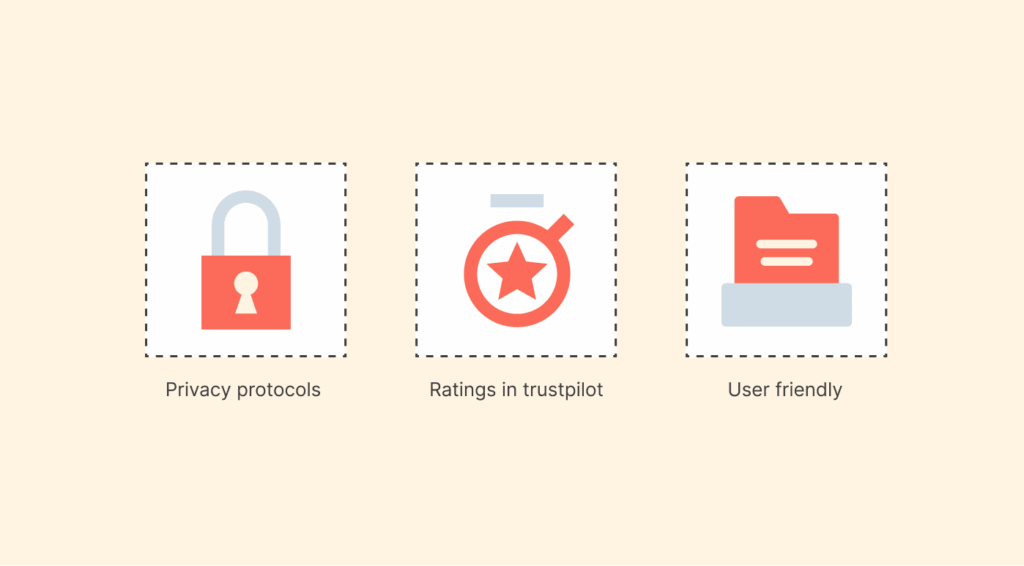
The quest to find the best Tor alternatives, including the top alternatives to Tor for free, was quite a tedious task because there are lots of them out there.
We painstakingly took my time to research and get the best alternatives to Tor. Despite finding numerous good ones, we had to narrow it down to the very best.
Here are the key things that we checked:
- Transparency and reputation
- Speed
- User friendly
- Core privacy features and protocols
- The strength of encryption
- Ratings in Trustpilot
- User-friendliness and compatibility
These factors helped us select the optimal options for you. Our evaluation standards are rigorous; for a deeper dive into browser security beyond privacy features, our analysis of the best, most secure browsers applies an even stricter threat model focused on maximum protection online.
Is the Tor browser illegal?
Upright citizens have a need to protect their data in today’s world of cybercrime. However, people with ulterior motives, like criminals, also use the Tor browser to hide their illegal cyber activities from prying eyes.
In the US, for instance, the NSA is highly suspicious of Tor users. Using Tor might put you in the spotlight for the government to monitor your activities, both on and off the Internet.
We previously mentioned how sceptical the government is of Tor users. Well, it gets worse when authoritarian governments come into the picture, as they have no tolerance for such users. Iran, Russia, and China are the usual suspects, and one needs to be very careful in these environments.
How safe is the Tor Browser?
We have hailed the Tor network as having the best security protocol for the dark web. However, because the dark web largely remains unregulated, your data could still be compromised in spite of the inoffensive built-in encryption.
You could get yourself into legal troubles because, as much as you might have gone there to seek contents that are legal, you could find yourself unknowingly granted access to illegal contents with legal implications.
Also, some governments have zero tolerance for such private browsers. Once you are in their spotlight, you could be in serious trouble for merely using platforms like Tor. It’s equivalent to swimming with sharks.
Since the platform acts as a gateway to the dark web, many users rightly question whether they can trust the browser. Bottom line: the risk level is high.
So, the tool is robust, but visiting hidden services carries elevated risk. Understanding the legal landscape is a critical part of that risk assessment. We break down the complexities in our article: Is Tor Legal or Illegal?
Why consider a VPN as a Tor alternative?

Amongst the alternatives to the Tor browser, VPN stands tall. With what it can do. Not only does it keep your data hidden, but the network also protects your data from threats that exist in the cyber world. Rare to find amongst Tor and other numerous alternatives.
Though there will always be the chance of your data being compromised, no matter how small this chance is, it’s highly unlikely because your data is hidden and secured. The subscribers can select servers of their choice depending on which geographic region they want to cover.
Final word
Tor is amongst the kings of encryption. So good, some of the other alternatives have built-in links to Tor for deeper privacy. However, it comes at a cost, drastically reducing the speed. The alternatives to the Tor browser make up for speed but don’t have encryption as good as Tor.
The Tor browser has legality concerns in China and Russia. If that’s your current location, you can opt for other alternatives, some of which have no legal concerns whatsoever.
Your final choice hinges on your personal threat model and which aspect you prioritize: anonymity or privacy. Tor is peerless for strong anonymity. For robust privacy in everyday browsing, things like blocking trackers, ads, and data collection come into play. And for that, the alternatives here often provide a better, faster experience. It’s up to you to decide which to use.
FAQs
Surprisingly, it isn’t. The platform was created solely to cater to the needs of the people, unlike some other networks with stakeholders who are waiting to cash in.
The Tor Project doesn’t have a traditional CEO. Instead, it’s led by its co-founder and President, Roger Dingledine, who guides the non-profit’s work on privacy software.
Yes. It achieves this by routing the user’s traffic through a global network of nodes that hide not just the user’s IP but also activities.
A lot of folks prefer VPNs to the Tor browser, but again, it depends on what the user wants to do with it.