Etsy is one of the world’s largest online markets where millions of creative entrepreneurs, artisan enthusiasts, and buyers who appreciate handmade, vintage, and custom products come together to do business.
However, the platform’s global influence has attracted many criminals whose focus is on exploiting vulnerable market participants. These scammers continue to cultivate new tactics, which include fake storefronts, counterfeit product listings, phishing schemes, payment fraud, and other scamming ideas known to them.
Most Etsy scams follow predictable designs, and identifying these plots early protects your wallet from costly mistakes. Whether you are buying your first handmade items or you run a shop, these 11 common Etsy scams explore how these scammers operate, warning signs to look out for, and practical steps you can take today to protect your money, personal information, and accounts.
11 most common Etsy scams – Quick list
Below are the most common Etsy scams to look out for today. They contain the warning signs that can help from being a victim.
- Counterfeit products: Imagine coming across beautiful accessories online. You make a purchase, but the vendor sends a cheap knockoff to you or none at all.
- Wrong address: A trickster intentionally sends your package to a wrong address and marks it delivered, so that when you want to track it, it will seem real, but you did not get the package.
- Account hijacking: A thief steals the identity of a trusted client you know, and uses it to send harmful messages to clients or run scam listings.
- Phishing or spoofing: Cyber thieves use forged email addresses that look like a real Etsy account, but they end up leading you to fake web pages and end up stealing your sensitive information.
- Fake reviews: Fraudsters use fake user accounts to promote their products online, giving it perfect ratings so that you will think that they are the best.
- Off-platform transactions: A seller asks you to make payments outside the real Etsy website so that they can dupe you out of your money.
- Fake shop: When a fraudster builds a fake store online with stolen product photos, thereby scamming clients with their money and then deletes the whole shop.
- Email harvesting: A fake buyer tricks a real vendor into giving away their private email address so that they can send them malicious messages outside of the marketplace.
- Fake checkout/payment problem: A trickster deceives a merchant into believing that their payment did not go through, and sends a fake link or square code to steal the client’s bank secrets.
- Influencer or free product: A fake internet star cons vendors by asking them to give out their products for free and end up scamming them.
- QR code verification: A scammer claims that his fake QR code confirms a purchase or identifies the buyer’s account, but when you scan it, you realize that it leads to phishing websites or you have installed malware on your device.
What are Etsy scams?
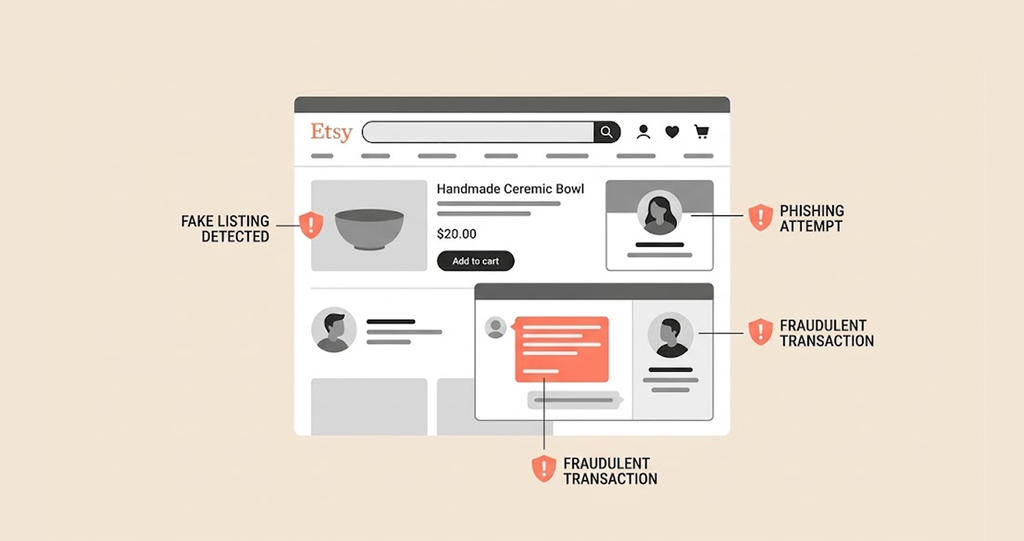
Etsy scams are those intentional lies that mislead sellers or buyers into handing over their money, goods, or personal details on the website. The platform is not responsible for these scams; rather, it is those bad actors online that are looking for whom to devour. Etsy is a decentralized platform, and fraudsters can set up a shop or send a message to trap clueless shoppers.
So this means that both the buyers and sellers are at risk here. As a merchant, you may be duped into purchasing counterfeit goods and fake shops.
How do Etsy scams?
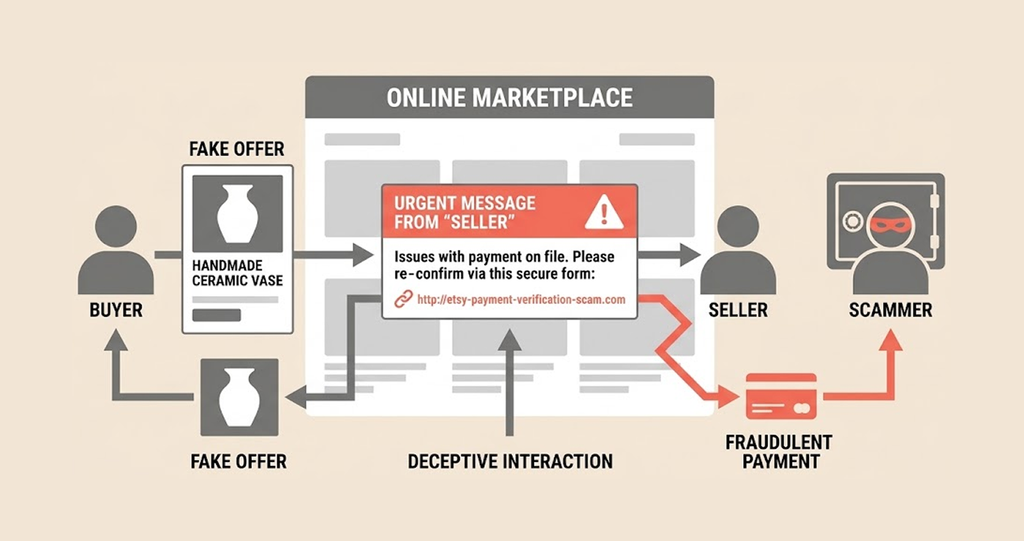
Most of the scams start with fraudulent vendors who deceive clients into believing they are real buyers, sellers, or Etsy’s support representative. These imposters cultivate trustworthiness through forged reviews, stolen product images, and polished storefronts. Once they achieve their aim of approaching users, they strike immediately.
These online swindlers mostly attract merchants with absurdly low prices. They will now convince their clients to make payments through channels like Crypto, Venmo, or PayPal. Making any offline payments may put clients in the position of being scammed. Once your transactions are not within Etsy’s protection, they cannot be traced, and the e-commerce site will not be responsible for your loss.
Bad actors online like to steal real Etsy accounts. They look for accounts that already have lots of nice stars and good comments from real shoppers. Because when buyers see such accounts, they will think the seller is safe and friendly. The very moment these bad guys take over the account from the user, they will start using it to manipulate merchants.
They make use of sneaky links to send them as private messages. If you click those links, they can steal your secrets or put bugs in your computer. This is how they steal your secret passwords, your money details, or your names, and you may not be aware. Scammers are always finding new ideas on how to cheat people. That is why it is super important to learn about their tricks so that you will not become a victim.
How to identify Etsy scams
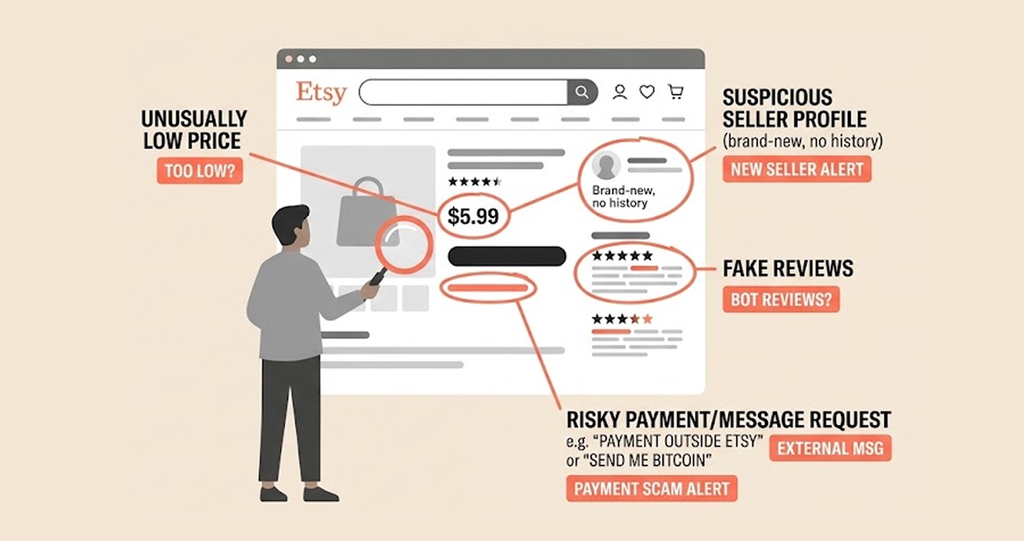
It is hard to pinpoint a trick on Etsy. These criminals try very hard to look like real shops. Yet they always follow the same pattern over and over again.
Unprofessional or inactive profiles
Real product creators are proud of their shops and love sharing pictures that tell you who they are and what they produce.
An empty shop means you should walk away. So watch out for these empty pages. Some of the bad pages don’t have profile pictures, and some are operating with stolen identity; they don’t have stories about their shop’s growth, and silly names made of random numbers.
Pricing too good to be true
These fraudsters make use of unbelievably low prices to trap clients into buying from them. They sell expensive goods for just a few pennies.
So always try to confirm with other shops first. If one shop is way too cheap and has no good reviews, do not trust it. They also make use of this slogan “buy two and take one for free” to make you rush, so be guided.
Requests for personal details
Genuine and kind vendors will not ask you for your personal information. They don’t need your bank card details or your house address to complete their transaction. Anyone who asks for your sensitive personal information outside the normal checkout button wants to steal from you.
Over-the-counter payment requests
Any vendor who pushes you to make payments with other apps like PayPal, Venmo, or Zelle instead of Etsy’s built -in checkout system is violating their rules. They want to take your money and run away.
Always make sure that you click the real checkout button through the platform’s official payment page to complete your purchase.
Misleading product descriptions
Always be sure to look out for vague writing and intentional grammatical errors. Sometimes their write-ups don’t match the photos, or they have just copied and pasted other product listings from different websites.
All these things are signs that they are con artists. Genuine vendors know their product perfectly, so they always take care to write clear, loving words about their products.
External URLs
Avoid clicking manipulative links from private messages or shop pages. These links take you away from the official website.
Their aim is to deceive you and plant malware on your devices by hiding bad computer bugs and fake login pages. If a seller tells you to leave the website to finish buying any product from them, say no right away.
Defensive or delayed communication
Good sellers respond to your questions openly and nicely. While bad sellers hide from these questions. They take days to reply, or some may get angry if you ask them for more pictures of their product line or shipping information.
Exploitative shipping and protracted delivery methods
Some criminals sell their goods at a lower price while making their shipping costs a million dollars to cover for their loss. Others will promise you an immediate delivery of your goods but never send it. If the shipping price looks ridiculous, or if they keep on extending their delivery time, stop buying.
AI-generated images or stolen identity
Be careful of those pages that only use good-looking photos or stock-styled pictures. Without any real shots of the main item displayed, you really need to properly vet the products.
Genuine vendors take pictures of their products and display them on a real table. So make sure to confirm any listing images you are unsure about. If you see any of the same pictures on ten different websites, then the page is fake.
Common Etsy scams – Detailed list
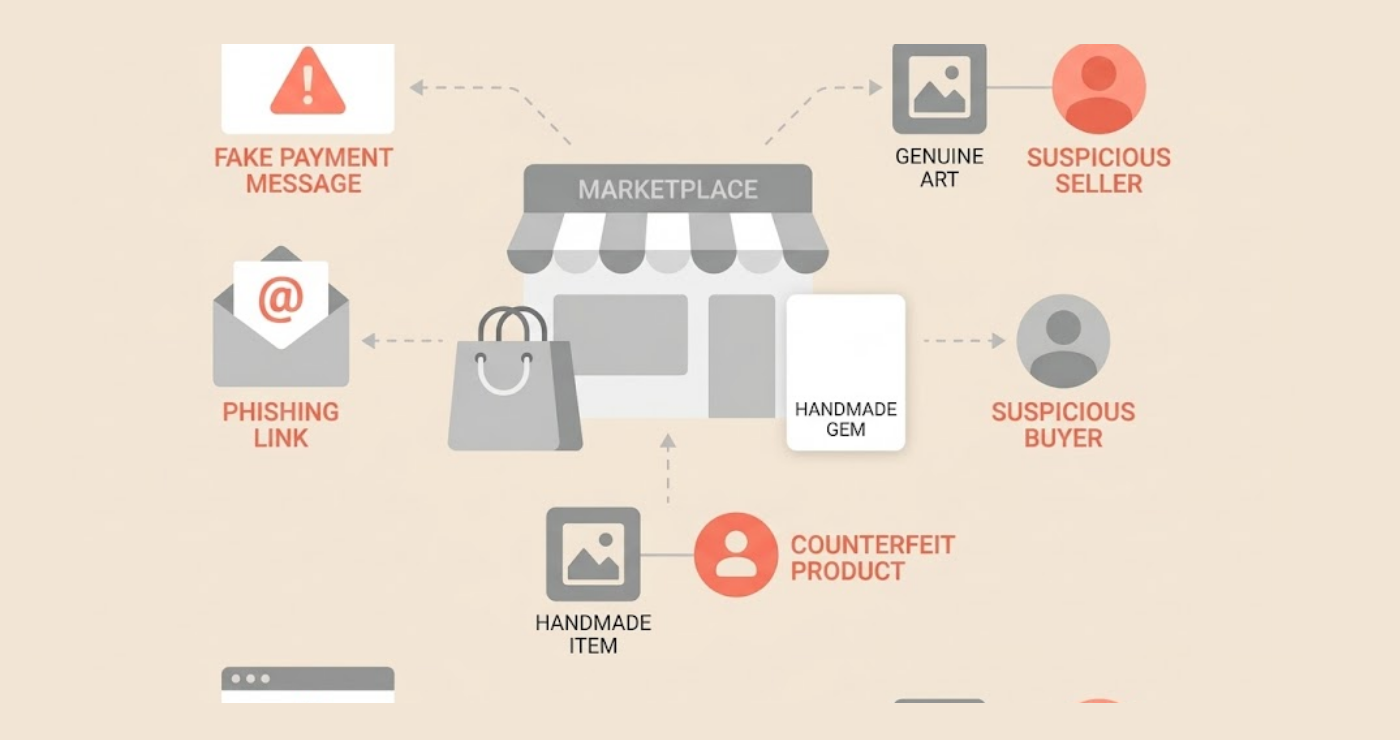
1. Counterfeit products scam
The fraudsters like to use quality product images from other websites to sell their cheap fake goods or handmade items, while direct fulfillment scams will sell off-the-shelf items at high markups under the disguise of being handmade or antiques. For instance, on the Etsy scam’s Twitter account, it was revealed that a single shop had sold close to 4000 pieces of fake jewelry as handmade before being caught.
To recognize these scams, consumers should research shops with inaccurate records, underpriced goods, and automated reviews. These scammers are deceiving online buyers by reselling inexpensive, factory-made jewelry from platforms like AliExpress and Temu at a massive rate as “handmade” or “vintage” items.
AliExpress itself is a legitimate marketplace, but buyers still need to understand how its marketplace model works and what risks to watch for when shopping there. Our guide on is AliExpress legit and safe to use explains what buyers should know before making a purchase.
2. Wrong address scam
Many of these con artists run scams on clients by shipping their packages to some random local address, and it will trigger a “delivered” status in the platform’s tracking system.
This tactic is used to create the illusion of a fulfilled order, leaving the buyer without the item while the system marks it as a complete purchase. These fraudsters leverage the time delay between tracking confirmation and the buyer’s actual receipt to escape with the money.
So merchants must verify the shipping addresses before checkout, be sure to open an Etsy case immediately if a delivered package vanishes, and also report these fraudulent transactions to Etsy support immediately.
3. Account hijacking scam
This type of scam happens when a criminal gets unauthorized access to a trusted buyer’s or seller’s account. They usually do it by stealing their login credentials through various means, such as phishing emails, data breaches, etc.
Once these cyber thieves get inside their account, they take advantage of their account’s reputation and trust. Since the account seems legit to buyers, criminals are able to carry out fraudulent activities without immediately raising suspicion.
For example, a hijacked seller account may be used to list fake products, collect payments without shipping any items, or send phishing messages to customers.
4. Phishing or spoofing
These scams contain email campaigns that often mimic official Etsy notifications and try to use it to trick users into revealing their passwords, payment details, or account information. This is one of the most common Etsy scams aiming at both buyers and sellers. Criminals may send email or in platform messages that look like Etsy’s official logo by mimicking their overall design.
These chats sometimes contain links to strange login pages that steal clients usernames, passwords, and payment details. Fake support messages will scare you by saying you will lose your account, your payment failed, or you should verify your shop right away.
Note that genuine Etsy chats show up in the form of a “From Etsy” folder in your inbox. Etsy will not ask for your password or bank details in their official notice. So make sure that you always check the emails, from which account they are coming from and whether they are legit.
5. Fake reviews
Scammers fabricate authenticity by purchasing their own products using a ghost profile account and leaving glowing five star reviews.
They flood their shop pages with canned feedback by drowning the real complaints and push their listings higher in the platform’s search results. Some bad sellers will even go and attack their competitors. They post fake, negative reviews to damage the image of honest shops.
Notice that these fake reviews often lack details; what you can only see are things like “great product!” without explaining why people should buy from them. To spot their tricks, you can look for a sudden wave of reviews within a few days; they can be identical words across different reviews, or reviewer profiles that have no other purchase history.
6. Off-platform transaction scam
A thief contacts you, whether you are buying or selling on the site, and urges you to make your purchase payment using PayPal Friends & Family, Venmo, Zelle, or crypto. They may tell you that it is easier, cheaper, or faster; they are lying to you.
Should you ever make any of your payments outside of the platform, you may lose Etsy’s Purchase Protection. This means, once you send money through another app, you cannot start a dispute to get it back because Etsy cannot intervene for you at all.
This trick usually works because these cybercriminals will always use a subtle manner of approach to manipulate users until they get what they want, which may be your money or products.
7. Fake shop scam
These swindlers can build an entire fake shop just to steal your money and run away. They use stolen product pictures, robot written descriptions, fake reviews, and super low prices to trick you into buying fast from their fake stores.
Some scammers even use artificial intelligence to set up a decent shop in just a few minutes, which confuses clients into believing that they are genuine businesses.
These bad guys often run their shops for a very short time, take the money, and then delete the store before you can ask for a refund. To stay safe on the shopping site, you should click on the shop’s name to check its history, see how long it has been open, look for matching graphics, and see when they last had their items sold to any clients. You must make sure to check out other new shops that have tons of sales and perfect reviews too.
8. Email harvesting scam
This particular trick hits Etsy vendors mostly, so online shop owners must know about it. Here, a thief sends you a message pretending to want to buy any item in your shop. They may claim that there’s a problem with a recent order; they can have a reference of a fake order number, or send a message such as, “Congratulations, your order has been placed.” Then, they ask you to provide your personal email address so they can resolve the payment issue or confirm the order details.
Just know that the thief only wants to move the conversation away from Etsy completely so it cannot watch or protect you. Once they have your email address, they can attack you with fake phishing emails, they will send ceaseless spam messages to you, or even try to steal your identity where Etsy cannot help you. The Etsy safety rule is so easy to follow: genuine buyers don’t need your personal email address to buy any item.
9. Fake checkout/payment problem scam
Here, these bad guys will send emails about payment issues, account verification, or order problems to lure victims into sharing sensitive information or visiting fake login pages.
If a swindler contacts a seller and claims that their payment failed during a checkout, don’t be deceived. They will manipulate the seller into believing that they must verify their bank details to get the failed payment.
Once the seller types in their bank details into that fake page, the thief will have access to their account and send all the money in it, including the money from their future sales, to their own bank account. Etsy never asks sellers to confirm payments after a sale happens. The money flows automatically based on the bank setup the vendor chose when they built their shop.
10. Influencer/free product scam
Bad actors use this gimmick on sellers, especially on new shops that really need people to patronise their items. If you receive any messages pretending to be brand ambassadors or bloggers who have a lot of followers, and they offer to show off your products to their fans if you send your product to them without any payment, that person is a fraud.
They will most likely not keep to their word; rather, they will take your free items and disappear. Some variations of these scams can cost you more than products. These fake influencers may ask you to pay for the shipping costs or an advertising fee before they help you to drive the targeted audience to your store.
This adds a cash loss on top of your stolen items. Make sure to check the influencer’s real social media profile to know if they are genuine before sending a single item to anyone who claims they are an influencer.
Look at their true engagement rate and see if real people talk to them. Don’t just check their followers, because scammers can buy online water armies that pose as real people just to defraud you. Sincere business partnerships will come as an enforceable agreement or a legally binding contract, not some private messages.
11. QR code verification scam
A thief sends you a message right after you make a real sale. They can pretend that Etsy needs you to scan a QR code to confirm your purchase, verify your bank details, or set up an account for you the right way. If you are using a mobile phone, the small screen will make it very easy to miss the fake web address. You might not notice that the QR code you want to scan opens a website that does not belong to Etsy.
They will start to demand that you input your bank information, your login details, or other sensitive details. Some QR codes can even cause more harm than just stealing your personal details; they can use it to install dangerous computer viruses or ransomware directly onto your phone or computer.
Etsy doesn’t send QR codes for checking your account or bank transactions. If you see a notification bearing a quick response, pretending to be Etsy support service, immediately click the spam button and report it right away.
How can I defend myself from Etsy scams?
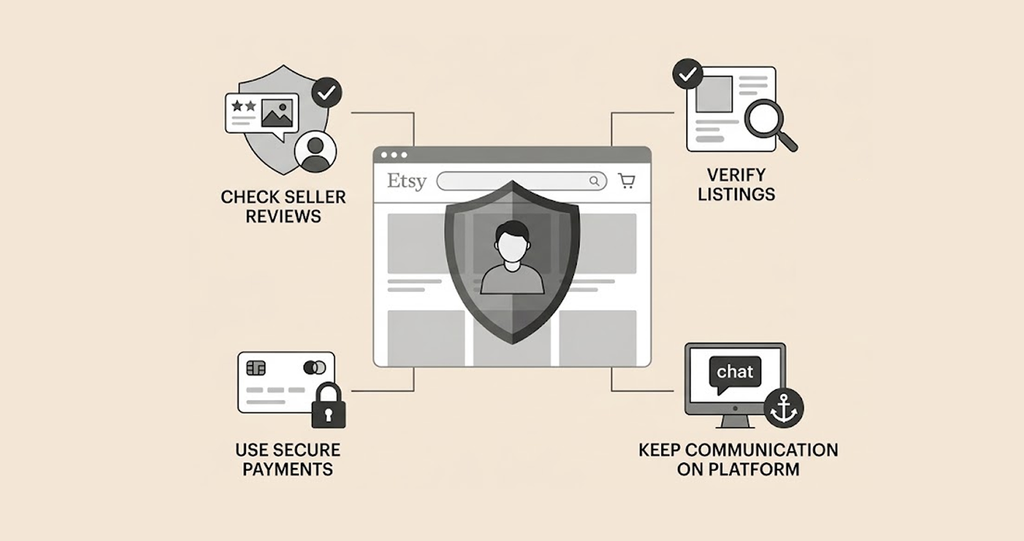
You can make sure you stay safe on Etsy with these constant habits:
- Select an authentic vendor that has a good reputation, a thorough, strong portfolio of revenue growth, and detailed reviews that describe the actual product.
- For your safety, make sure that all your communications and transactions are conducted entirely through Etsy’s native messaging tool and its secure checkout infrastructure. Don’t engage in any under-the-counter means of conversation or transaction, no matter the reasons the scammer comes up with.
- Be sure to avoid any private messages, strange addresses, short web links, QR codes, or product listings, especially when they are requesting your credit card details or login information.
- Activate 2FA (two-factor authentication) on the account you own & connect your email address. This step will prevent the bad guys from easily getting their hands on your account, even if they guess your password.
- You must create a strong layer of defence by using a unique password for your account. Choose one that you have not used in any of your other websites.
- Be careful of vendors that use super cheap items paired with countdown clocks or urgent “limited stock” warnings.
- Carefully inspect any product descriptions that you want to purchase and look out for any unusual details, missing sizes or material information, or awkward phrasing that reveals the use of system-generated translation.
- Carry out a thorough investigation of the merchant’s track record, matching the graphics, contact details, and their recent sales activities before you buy anything from them.
- With a VPN, you can hide your connection and keep your personal information anonymous if you are shopping using a public Wi-Fi. A VPN will keep your account activities and payment information hidden from anyone watching the network. With a VPN, you can hide your connection and reduce the amount of information exposed when shopping over public Wi-Fi. However, not every VPN service is trustworthy, and scammers also use fake VPN offers to steal money or personal information. Learn more about VPN scams and the warning signs to watch for before choosing a service.
- To evade the Etsy scammer list, make sure that you run a reverse image search on any product photo that looks like a stock photo or seems too perfect. Once the exact image appears on any of these platforms (AliExpress or multiple random websites), know that the listing is fake.
What do I do if I get scammed?
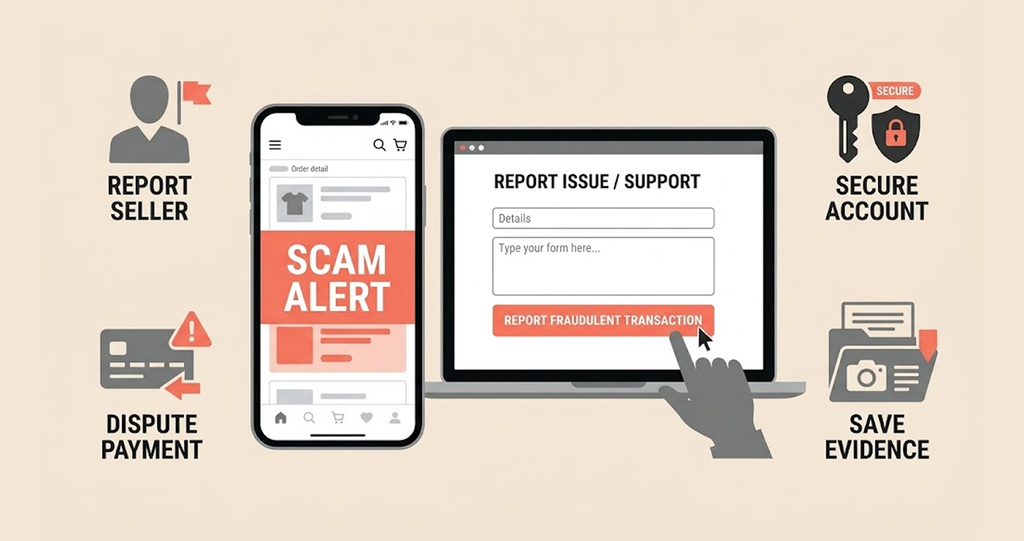
If you’ve been scammed on the marketplace, follow these steps:
- Contact the vendor quickly through Etsy’s messaging system. Any mix ups can affect the shop negatively, so notifying the seller directly will give them a chance to solve the problem before you complain to the platform.
- If the merchant refuses to handle the problem, then you can go ahead with launching a formal complaint against the shop through the help center. Make certain that you do this within six months of your purchase, because Etsy only allows Purchase Protection claims during this time frame.
- Make sure to keep a record of everything you buy as evidence of the transaction. Ensure you take listing’s screenshot, all your messages, your receipt, and any tracking information. These records help your case if Etsy or your bank should demand for it.
- You can also contact your bank or your credit card company and ask them for a refund if the platform cannot resolve the issue. Is Etsy safe for credit cards? Yes, Etsy’s checkout system will not expose your card details to sellers. What if a scammer tricks you into paying them off the platform, then your bank becomes your next safety line.
- Make sure to report any phishing emails or strange messages to both the platform’s support and your email provider. This will help it to locate active scammers and also protect other users.
- If you mistakenly click any suspicious link or scan a QR code from a stranger, make sure that you run a virus scan on your device to avoid bad bugs.
- Make sure that you activate the advanced threat protection software in your device immediately to be able to identify scam websites, block bad trackers, and lower your risk of future attacks.
With these procedures you can recover faster from any scam, and it will be very difficult for these fraudsters to use the same trick to catch you again.Though they cannot help you to undo the scam.
Is Etsy a Legit Website?
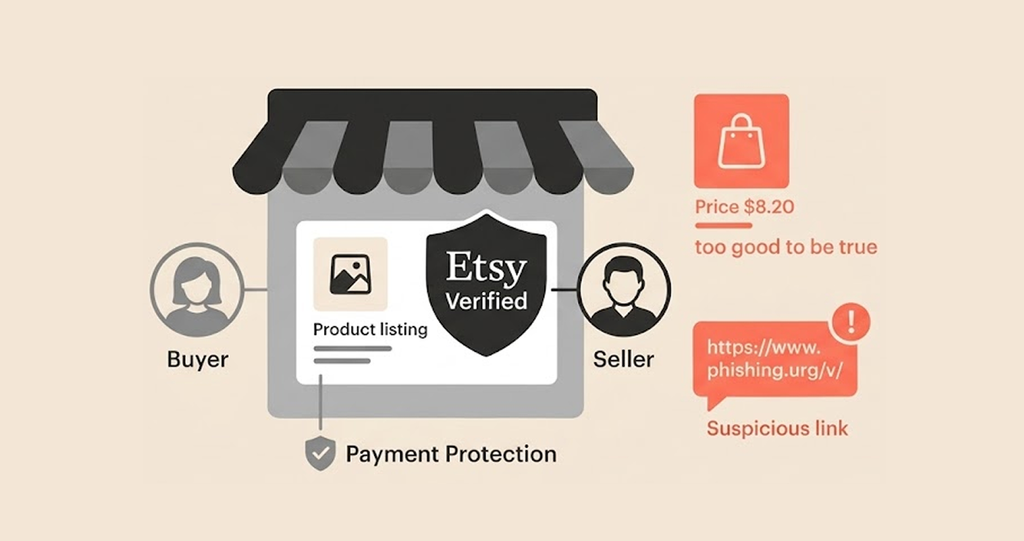
Yes, Etsy is a legit and secure online marketplace. It was established in Brooklyn in 2005. The website doesn’t itself produce items, retain, or ship products. At Etsy, vendors handle the listing of the product themselves, both distributing, shipping, and customer service.
That is to say, your safety as a buyer and the quality of your transactions on Etsy lie heavily on the particular vendor you choose to buy from and not the platform itself. So both buyer and seller are at risk of fraudulent acts by actors who use various means to exploit money or products from merchants.
Etsy uses TLS (Transport Layer Security) encryption, keeping user payment details safe and anonymous. It supports PayPal, Apple Pay, and Google Pay and backs authorized purchases made via its purchase protection program. Should a consumer come across an issue with their transactions, Etsy will assist in reviewing the case, and they will issue a refund if the vendor has committed a policy infraction.
Etsy runs millions of online shops, so they cannot keep track of all the scammers on the platform. Many of its clients are trustworthy, talented creators, but some vendors are not.
Etsy is not the only marketplace where buyers need to consider both the platform and individual sellers. Mercari follows a similar marketplace model, so shoppers should also understand the platform’s legitimacy, buyer protections, and potential risks before making a purchase. Here’s our article on Mercari scams covers these points in more detail.
Tips on how to prevent Etsy scams for sellers
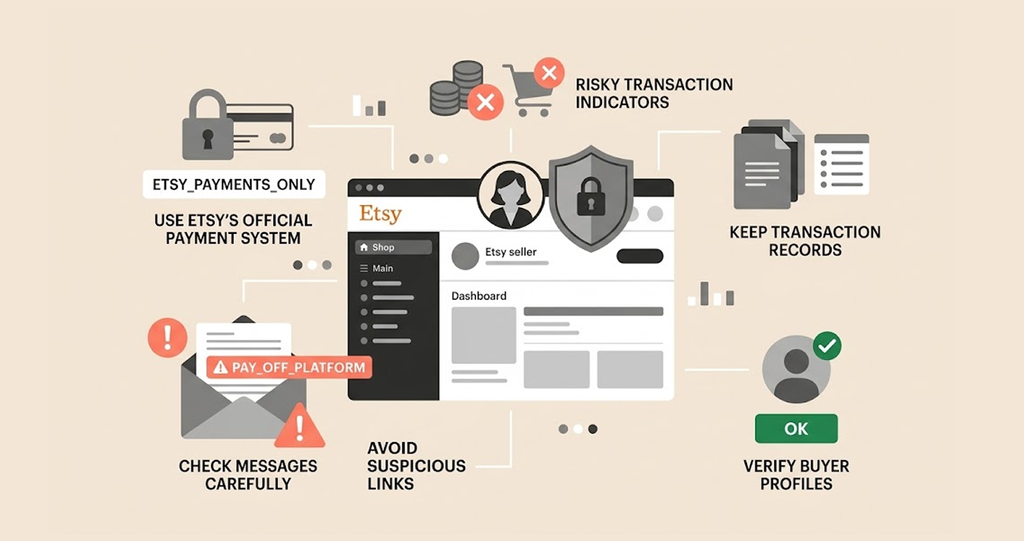
Etsy sellers can get scammed as well. If a seller gets scammed, it is very serious because these sellers lose both their items and their cash at the same time. So here is how to stay safe:
- Don’t let anyone pay you outside Etsy, ever, even when the buyers claim that it is better & faster. Off-platform payments destroy the protections you have & can make Etsy ban your services for breaking rules.
- Scrutinize the buyer’s personal information and also their delivery addresses before you dispatch high-value or customised merchandise. Sometimes these con artists will buy items using wrong addresses to manipulate people during an argument.
- Upload straightforward details on the return and refund policies of your shop page. These rules will protect you during an argument, and they show real buyers that you are running a professional business.
- Insert branding on your product photos so that your competitors and fraudsters will not steal from you and use them on their fake stores.
- Make sure to use shipping methods that include tracking and insurance, especially on your expensive orders. Tracking your goods gives you real proof of delivery if a buyer files a fake complaint.
- Be vigilant always so that you will not become a victim. In case a buyer sends you an urgent or weird request, like a message that asks for your private contact details, or chatting with them outside the Etsy page, or payment outside Etsy’s checkout, report it immediately.
- Always visit your account from time to time for any strange activities like changing your bank details, spam messages sent from your account, or listings that you did not make. If you notice anything strange on your page, report it to the platform (Etsy) immediately.
- If a buyer claims to be an influencer and requests you send your products to them for free, thoroughly check their social media profile before you send anything. You can easily spot fake engagement and bought followers if you look closely.
Running a shop on Etsy (and most similar platforms) brings various rewards, but scammers don’t just target buyers. Sellers should also stay on alert.
Conclusion
Etsy continues to be among the safest and most loved online shops worldwide, and for good reason. Millions of genuine individuals build trustworthy businesses here daily. And it also attracts millions of buyers who are looking for high-quality items and handmade products you can’t find anywhere in the physical marketplace. The company is completely real, safe, and they update their tools steadily to block bad guys.
But thieves go to places where people like to spend money. On Etsy, buyers spent over 12.6 billion dollars on buying goods in 2024. So fraudsters will always try hard to trick people and make it look real. The good news is that every single gimmick introduced on this list has the same pattern. So make sure that you remain on the Etsy website and ask questions about any activity that seems strange to you.
Keep all your discussions and transactions inside the platform. Do not reveal your sensitive information to anyone in a message. Verify everything on your main computer dashboard by yourself. If you are having any weird feelings about any merchant, know that it is a scam, so trust your gut.
FAQs
Write to the vendor on the messaging service that is on Etsy and ask for Purchase Protection. If no responses come in, report the scammer’s shop to the help center. But make sure to confirm the scam claim first. You don’t want to point fingers wrongly and tarnish the image of the shop by mistake.
Yes, Etsy’s checkout system will not expose your card information to your vendor. Its payment system uses high-grade encryption to process all card payments. So it is safe as long as you finish your purchase through Etsy’s official checkout page. You can encounter problems only if you were tricked into paying through an outside channel like PayPal Friends & Family or a direct bank transfer, where Etsy can no longer keep you safe.
Genuine emails sent by Etsy officials come in the form of an address that ends with @etsy.com. While scams use addresses that look like the real thing, you will know that it is not. It comes from @etsysupport.com or @etsynotifications.net. You must send any email straight to your spam folder if it creates rush pressure, asks for your password, requests payment confirmations, or adds weird links. When you are not sure about it, type etsy.com directly into your browser to check your account status.
Yes, Etsy scams for vendors include phishing emails pretending to be from the platform’s official support, con artists asking for off-platform payments, QR code verification tricks, email-stealing attempts, fake influencer requests for free items, and billing errors where a buyer will claim that they did not receive the goods they bought while they actually did. New vendors face these challenges often, although scammers also target established shops too. Staying inside Etsy’s platform for all chats and payments gives you the best safety defense.
Etsy’s Purchase Protection program covers buyers who did not really receive their package, or items that look very different from the listing description. As long as you bought the item through Etsy’s official checkout and reported the issue within 180 days of your purchase date, you will be refunded. The website checks each case one by one, so the outcome may vary depending on the situation. If Etsy’s Purchase Protection does not apply to your issue, especially if you paid outside of the platform, then you are on your own.