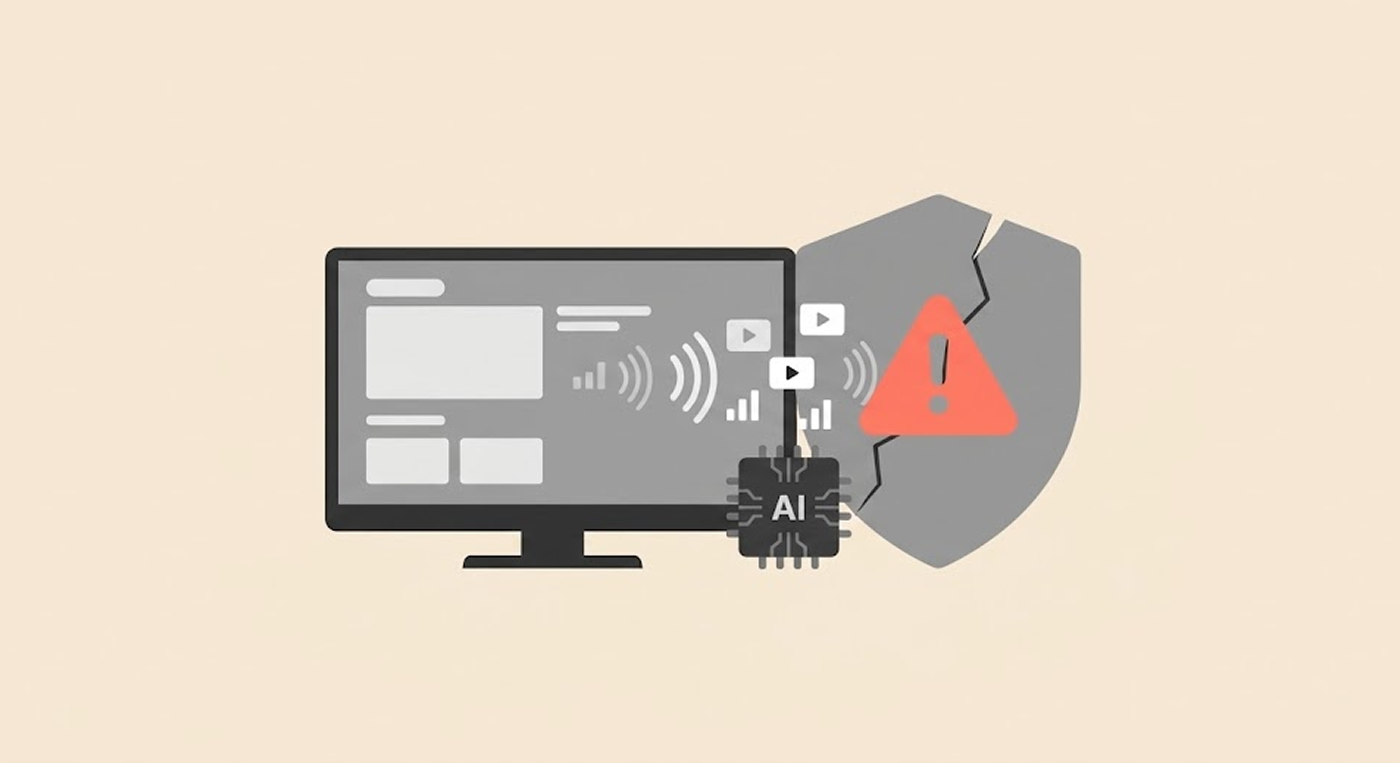
Recently, a security researcher found something alarming with regard to his Samsung TV. When he observed some very targeted ads running on the screen, he decided to check. As it turned out, the researcher discovered developments in the TV’s software that made him think of it as a privacy disaster.
The researcher, who goes by the name log4j online, was able to get administrative access to his 2025 Samsung TV for research. Further, he took a close look at the Tizen operating system that operates the TV. His findings suggest the TV collects detailed data about what users watch and do. Samsung has not publicly responded to the claims.
What the researcher found inside the TV
According to the researcher, the television has a voice feature that is always activated. Despite users not saying a trigger word, the TV continues to stay active. The television also uses a convolutional neural network that is region-specific AI. This means it tracks activity in different apps like YouTube by keeping track of what videos the users watch, what ads they skip, and how much of the video they watch.
Further, the system collects screenshots and audio data; it also uses an advertising identifier called AID to track users across devices. The researcher believes this heavy background processing explains why Samsung TVs often feel slow.
The voice function is the most alarming part. The researcher says it does not wait for a wake phrase. It stays listening in the background. The TV then classifies sounds it hears. It sends the results to Samsung’s servers.
For TVs without a built-in microphone, the researcher claims the system looks for connected devices that have one. It can use a soundbar or a Bluetooth speaker to capture audio. The data then goes to Samsung’s servers.
Another striking claim involves sound detection. The telemetry of the TV reportedly includes counters for dog barking and baby crying. These events fall under an identifier called EV201/SOUNDSENSOR_ON.
Samsung does advertise Pet Care and Family Care features on its 2025 Vision AI TVs. These features use on-device AI to detect sounds and send alerts through the SmartThings app. However, the researcher suggests the counts of these events also go back to Samsung.
The OpenAI ban and partner concerns
According to the researcher, he employed OpenAI tools while carrying out his study and indicates that he limited their use to local reverse engineering on his own devices. OpenAI later suspended his account for Cyber Abuse. An email regarding the matter specified that he was guilty of violating usage rules. However, the researcher claims that he never utilized OpenAI for discovering or exploiting weaknesses.
The penalty amounted to around $500 in subscription value and credit resets incurred. The incident raises speculation about how AI firms handle security research. Moreover, some users have reported similar experiences, yet there is no verification of their accounts.
The researcher expressed concern regarding the data partners of Samsung. He mentioned that the TV transmits information to about 400 partners which means that they can track consumers easily. This broad sharing of viewing data could expose users to extensive tracking. However, the claims about partner data flows remain part of his ongoing investigation.
The response from Samsung and previous controversies
Samsung has not issued a public statement about these findings. The company previously said its viewing-recognition feature requires user consent. About a decade ago, Samsung faced criticism over its TV voice recognition policy. The company clarified then that only commands spoken after pressing the remote button were collected.
Samsung has also removed smart TV apps over concerns about residential proxy software, raising separate questions about the software running on its televisions.
The claims remain unverified. The researcher promised a full technical write-up of about 44 sections. That report has not yet appeared. Until independent researchers verify the findings, they remain allegations.
Hugging Face engineer ngxson conducted a partial test. Using a Flipper Zero device, he observed a rooted Tizen TV open its microphone for about five seconds. It then stopped. He noted that his TV had modified settings, so an unmodified TV might behave differently.
Samsung is not the only brand facing such claims. In September, an investigation into LG smart TVs showed they mapped devices on home networks and captured audio in standby mode.
Smart TV data usage is now under the scrutiny of regulatory bodies. Two years ago, the privacy data regulator of the UK assessed the collection of TV viewing information by smart televisions. It uncovered two main issues: transparency and consent. Some of the manufacturers complied with requests for disclosure.
If a user hopes to limit tracking, there are several things they can try to do. They can turn off the voice recognition feature using the TV settings – or check the privacy settings and permissions for each application. Furthermore, disconnecting the smart speakers or sound bars from the TV can be another way to prevent tracking; checking the SmartThings privacy settings can also help.
