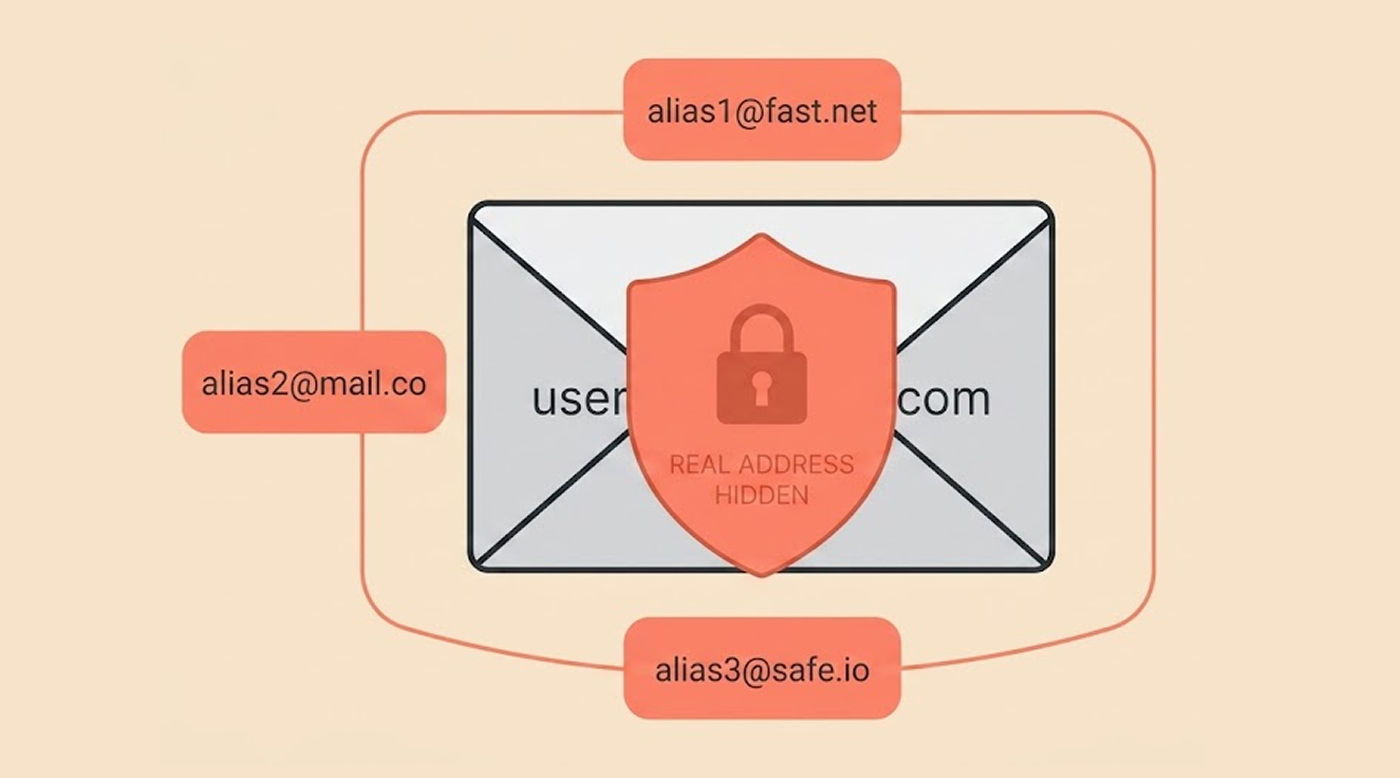
Brave just gave its users a new way to guard their privacy online. The browser now lets you create fake email addresses when you sign up for websites. These fake addresses hide your real one from every company you sign up with.
Brave built this feature to fight two problems at once. The first is plain old spam. The second is sneakier. Companies often use your email as a tag. They track you across different sites and apps with it. Brave wants to break that link for good.
How Brave’s email aliases actually work
The new tool arrived with Brave version 1.94 on August 27, 2026. It works quietly in the background once you turn it on. Users must first set up a separate Brave Account to use the feature. After that, aliases pop up right inside the sign-up process. Click any email box on a website, and Brave offers to build a fresh alias for it.
Every message sent to that alias lands in your normal inbox. But the website itself never learns your true address. Say a shopping site starts sending you junk mail. You can just switch off that one alias. Your main inbox stays clean, and every other account stays untouched.
You can also manage your aliases anytime. Head to Settings, then Autofill and Passwords, then Email Aliases. Brave currently offers five free aliases per person. A paid plan with more aliases is coming later, according to the company. Brave also says it plans to bring this same tool to phones and tablets soon.
Brave explains how it handles this data in its own privacy page. The company stores your main email and the aliases you create. It forwards every message straight to your real inbox. Brave states it does not log the contents of your emails or track who sent them.
Standard spam and virus checks still run on those messages, though. Brave also says all stored messages stay encrypted, and the whole system runs on Amazon Web Services.
Why Brave says this move matters for privacy
Brave already blocks trackers and cookies inside the browser itself. But the company says email breaks that shield in a sneaky way. Cookies can be kept separate between different websites. Company servers, though, can still trade information behind the scenes. Your email address often becomes the thread that ties it all together.
Picture two unrelated stores. Both know your email. They can quietly swap notes and build one bigger profile of you. Brave’s new tool aims to cut that thread. A different alias for each site makes that kind of matching much harder to pull off.
Microsoft Edge’s built-in Secure Network VPN, powered by Cloudflare, encrypts browser traffic and hides users’ IP addresses. It offers 5GB of free monthly data but only protects Edge traffic, with no manual server selection.
This is not a brand-new idea. Apple already offers something similar called Hide My Email. Independent services like SimpleLogin have offered this same trick for years. What makes Brave’s version different is where it lives. It sits right inside the browser people already use daily. That means more regular users may actually try it out. Most people never go looking for a separate alias service on their own.
How people are reacting to the new tool
Early response to the feature has leaned positive so far, based on online discussion. Many users like having one email per website. It makes spam easier to trace back to its source. If one alias gets flooded with junk, you know exactly which site leaked it. Shutting it down takes just a few clicks.
Some users have raised a fair concern, though. Every forwarded email now passes through Brave’s own servers first. That means trusting Brave with a piece of your daily traffic. A Reddit thread discussing the launch shows a mix of praise and caution from users. Coverage from outlets like Neowin and Reclaim The Net frames the update as a useful, if familiar, privacy step.
Brave’s support page lays out more detail on how the Email Alias system works behind the scenes. The company also published full release notes for version 1.94.117, and a longer breakdown on its privacy updates blog.
None of this makes email tracking disappear completely. Companies can still find other ways to link your activity together. But Brave’s move removes one of the simplest tricks: reusing your one true email everywhere you go.
By splitting that single address into many, Brave hopes fewer companies can quietly connect the dots on you. Less spam reaches your main inbox too, since junk mail now has a specific culprit behind it.
For now, the feature stays limited to desktop. Mobile support is planned but has no confirmed release date yet. Anyone curious can try it today by updating Brave and setting up a free Brave Account.
