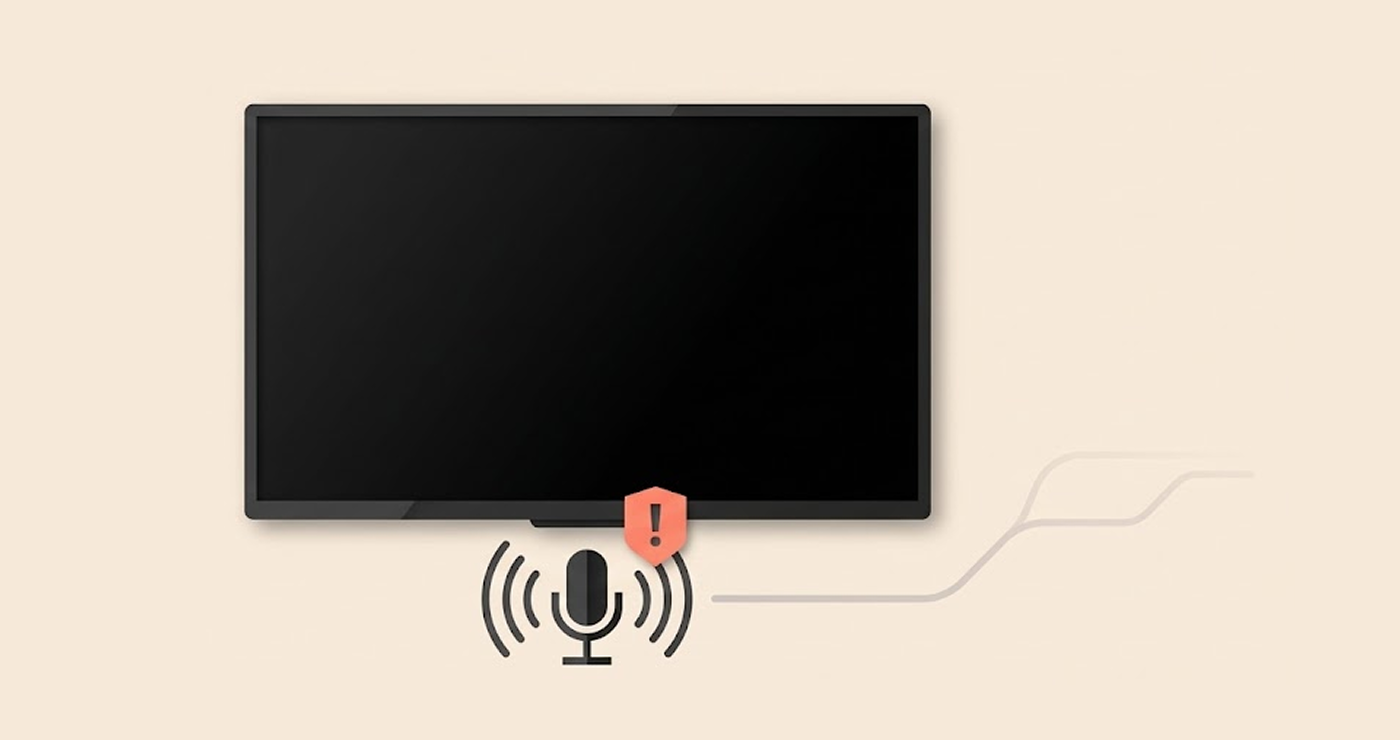
A recent study done by Gamers Nexus, Level1Techs, and other security experts has highlighted new problems associated with LG smart TVs.
The team tested retail LG OLED televisions, including the G5, and examined their network traffic and internal behavior. The 135-minute investigation found more activity than many owners might expect from a television.
The most striking finding involved the TV’s microphone. Researchers demonstrated that an LG TV could capture clear audio while its display appeared to be off in standby mode.
They also disconnected the TV from the internet and found that it could continue storing audio locally. When the network connection returned, the stored data could then be uploaded.
That does not mean every LG TV is secretly being hacked or that attackers are currently listening to owners. Tests demonstrate the capabilities of both hardware and software.
The security threat is that of what can be achieved by the attacker once he takes control of the TV. There has been no response from LG regarding the findings as of September 8th.
The TVs also scan the home network
The researchers found another concern: LG TVs can look beyond the TV itself. Network captures showed tested sets discovering other devices on the local network.
They included mobile phones, computers, smartwatches, and other connected hardware. Additionally, the televisions were collecting IP addresses of devices inside as well as information related to nearby Wi-Fi networks.
That information can reveal a lot about a household. A TV may be able to determine that a home contains several phones, computers, smart devices, and other network equipment. On its own, that may seem harmless. But the information becomes more useful when combined with other data.
LG Ad Solutions already promotes its ability to use first-party Automated Content Recognition, or ACR, data for advertising. The company says its system can identify viewing behavior across live TV and streaming content. It also markets cross-device advertising that can reach beyond the TV.
LG Ad Solutions currently says it reaches 216 million LG smart TVs globally. It also advertises access to 363 million secondary addressable devices in the U.S.
ACR can track more than LG’s built-in apps
The investigation also looked at ACR, which is not unique to LG. ACR creates a digital fingerprint from audio or video and compares it with known content. This can help identify shows, movies and advertisements.
LG’s own privacy documents describe ACR as technology that can identify content from sources such as set-top boxes, game consoles and media players. The company’s documents also say viewing data can include the program watched, viewing duration and input source.
LG Ad Solutions openly markets this data for audience targeting. Its website says its ACR technology can provide information about programs, movies, ads, gaming content and streaming apps shown on LG TVs.
The privacy debate is not new. In May, Texas Attorney General Ken Paxton said LG had settled over how it collected users’ viewing data. Now, LG has to spell out what it collects and make it easy for people to opt out.
The lawsuit accused LG of taking in viewing info without making it clear or getting real consent. The new investigation raises a separate question: what happens if someone exploits the TV itself?
Security flaws could turn privacy risks into an attack
Researchers working on the investigation also identified remote-code-execution vulnerabilities in LG’s webOS. This is a very dangerous vulnerability. This allows the attacker to make the machine execute code without the consent of its rightful owner.
However, the researchers haven’t disclosed the technical information. They reported the vulnerabilities to LG and are keeping details private while the disclosure process continues.
That distinction matters. So far, there’s no sign that criminals are actually using these flaws to watch LG TV users. Instead, it showed that a compromised TV could become a much more serious security problem.
An attacker who takes control of a TV could potentially use its position inside the home network to gather information about other devices. Access to microphone functions could also turn the TV into a listening device.
The potential for abuse of LG’s smart TV platform has already been demonstrated. Security firm Spur found that more than 42% of apps available for download on LG’s webOS store contained residential proxy SDKs, which could turn a user’s television into an always-on proxy node for third parties.
LG has continued releasing security updates for its TVs. Recent LG support pages show patches for issues involving privilege escalation, authentication bypass, arbitrary code execution, and path traversal.
What LG TV owners should do
Owners do not need to throw away their TVs. But these findings are a good reason to treat smart TVs like computers.
First, install the latest firmware available for your model. LG continues to issue software and security updates for supported TVs.
Next, review the TV’s privacy settings. Disable viewing-data collection, personalized advertising, and voice features that you do not need.
LG also supports direct voice recognition on some models. Features such as “Hi LG” can wake a compatible TV even when the screen is off.
For stronger protection, put your TV on a separate guest or IoT network. That can reduce what the TV can reach if someone compromises it.
Lastly, consider using the television as a screen instead of a connected source of entertainment on the web. An external streaming device can reduce the amount of data and network access handled directly by the television.
The bigger lesson goes beyond LG. A modern smart TV is no longer just a screen. It may have microphones, software, networks, and advertising capabilities.
When the screen is off, it doesn’t always imply that the computer within the screen is turned off.
