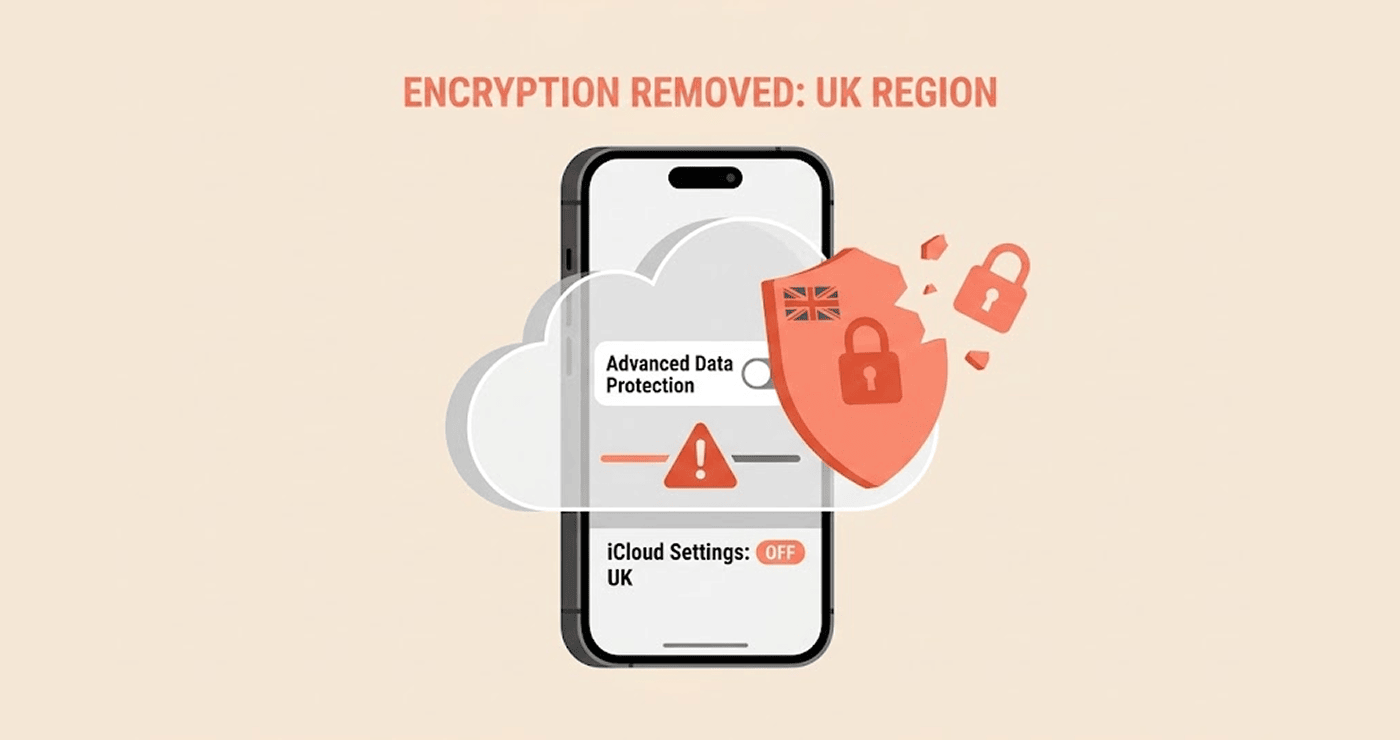
Recently, the technology conglomerate Apple modified its security features for millions of users in the UK. This change has emerged after government officials issued guidelines on data storage access.
The tech company has reportedly withdrawn its high-security tools from the accounts of users in the UK. This has caused a stir among proponents of consumer rights and digital security as well as privacy activists.
Surrendering advanced safeguards under official pressure
The UK authorities demanded that they have access to encrypted information about users. In light of legislative requirements, the company was compelled to opt for either changing its security systems or leaving the domestic market altogether. The representative of the company noted that they felt extremely bad because of the termination of the most secure functions of their service for local users.
The company announced it had to stop applying the most modern encryption technology for clients in the region. Thus, local consumers will have no opportunity to apply the highest-level defense features in their cloud accounts. Existing account holders will slowly get phased out of top-tier online protections as policies take full effect.
Ministers rely on legacy surveillance statutes to compel tech providers toward complete compliance. Authorities argue that unrestricted law enforcement access helps stop dangerous elements online. However, cybersecurity experts insist that weakening system defenses leaves standard users open to dangerous cyber intrusions.
Furthermore, civil liberties groups assert that government regulations severely weaken basic consumer expectations for digital privacy. However, law enforcement officials insist that warrants are critical for investigating sophisticated cases of crime. Nevertheless, technology experts argue that the removal of protective measures creates even more weaknesses in the infrastructure that supports society.
Structural vulnerabilities in cloud storage solutions
Removing high-level encryption alters how external servers handle private digital assets. Furthermore, non-encrypted files sitting on remote servers become accessible if state agencies present valid legal orders. Photos, documents, and system backups now sit inside standard storage vaults.
Engineers emphasize that building deliberate backdoors creates massive liabilities for everyday consumers. Furthermore, criminal syndicates eventually find and abuse security gaps created for government inspection. Disabling complete encryption allows company servers to hold decryption credentials directly.
When account holders lose exclusive key ownership, overall cloud protection drops significantly. Software specialists warn that these compromises turn digital storage into primary targets for hostile actors. Customers are left with far fewer built-in tools to shield sensitive personal records.
Besides these immediate technical vulnerabilities, standard cloud architecture relies on centralized server management. Without end-to-end controls, third-party operators can review user files during routine maintenance operations. Consequently, personal records face heightened exposure from both authorized government queries and unexpected database breaches.
Industry shockwaves and global implications
Major technology rivals monitor these developments closely as legal battles unfold across Europe. Moreover, executives at popular encrypted messaging platforms reiterate their commitment to user security. Signal has also expanded its privacy protections by introducing encrypted backups for iPhone users, giving users another way to protect sensitive data stored with the service. Several firms openly state they would exit the market before breaking end-to-end encryption promises.
Proponents of privacy view government demands as an encroachment on the private lives of individuals. In addition, civil rights organizations believe the removal of consumer mechanisms sets a dangerous ‘precedent’ around the globe for other regions. Overseas governments might soon push similar legal orders against major tech manufacturers.
Security researchers point out that weakening security measures rarely stops sophisticated bad actors. Instead, dangerous groups simply migrate toward independent open-source encryption tools. Standard citizens suffer the most because their daily digital tools lose critical defense barriers.
Therefore, global market analysts expect broader pushback from international privacy coalitions. Also, the pressure placed on tech companies by the regulatory authorities and consumers makes firms adjust the implementation of safety features to the needs of different regions around the world.
The unfolding future of mobile digital privacy
Consumer rights advocacy groups urge the officials in charge of the surveillance and enforcement policies to rethink their approach. Nevertheless, politicians are firm in the belief that the needs of national security take precedence over individual privacy. Lawmakers are unwilling to grant tech firms complete confidentiality in terms of their operations in public spaces.
Hardware users must reconsider how they store private photos and confidential files moving forward. Therefore, tech analysts advise citizens to utilize alternative offline backups or secondary encryption programs. Using only basic cloud services cannot be a guarantee of absolute data safety.
Notably, this battle signifies a crucial shift in tech regulation and consumer protection. Similarly, there is a delicate balance between public safety demands and individual digital privacy – which is still remaining intensely fragile. Device owners around the world must watch closely as governments challenge global tech standards.
With the amount of regulation increasing around the world, consumers need to resort to self-security practices. Thanks to the use of local hardware storage solutions, users receive better protection against continuous changes in regulations. Digital privacy requirements will keep changing as companies comply with the demands of regulators.
