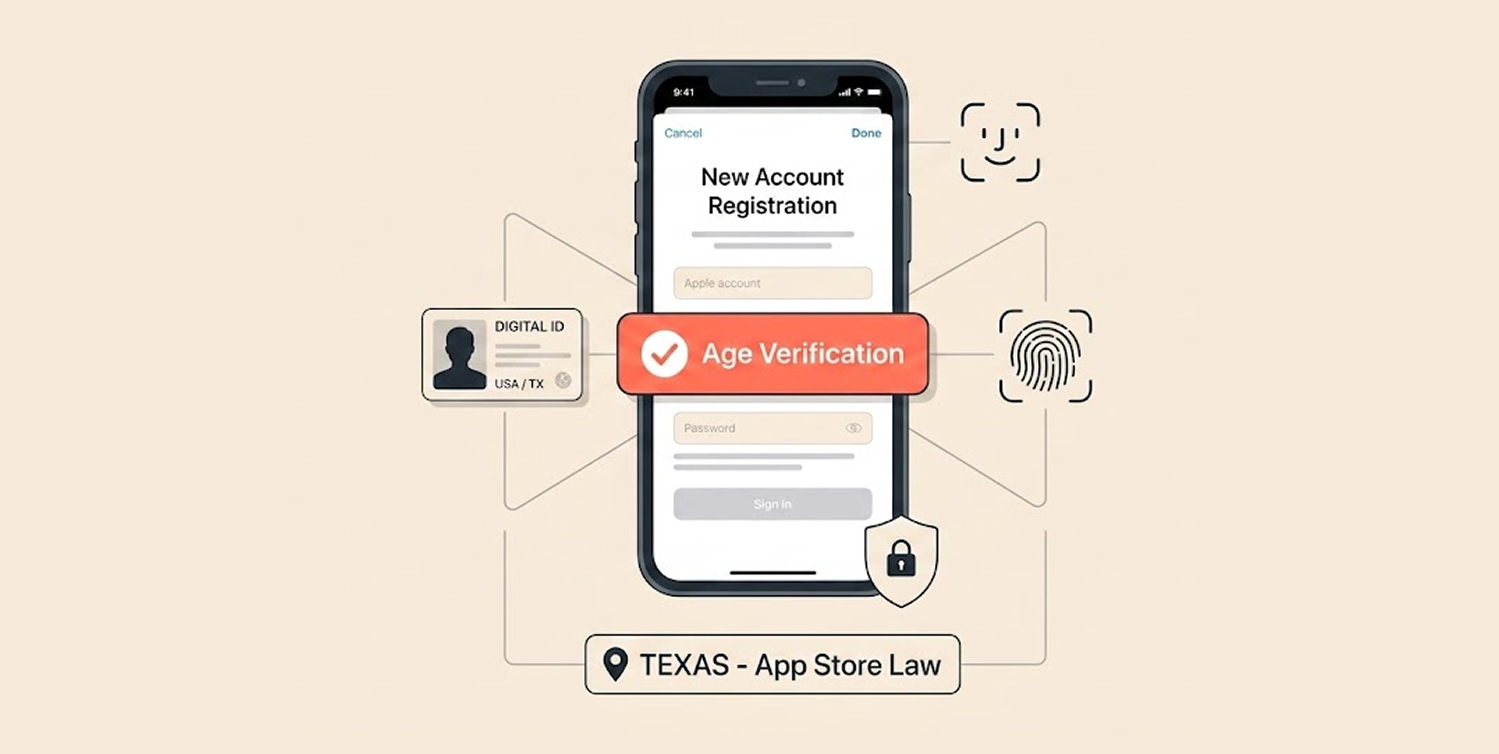
A new Texas law went into effect on June 4, 2026, requiring age verification for all new Apple account creations in the state. The change follows a federal appeals court ruling that allowed Texas Senate Bill 2420, also known as the App Store Accountability Act, to take effect.
Apple must now determine whether new account holders are adults under the state’s new requirements. Adults must prove they are 18 or older using a credit card, government-issued ID, or Apple’s Digital ID feature in the Wallet app. Apple may also automatically verify age based on existing account information and a registered credit card.
Apple does not allow independent creation of standard Apple accounts for users under age 18; they must use the Family Sharing option, where their parents or guardians will approve all app downloads and in-app purchases.
Parents can revoke consent at any time, allowing developers to receive such notifications. For younger users, Ask to Buy and certain Screen Time features are automatically turned on and cannot be disabled, even by parents.
How the law affects developers
Developers who distribute apps in Texas should implement Apple’s age-verification systems. They should also follow the specific age groups, according to the established categories of law: children (under 13), young teens (ages 13 to 15), older teens (ages 16 to 17) and adults (ages 18+).
If developers make significant changes to an app, they must obtain parental consent again for all users who are under 18. The law defines ‘significant changes’ as modifications that affect data collection practices, alter age ratings, add new monetization features like ads or in-app purchases, or materially change app functionality.
Non-compliance could result in penalties reaching $10,000 for each violation. Parents or guardians can also bring civil actions against app stores or developers for violations.
A long legal battle
The implementation of the law was to be from January 1, this year but the U.S. District Judge Robert Pitman blocked it in December 2025 on the grounds that it was ‘most likely’ unconstitutional and violated the First Amendment because it imposed an undue burden of the age verification requirements. As a result, Apple and Google both cancelled their plans to proceed with implementing the necessary changes.
The legal battles over tech regulation in Texas extend beyond age verification, the state has also filed a lawsuit against Meta and WhatsApp over alleged misleading privacy claims.
Later, the United States Court of Appeals for the Fifth Circuit stayed the initial injunction to allow enforcement of the law pending resolution of the legal challenges. The Fifth Circuit has not yet determined whether or not to issue a permanent stay during the appeals process, nor have the courts made any determination concerning the constitutionality of SB-2420.
Similar age verification requirements are also coming to Utah and Louisiana later this year. Over 80% of Americans support parental consent requirements for minors creating social media accounts, while more than 70% back age verification before using social media, according to a Pew Research poll and Reuters report.
Apple’s privacy concerns
Apple has long opposed app-store-level age verification. CEO Tim Cook made a direct appeal to Governor Abbott to reject the legislation. Apple argued that the law forces users to share sensitive personal information just to download simple apps like weather or sports score trackers.
The company warned that app marketplaces would need to collect and store sensitive personal data for every Texan who wants to download any app, even non-controversial ones.
Apple and Google have proposed alternative solutions, such as sharing age-range data only with apps that pose risks, rather than requiring verification for all apps. Google’s Play Store is also subject to the same law.
