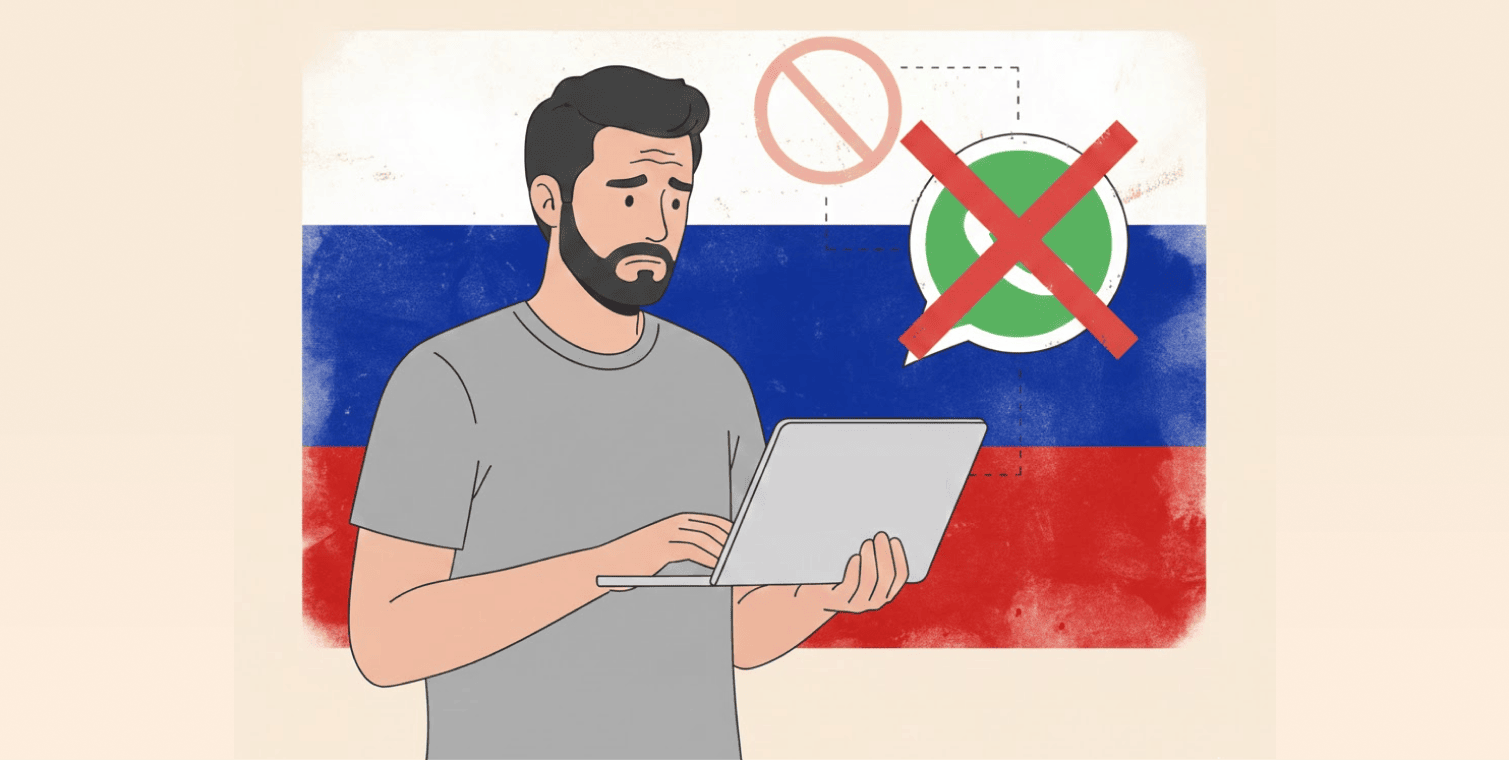
Russia blocked Meta’s WhatsApp messaging service this week. Over 100 million Russian users lost access to one of the world’s most popular private messaging platforms. The Kremlin made the announcement on Thursday and immediately pushed citizens toward Max, a state-backed alternative.
Russia has attempted to exert influence on digital communications within its territory once again with this action; however, it also signifies escalating tensions between technology providers who provide encryption for messages and those national governments that require some type of access for surveillance purposes.
Kremlin promotes state-controlled alternative
Dmitry Peskov, the spokesperson for the Kremlin, stated to reporters today that Russians ought to start using an alternative to electronic messaging by switching to MAX.
He described the platform as “an accessible alternative, a developing messenger, a national messenger.” According to news agency Ria Novosti, Peskov emphasized that Max “is available on the market for citizens.”
WhatsApp responded quickly. The company posted on X that Russia attempted to “fully block” its service to force users toward what it called a “surveillance app.” The statement continued: “Trying to isolate over 100 million users from private and secure communication is a backwards step and can only lead to less safety for people in Russia.”
The company pledged to “continue to do everything we can to keep users connected.” WhatsApp works with end-to-end encryption by default, meaning that even WhatsApp itself can’t see what users discuss in their messages. Max reportedly lacks this fundamental privacy protection.
Russia’s telecoms watchdog, Roskomnadzor, has accused both Telegram and WhatsApp of going against Russian legislation. The agency claims these platforms fail to store Russian user data inside the country. It also alleges they don’t introduce adequate measures to prevent criminal or terrorist activity on their networks.
Telegram faces similar pressure
WhatsApp isn’t the only target. Telegram has faced increasing restrictions since last year. Users reported sluggish performance on the app beginning in January, according to the Moscow Times. Last August, Roskomnadzor partially restricted calls on both Telegram and WhatsApp.
Russian developers founded Telegram, but the company now operates from Dubai. This hasn’t protected it from scrutiny. Roskomnadzor accused Telegram on Wednesday of failing to prevent illicit activity, failing to protect user data, and violating Russian laws.
The watchdog said in a statement reported by RBC news outlet: “In this respect, by verdict of the permitted entities, Roskomnadzor will keep on bringing successive bans to foster compliance with Russian legislation and ensure the protection of citizens.”
Peskov defended the restrictions on Wednesday. He told state news agency TASS that Roskomnadzor’s decision came “due to the fact that the company isn’t complying with the requirements of Russian legislation.” He added: “It’s shameful the firm is not complying; however, there is a law that ought to be adhered to.”
Critics see control and surveillance
Critics argue that Russia’s strategy aims to restrict freedom of expression and privacy. They believe the government wants to monitor and control the narrative around the war against Ukraine. The restrictions also allow surveillance of the public for any criticism of the government and Russian armed forces, pushing many citizens to bypass censorship through encrypted tunnels, a trend that has dramatically accelerated VPN usage in Russia amid the Ukraine invasion.
Russia’s broader campaign against social media platforms and messaging services follows a clear pattern. The government drives users toward domestic services that offer more easily controlled and monitored communications. Max represents the latest example of this approach.
Roskomnadzor said Wednesday it remains open to working with any domestic or foreign internet resource. The condition? Complete compliance with Russian law and respect for its citizens. This sounds reasonable on the surface. But the reality is that Russian law now requires data localization and backdoor access that fundamentally undermines the encryption protecting private communications.
The WhatsApp block shows Russia’s determination to create a walled garden of state-approved communications. For the 100 million Russian WhatsApp users, this means a difficult choice: switch to a surveillance-friendly platform or find reliable ways to bypass censorship, which is why interest in the best VPN for Russia has surged as citizens fight to stay connected to private, secure communication.
