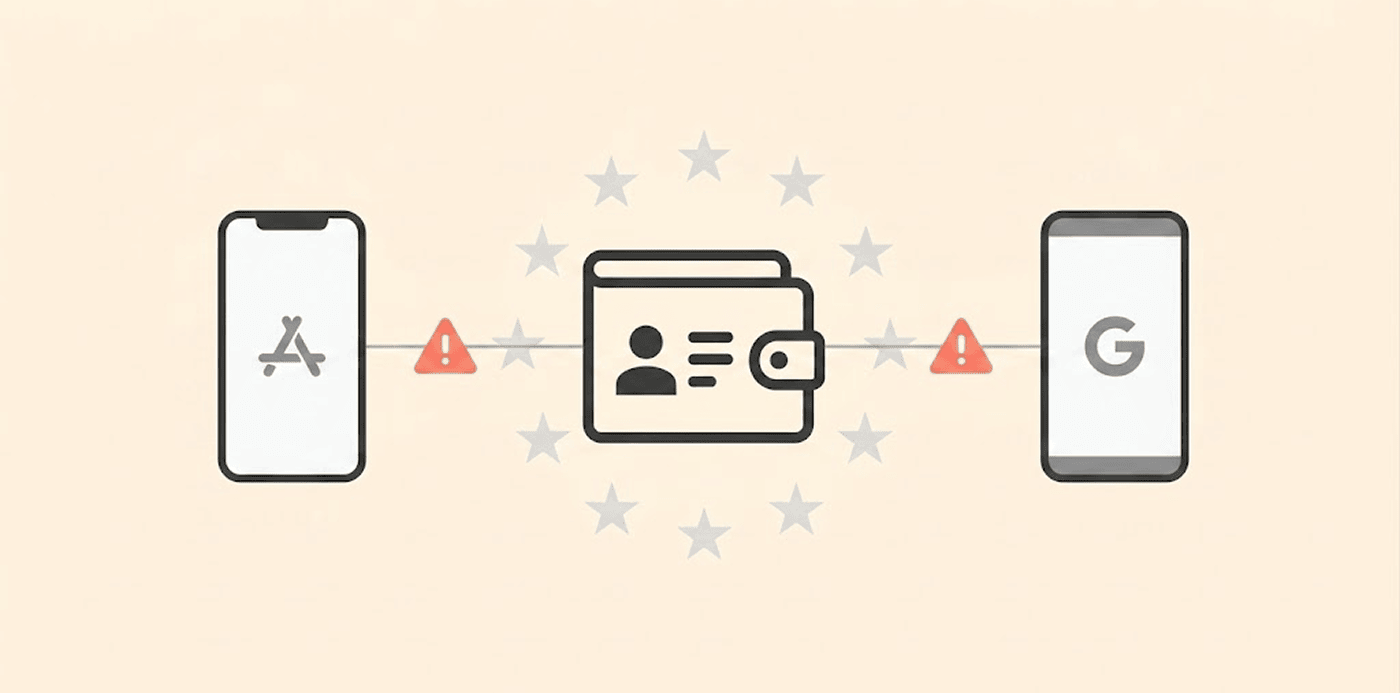
The European Union’s plan to introduce digital identity wallets across member states has come under increasing scrutiny after reports revealed that some of the applications depend on technology supplied by Apple and Google.
The debate intensified after International Cyber Digest highlighted findings from Dutch investigative outlet Follow the Money. The report claimed that the Netherlands’ upcoming NL Wallet digital identity application relies on software components provided by the two U.S. technology companies.
The revelation triggered widespread discussion online, with critics questioning whether Europe can achieve genuine digital sovereignty while depending on foreign platforms.
Dutch officials acknowledged the use of Apple and Google technologies. According to the report, authorities selected those technologies because they offer strong security capabilities and support the largest number of users.
Officials also noted that support for alternative ecosystems remains under examination rather than active deployment. The controversy emerged as the EU continued efforts to establish a unified digital identity framework. The initiative aims to allow citizens to access public and private services securely across member states.
European authorities want every member country to have a functioning digital wallet solution in place by the end of the year, although many observers believe several nations may struggle to meet that target.
Platform dependence raises sovereignty concerns
The discussion largely centers on the difference between identity verification and platform infrastructure.
International Cyber Digest noted that national governments still control authentication systems. Citizens can continue verifying their identities through government-issued electronic IDs, banking credentials, and other nationally approved methods.
Critics, however, argue that the applications themselves rely on technologies embedded within Apple’s and Google’s ecosystems. These reportedly include features such as platform integrity checks and hardware attestation services. As a result, users may need access to Apple or Google accounts to install and run the applications, even though national authorities handle identity verification.
That distinction has become a major point of contention.
Several critics argue that a platform cannot be considered fully sovereign if access depends on infrastructure controlled by foreign corporations. Others maintain that the arrangement reflects a practical compromise between security, usability, and rapid deployment.
Online reactions reveal deep divisions
The issue generated strong reactions across X, where cybersecurity professionals, digital identity advocates, and technology commentators offered sharply different perspectives.
Stergios K, known online as @Aster_Rex_I, argued that Europe appears to be reducing dependence on major U.S. cloud providers while simultaneously building key digital identity services on technologies supplied by Apple and Google.
Another user, @UnmuteToken, questioned whether a digital wallet could truly be considered sovereign if its operation still relies on services controlled by those companies. The commenter suggested that whoever controls access points ultimately retains significant influence.
Not everyone shared those concerns. User @NicoSandvangPrang argued that deeper integration with Apple’s ecosystem could deliver practical advantages, especially if it enables seamless use across EU countries.
Others viewed the debate as a reflection of broader challenges facing Europe’s technology sector. User @tiny_egg suggested that Europe is only beginning to address longstanding gaps in digital infrastructure and may not yet be ready to build a completely independent ecosystem at scale.
Additional criticism focused on policy rather than technology. CyberSekhmet, known online as @larp_acc, argued that Europe’s approach to digital sovereignty remains inconsistent. Meanwhile, @ViliBorson suggested that increasingly strict regulations could discourage foreign technology firms from operating in the region.
Experts defend the security architecture
Some experts pushed back against claims that Apple and Google gain access to sensitive identity information.
Ryo, known online as @iamlouav, argued that running an application on iOS or Android does not automatically give platform providers access to identity credentials, private cryptographic keys, or digital attestations. According to the commentator, secure architectures designed to meet European standards handle those operations independently.
Privacy claims about messaging apps are also under legal scrutiny. Texas sued Meta and WhatsApp over alleged misleading privacy claims, showing how governments are challenging tech companies’ privacy representations.
Despite those assurances, concerns remain. The X user @PrasVector described the reported dependency as a significant weakness for a project intended to strengthen European sovereignty. Another commenter, @johandev, warned that future account suspensions or platform restrictions could create risks for users who depend on the wallets.
International Cyber Digest echoed some of those concerns, arguing that Europe remains heavily reliant on American technology providers despite ongoing efforts to expand digital independence.
As EU member states race to deploy digital identity wallets before looming deadlines, policymakers face a difficult challenge. They must balance security, convenience, and widespread adoption while pursuing greater technological sovereignty. Whether Europe can achieve that goal without continued reliance on major U.S. technology platforms remains an open question.
