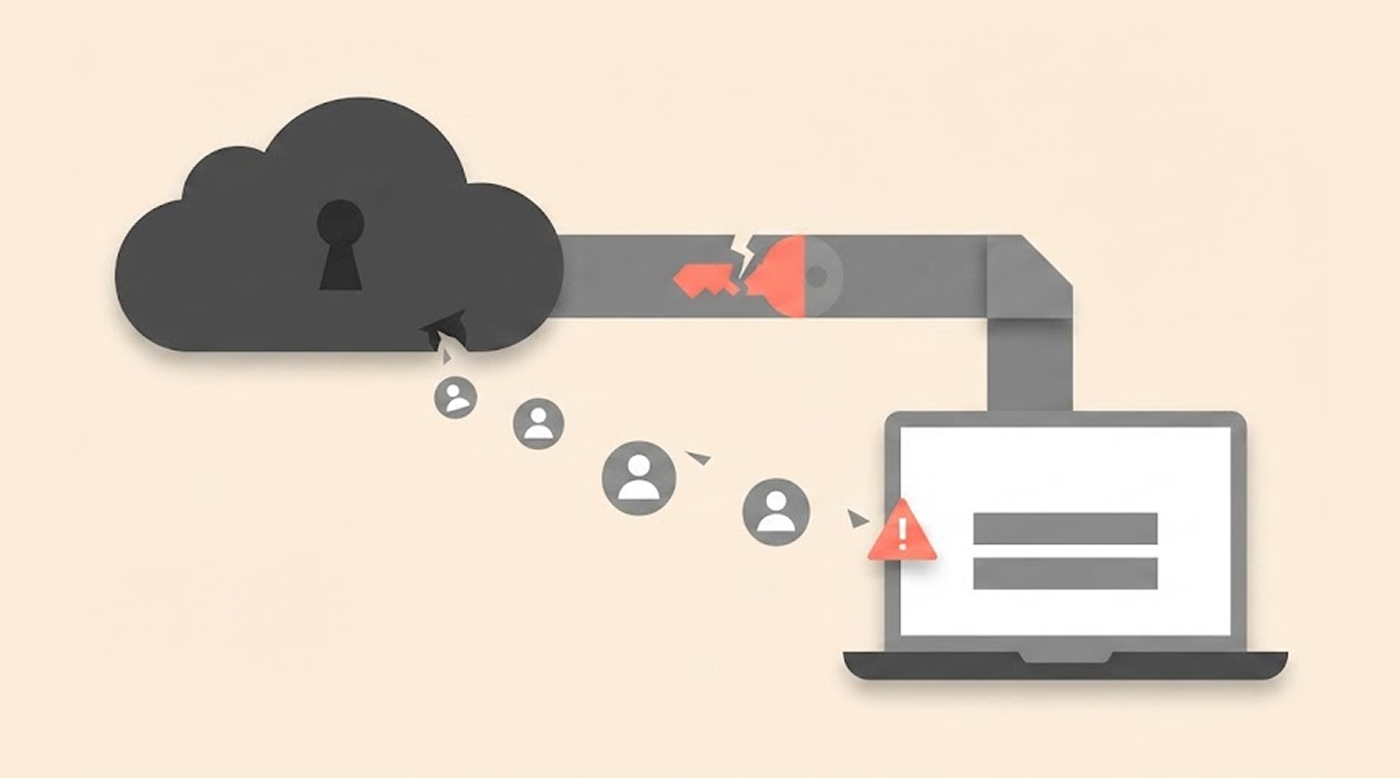
A severe authentication vulnerability recently compromised security across cloud storage environments. Security experts discovered that unauthorized actors exploited broken account linking workflows to breach cloud accounts.
The security incident allowed attackers to access private personal files stored online. Cyber criminals exploited flawed email verification routines to link rogue profile credentials directly to existing cloud storage accounts.
Vulnerability in third-party account linking
Cloud storage giant Dropbox recently confirmed a security breach affecting user accounts between August 4 and August 21. The security incident stemmed from an authentication weakness in a third-party integration partner, computer manufacturer Lenovo.
Lenovo maintains its own authorized integration system for connecting the hardware accounts of its users with cloud services. However, the integration system had a major flaw in its email verification process that was designed to circumvent the standard verification processes associated with identity verification.
The hackers were able to take advantage of the fact that Lenovo was not properly verifying email ownership while creating new profiles. Consequently, malicious actors created fake Lenovo accounts using targeted email addresses belonging to existing cloud storage subscribers.
Since Lenovo trusted unverified email entries, the platform allowed rogue accounts to connect seamlessly to matching storage profiles, this flaw granted unauthorized individuals full access to stored files without needing the account password of the victim.
The flawed setup allowed attackers to link accounts silently in the background without user intervention. Furthermore, the system did not require victims to confirm the new connection through an existing session. As a result, cyber criminals hijacked account access permissions without encountering standard password prompts or secondary security checks.
Breach indicators and incident timeline
Security researcher Justin Kalland publicly detailed the exploitation mechanics after discovering unauthorized access attempts on his personal account. Kalland reported receiving a suspicious email titled ‘Your Lenovo Code’ on August 7, which he had not requested.
Shortly after that message arrived, Dropbox sent an automated notification warning that a new device signed into his account. The timeline confirms that attackers actively abused the verification bug throughout early August.
The attack required no interaction or approval from the actual account owners. Moreover, the only way victims could respond to the intrusion was through alerts sent out by the cloud service provider.
Following the incident, Dropbox admitted that hackers accessed certain accounts due to a break-in in the connection system. The company subsequently severed the vulnerable connection to prevent further unauthorized file access across its platform.
After the discovery of the hacking patterns, the security team immediately began investigating the breach; they uncovered multiple sign-ins from the same address belonging to the hacker’s connection.
Consequently, engineers disabled the third-party account linking feature globally to protect remaining user profiles from exploitation.
Mechanics of identity bypass attacks
This case demonstrates the increasing threats of the use of single sign-on systems and third-party authentication methods related to OAuth 2.0. Modern web platforms frequently rely on delegated trust models to streamline user logins across different internet services.
When an external partner fails to verify user identities properly, those security flaws instantly extend to connected cloud services. In this case, trusted integration status allowed attackers to bypass multi-factor authentication defenses completely.
Additionally, automated credential linking scripts allowed attackers to scan large pools of target email addresses rapidly. These criminals used Lenovo’s weaknesses to produce real authorization tokens which let them impersonate actual account holders.
Bypassing main log-in forms enabled attackers to access saved documents without being detected. Thus, software vendors have to introduce strong identification processes to every potential API integration endpoint so as to avoid the possibility of account hijacking.
Software developers often grant broad permissions to partner applications to ensure smooth user experiences. However, granting deep API access without verifying identity data creates massive security risks for end users. Therefore, security teams must regularly audit integration permissions to prevent third-party flaws from compromising core user data.
Data security impacts and remediation steps
The security crew took nearly 21 days to spot and fix the vulnerability. During this time, unauthorized individuals accessed multiple documents like private files, financial records, and other important business documents stored in the affected directory.
While the Dropbox incident exposed users to the risk of account takeover through an integration flaw, online privacy faces pressure from other directions as well. For example, China has been intensifying its crackdown on unauthorized VPN use, increasing scrutiny on tools many rely on to protect their online privacy and access blocked information. Apart from this, there was also the risk of data leakage and hacking of the targeted accounts.
Therefore, cloud storage users should examine their past activities on the accounts involved in the incident from August 4 to August 21. Also, it is best for users to review third-party applications and get rid of the old permissions and outdated applications.
Furthermore, users who received suspicious Lenovo security codes during the breach window should immediately update their master account passwords. Terminating active sessions across all devices ensures that rogue authorization tokens cannot maintain persistence inside breached user accounts.
Organizations need to implement continuous monitoring techniques to identify unexpected downloads of files and unanticipated connections from third parties. Introducing stringent access management procedures for APIs prevents vulnerable partner systems from compromising company-sensitive data.
Cloud service providers should ensure the implementation of stringent security checks for any third-party integration tools before granting any in-depth access to their accounts. Having proactive threat hunting practices and strict identity management systems is crucial for protecting against the vulnerabilities related to supply chain integration.
