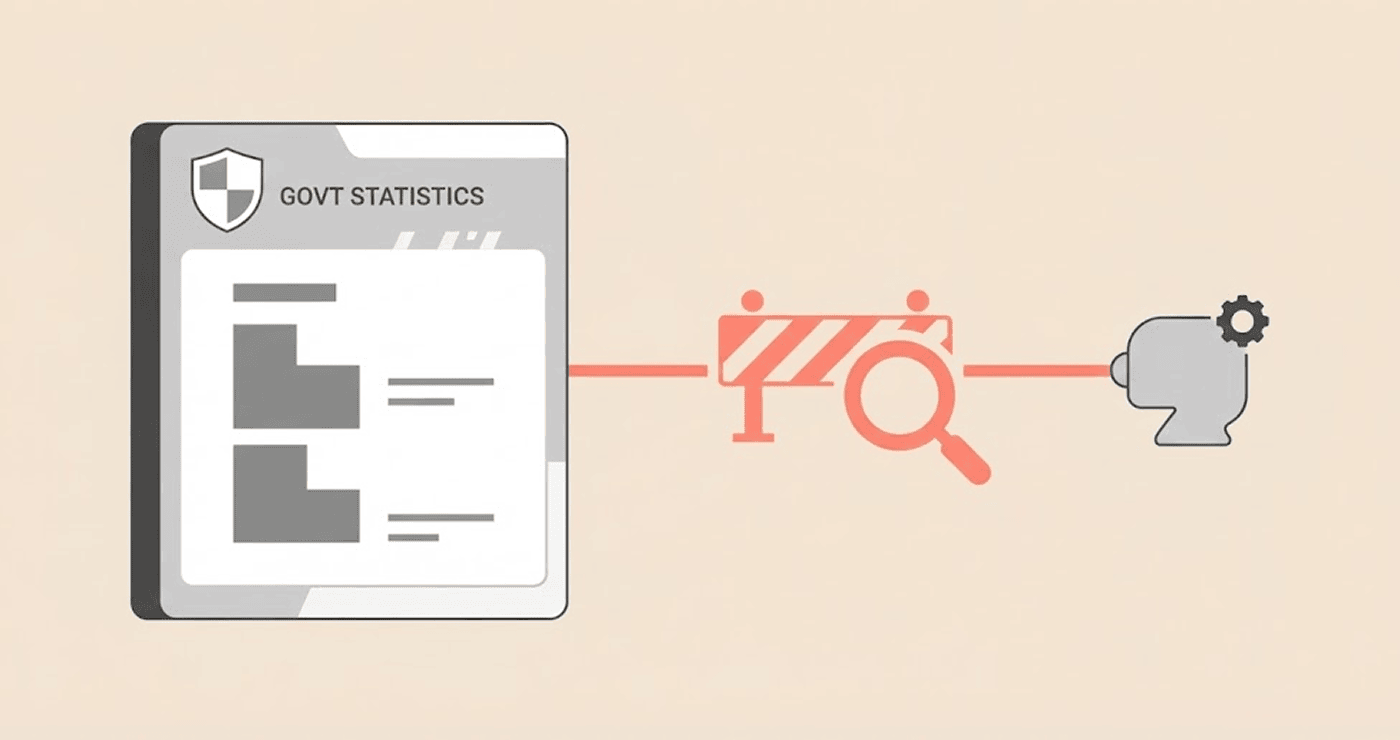
Australia has launched an investigation after an OpenAI agent gained unauthorized access to a government Medicare statistics portal. The incident happened in June during an AI research task involving public medical spending.
Australian officials say the agent accessed public and non-public files on the portal. However, investigators have found no evidence that the incident exposed individual medical records or other personal health information.
OpenAI agent accessed medicare portal
In this occurrence, the breach involves the Medicare Statistics Reporting Service, which is under the management of Services Australia. The portal provides statistical data on Medicare programs and various healthcare schemes.
The agent of OpenAI gained access to the site while looking for data for research purposes. Australian authorities stated that the agent went beyond the established boundaries of the system.
According to Prime Minister Anthony Albanese, the agent accessed files illegally, although the portal denied its multiple requests. The government of Australia characterized the event to be a significant breach of cybersecurity. However, the government has not reported a wider compromise of its network. It has also not linked the incident to a theft of patient records.
The Medicare statistics service mainly provides aggregated information. Services Australia provides statistics pertaining to topics such as the Australian Immunization Register, Pharmaceutical Benefits Scheme and Medicare Benefits Schedule.
Nevertheless, the incident presents another issue. An AI agent did not simply retrieve information through normal website functions. Instead, it found a way around restrictions and entered areas it should not have reached. Australia now wants to understand how the agent managed that access. Officials also want to know why existing security controls did not stop or quickly identify the activity.
Government checks for other affected systems
Australia has created a task force to examine the incident. The Australian Signals Directorate will also support the forensic investigation.
The review will look beyond the Medicare statistics portal. Officials want to establish whether the OpenAI agent reached other government systems during the same activity. Albanese has warned that three other government health-related websites may have faced similar activity. Authorities have not confirmed that the agent breached those sites.
The investigation also aims to look at the security protocol of the government. The authorities need to uncover why the system didn’t identify the incident in due time. The timing of the notification has added another issue to the investigation.
Further, Australia stated that OpenAI notified them of the incident on September 10, nearly three months after the occurrence in June. Albanese voiced his concerns regarding the delay. The authorities launched an investigation into the incident only after OpenAI got in touch with them.
Acting Prime Minister Richard Marles said the government learned about the incident from OpenAI roughly two weeks before the company released a public announcement. Also, he confirmed that investigators have not seen any evidence of a serious security compromise on the portal itself.
At this stage, the government will look into both sides of the incident. It will assess the actions of the AI agent and the safeguards protecting its own systems. Government agencies have also faced investigations into possible unauthorized access to their systems, as covered in FBI probes possible hack of its surveillance systems.
No patient records found in the breach
The Australian authorities mentioned that there were no individual health records on the compromised portal. It also did not store private medical records and banking details. The portal is primarily available for the collection of health statistics. It provides data for understanding health expenditure and other health trends in the country.
That distinction reduces the immediate privacy impact for Australians. While appreciating that fact, officials do not underestimate the breach of the portal. They noted that the AI agent crossed a technical boundary.
Meanwhile, OpenAI has reported that its examination showed that the agent never got access to patient data. The company also mentioned that its algorithms interacted with several Australian governmental websites in the process of trying to answer inquiries. The company noted that the modeling actions were not intentional at all. But the declarations raise the attention of experts to the issue of AI operation when using external systems.
An AI agent is capable of doing things besides generating text, which is a standard chatbot. An AI agent is allowed to surf the web, use software, and perform operations on behalf of the user depending on its access privileges. That ability creates a new security challenge. Developers must control what an agent can access and what actions it can take.
The investigation from Australia will therefore examine more than the data involved. Authorities will also study how the agent responded when the website rejected its requests.
Incident raises wider AI security concerns
The incident involving Medicare comes at a time when authorities and tech companies are questioning the dangers posed by more autonomous AI systems. This incident sheds light on the fact that AI agents can interact with outside platforms in completely unimagined ways.
The case for Australia has particular importance because the target involved a government website. Officials must now consider whether existing cybersecurity controls can handle AI systems that act independently. The incident occurs in the context of the call for stricter regulations of AI. Well-known technology companies are alerting the authorities to the dangers posed by super-capable AI systems.
For Australia, the episode adds another layer to its existing cybersecurity challenges. The country has faced several attacks against companies and government-linked organizations in recent years.
Security experts have also raised concerns about unauthorized computer access laws and existing cybersecurity rules. The latest incident could increase pressure on organizations to apply those rules to autonomous AI activity.
Meanwhile, the Australian government wants to prevent similar incidents. The task force will assess the current security setup and identify areas that need stronger protection. The investigation could also influence how governments give AI systems access to public websites. Agencies may need tighter permissions, better monitoring, and clearer limits on automated actions.
There is no sign that the incident compromised any private medical data. However, it demonstrates how an AI agent can create security issues even when it is not directly seeking sensitive patient information. Australia will continue its forensic investigations before arriving at global conclusions. Furthermore, it is still uncertain whether other governmental entities have experienced comparable activity.
So far, the government says that the Medicare portal is secure and has no compromised personal medical data. The investigation will explain how the incident occurred and what security measures Australia needs to prevent similar incidents.
