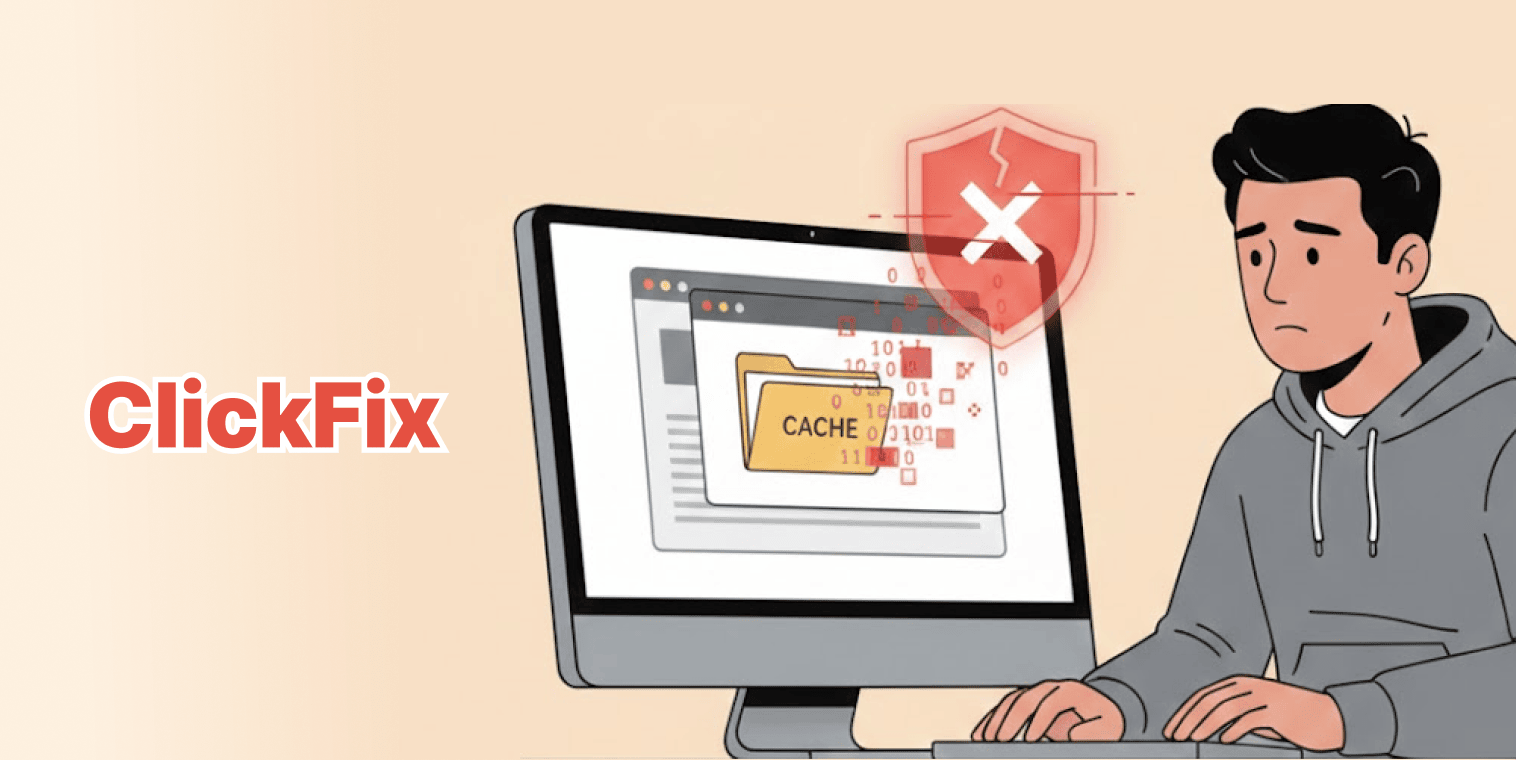
A new malware-delivery tool makes the rounds on underground forums. Cybercriminals can now rent it with ease. This threat specifically targets Windows computers. Its main trick involves slipping past your defenses without raising red flags.
The seller promotes ClickFix as a way to infect machines quietly. “It bypasses the usual red flags,” the advertisement claims. “No big file downloads or odd network calls that security software loves to spot.” Instead, this tool tricks users into running a fake browser fix.
Once someone clicks, the payload plants itself in the browser cache. Most antivirus scans overlook this spot. From there, it uses hidden file explorer commands to launch the malware. Everything looks innocent, as if routine browser maintenance were happening.
Attackers target browser storage to evade detection
Experts admonish that this approach fits a growing trend. Bad actors increasingly go for browser storage since it operates as a user-managed and temporary space. Cache folders store web data such as images and scripts. However, security tools do not lock them down like program files.
EDR tools often ignore cache folders during scans. They assume these directories contain harmless leftovers from browsing sessions. “ClickFix exploits this blind spot perfectly,” security researchers note. “It makes the tool ideal for red-team exercises or actual attacks.”
ClickFix starts with a phishing lure. Victims receive an email or link claiming their browser needs a quick update. They see a pop-up or shortcut labeled “Click to Fix Cache Error.” When users click it, a script runs in the background.
The script grasps a little encoded payload from a site that looks legitimate. Nothing exceeds some kilobytes so it doesn’t trigger network monitors. The real action happens next. The script decodes the payload and drops it into the browser’s cache directory. On Windows, this might be Chrome’s User Data/Default/Cache folder.
The malware renames the file to mimic a thumbnail or temporary file. Names like “cache_001.dat” help it blend in. No writes to system folders occur. No registry changes happen that would scream malware.
How ClickFix executes without triggering alarms
To execute, ClickFix crafts a disguised command for File Explorer. Something like “explorer.exe /root,CacheFolder:RunPayload” blends into normal Explorer activity. This bypasses behavioral rules in tools like CrowdStrike or Microsoft Defender.
According to Dark Web Informer, the malware can do anything once it runs. “Steal data, deploy ransomware, or set up a backdoor,” researchers confirm. The seller claims EDR-proof status because the tool chains short-lived processes. Each step lasts mere seconds, under the radar of memory scans or process trees.
This multi-purpose capability mirrors the tactics of sophisticated state-sponsored groups such as the Lazarus Group, deploying macOS malware to target blockchain engineers, demonstrating that whether it’s cybercriminals renting tools on forums or nation-states conducting espionage, the goal is the same: silent infiltration for maximum damage.
Researchers tested a sample and confirmed it evades basic signatures. However, advanced behavioral analytics might catch the Explorer abuse if defenders tune their systems correctly.
Forum posts on sites like Exploit.in or BreachForums featured the advertisement last week. A demo video shows it infecting a virtual machine without triggering any alerts.
Sale details and defense recommendations
The full package costs $300 in cryptocurrency. Buyers receive the source code in JavaScript and PowerShell, a builder GUI, a setup guide, and a ready template for lures. “For an extra $200, we customize the phishing page to match brands like Google or Microsoft,” the seller advertises. Delivery happens instantly via encrypted links, with lifetime updates promised.
This development carries real weight. Similar cache-based attacks like the 2025 Magecart variants hid payment skimmers in browser storage. Security expert Brian Krebs covered these incidents extensively. As browsers tighten their sandboxing, cache abuse will likely grow.
Organizations should scan cache folders in EDR rules now. They need to block unusual Explorer arguments and train users on fake fix scams. Defenders must act fast by updating browser policies to clear the cache on exit. They should monitor PowerShell activity in browsers closely.
Threat hunters should search for anomalies in files matching patterns like “cache_*.dat” in browser directories. This low-tech trick proves that evasion arms races never truly end. The tools change; however, the cat-and-mouse fight between bad actors and defenders lives on.
For the average user, the best defense is a good offense, starting with a browser built for privacy and security. Check out our list of the most secure browsers for private browsing to see which options offer the strongest protection against cache-based malware like ClickFix.
