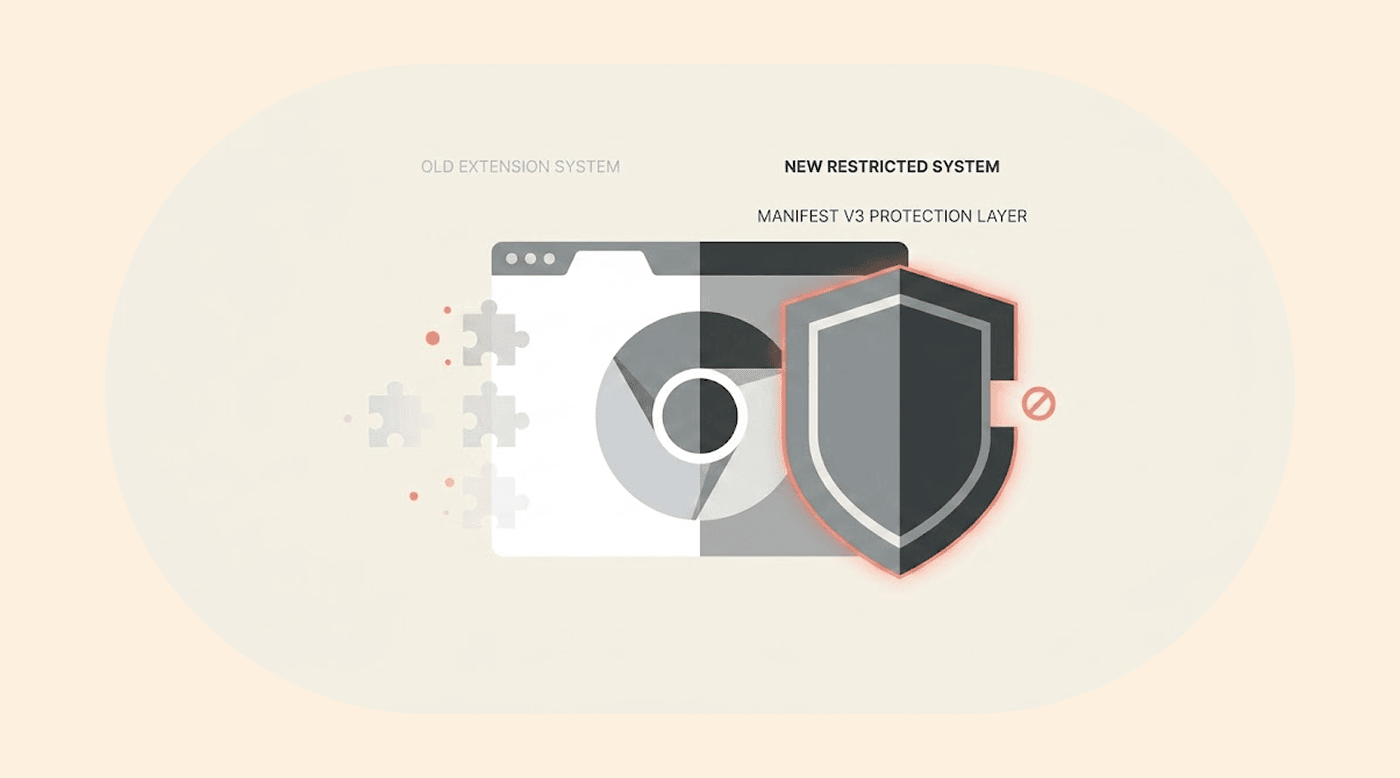
Google is about to close the final loopholes for old ad-blocking extensions this summer. They’ve been working on this switch for years now, moving everything over to their new system, Manifest V3.
Once Chrome 150 rolls out on June 30, and then Chrome 151 lands in July, the last bits of code keeping those older extensions alive will disappear. If you’re still using the original uBlock Origin, get ready—it’s about to stop working for good.
Google moves to close the door on older Chrome extensions
Google first made an announcement regarding its upcoming retirement of Manifest version 2 (v2) extensions a few years ago. This older version had been providing users with a ton of access to their browsing data and giving them the ability to block ads and track users in real-time.
To combat this issue, Google came up with a new manifest system that would make using the internet more secure, fast and private. The new Manifest version (V3), however, would limit access to users’ browsing data and also needs to adhere to stricter content filtering rules. Unlike MV2 which blocks the webRequest API, MV3 uses the declarativeNetRequest API instead.
When Chrome v127 was rolled out, Google began disabling the v2 extension functionality. But many users still found some workarounds that allowed them to keep using their favorite extensions. The upcoming updates will finally close those backdoors for good.
Engineers will remove the ExtensionManifestV2Disabled flag, a developer setting used to bypass restrictions. Google describes this as “dead code” since the company no longer officially supports MV2. Once the flag disappears, there will be no practical way for standard users to continue running outdated extensions.
Security concerns or business strategy?
Google says the change is necessary for technical reasons. “MV2 extensions are no longer allowed in any supported version of Chrome, and we are removing support for them and the associated functionality,” wrote Google engineer Devlin Cronin in a Chromium code review.
He added the company won’t continue to maintain this functionality due to how complex it is technical-wise and also the security risks it entails. Engineers have found several bugs specific to Manifest V2 recently.
But critics see different motives. Some argue that Manifest V3 limits the capabilities of advanced ad blockers and privacy tools. The new framework limits how many filtering rules an extension can use, so blocking ads that change all the time gets a lot tougher.
Privacy advocates wonder if Google, the same company making money from digital ads, should really be the one setting the rules for ad blockers. Trust in tech platforms is a growing concern. Hackers have been exploiting Microsoft Teams and Quick Assist in a remote access campaign, showing how attackers weaponize trusted tools. They’re concerned that Google might be more interested in protecting its ad revenue than protecting user privacy.
However, a recent research was of a different opinion. A team at Goethe University Frankfurt studied ad blockers using MV2 and MV3 and found they worked about the same. In terms of blocking ads and fighting tracking, there wasn’t much difference. In some cases, MV3 extensions even blocked more trackers. The researchers described the impact on privacy as minimal.
What’s Next for Users
uBlock Origin’s developer, Raymond Hill, has confirmed he won’t create a full MV3 version of the original extension. “No version of uBlock Origin under Manifest V3,” he stated. Chrome will suggest alternative extensions when users try to load the old version.
uBlock Origin Lite is simple to install and use. uBlock Origin Lite uses Manifest v3 and has fewer advanced features than uBlock Origin, but it is sufficient to block ads effectively for most users. This allows more users to take advantage of the benefits associated with blocking ads from certain websites.
Firefox offers another path. Mozilla has confirmed that it won’t remove support for Manifest V2. For those using AdBlock extensions like uBlock Origin, this is a relief. Some stated on the extension’s subreddit that “uBO works best on Firefox.” Since Firefox runs on its own Gecko engine, Mozilla isn’t forced to adopt Google’s extension rules.
While for Microsoft Edge and Opera, the story is quite different since both of those are also based on the Chromium engine. This means they’ll have to mirror every change and update Google makes to their Chrome web browser.
Brave has a different approach, though, as they have built their ad-blocking feature directly into their browser itself rather than having it function separately like a typical extension. Therefore, this allows them to bypass many of the new restrictions and limitations Google is enforcing.
As for the updates, they aren’t introducing anything out of the blue. What we are seeing is more of a way to lock in place a long-standing policy that’s been there for years. The countdown is almost over for the Chrome user base that has continued to rely on older tools.
