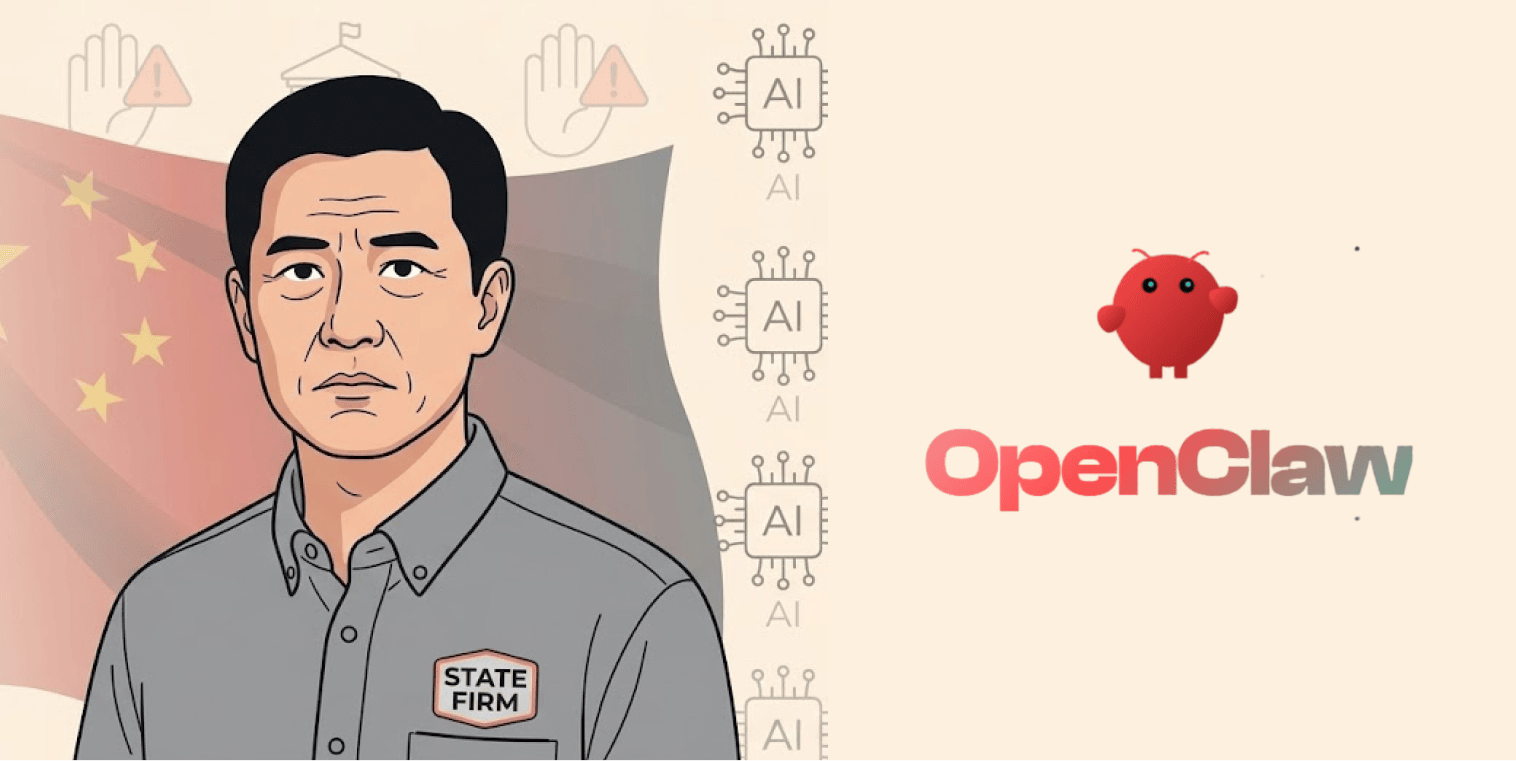
Chinese authorities are trying to curtail the deployment of OpenClaw apps in state-run enterprises and government agencies.
They aim to prevent potential security risks after individuals and companies across the country started experimenting with the agentic AI phenomenon.
The authorities recently sent out notices to government agencies, including major banks, warning them to stop installing OpenClaw software in their office devices.
According to sources familiar with the matter, staff members got express instructions to let their superiors know if they have already installed related apps so they can run security checks and remove the apps if possible.
Why OpenClaw is raising eyebrows in China
OpenClaw is an open-source software that can execute many different tasks automatically with little to no human guidance. Its scope goes beyond the normal AI chatbots that you ask questions to, and they provide answers.
Peter Steinberger, an Australian developer, created OpenClaw and uploaded it to GitHub last November. He just got a job offer at OpenAI last month.
Over the past month, many Chinese tech developers, leading AI companies, and local governments have adopted and promoted this software. Some regions even went as far as offering million-dollar subsidies to companies innovating with OpenClaw. They tagged it as part of their own way of implementing Beijing’s national ‘AI plus’ action plan.
Security warnings and restrictions against the use of OpenClaw
Central government regulators, along with the state media, have repeatedly warned about the potential of OpenClaw to delete, leak, or misuse user data. This risk takes effect after a user downloads the app and grants it security permissions to operate on the device.
One source said the authorities told staff at state-run enterprises not to deploy OpenClaw, even on personal devices in some cases. Another source from a Chinese government agency said their workplace didn’t outrightly ban the software. Rather, staff were advised not to install it due to safety concerns.
Promoting innovation and data security
The recent restrictions suggest that Beijing is trying to carefully navigate two priorities. Officials want to foster economic growth through AI innovation by promoting the ‘AI plus’ action plan. But they are also wary about the cyber implications and data security risks that may follow such moves.
For now, it’s not clear how much the restrictions have spread throughout China and whether they’ll affect any of the already existing local government policies.
A research center under Shenzhen’s municipal health commission ran a training session for OpenClaw last week. The workshop was part of its AI plus push in healthcare, and thousands were in attendance.
Also, China Daily reported how the Futian district in Shenzhen used OpenClaw to design an agent that helps with civil servant work. This suggests that the restriction may not utterly stop all Chinese government deployment.
China’s state asset regulator and industry ministry didn’t immediately respond to requests for comment. In the meantime, the situation underscores the challenges regulators worldwide are facing when it comes to keeping up with the rapidly evolving AI technology as they try to protect sensitive data and keep users and systems safe.
For a deeper dive into how these challenges are playing out globally, and what they mean for your personal data, check out our comprehensive analysis of AI and privacy in 2026.
