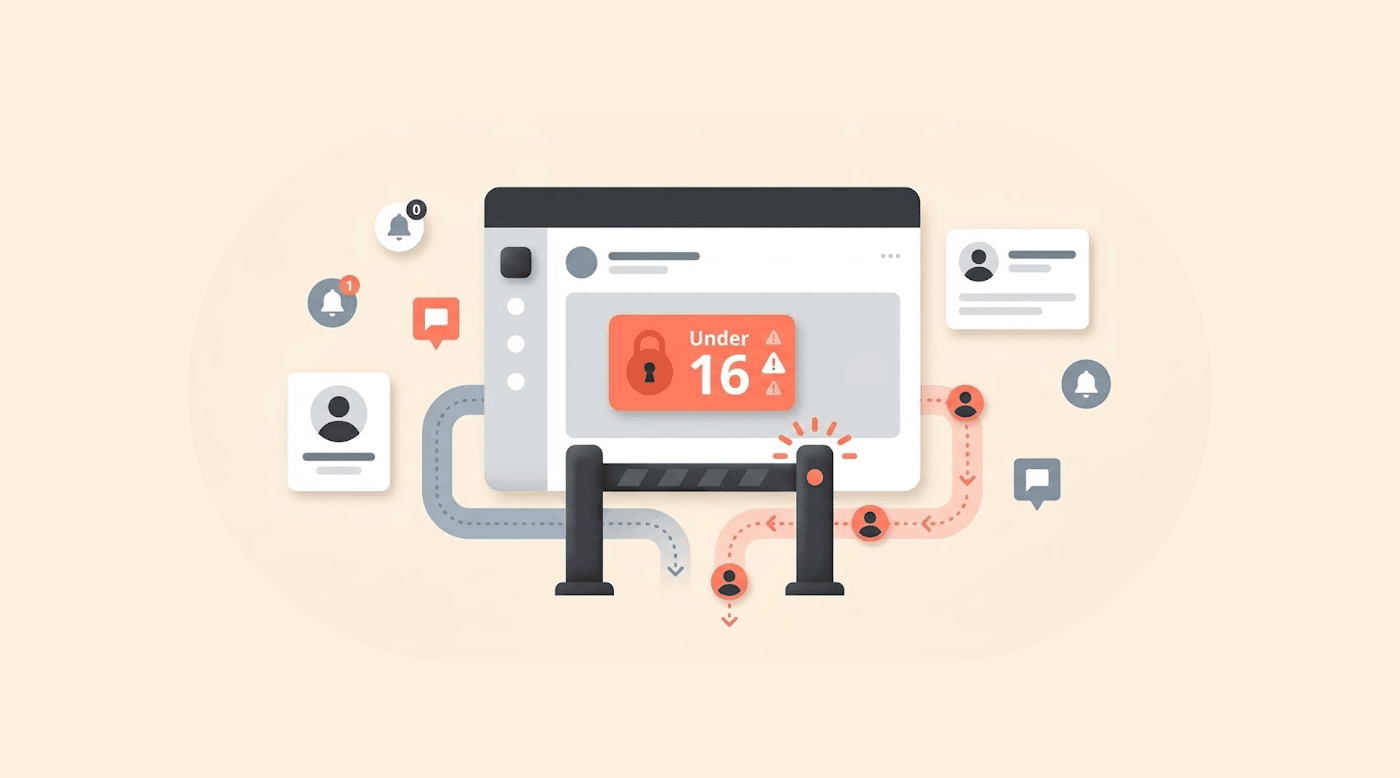
Australia became the first country to introduce an under-16 social media ban, but the law is already showing cracks. The eSafety Commission, the government body tasked with enforcing the legislation, reports that seven in ten parents whose children already had social media accounts say their teens are still accessing age-restricted platforms after the ban took effect.
The question experts are now asking is not whether teenagers will find a way around the rules, but where exactly they will end up. Cybersecurity and child wellbeing experts, speaking to Metro, largely agree that the ban alone will not solve the problem.
Teens may turn to the dark web amid social media ban
Pieter Arntz, a security intelligence analyst at Malwarebytes, raised the alarm in an interview with Metro, warning that teenagers could migrate to the dark web if social media platforms remain inaccessible to them.
The dark web operates through special browsers such as Tor, which keep users anonymous by masking both their identity and location. Criminals and privacy-seekers alike use it, and it hosts sites tied to illegal transactions and unregulated activity.
Meanwhile, Ireland is testing a different approach to age verification, a digital wallet with built-in age verification, which could offer a more structured alternative.
Not everyone shares the same level of alarm, however. Dr. Yusuf Oc, a marketing lecturer at London’s Bayes Business School, told Metro the concern is real but considerably overstated.
According to Dr. Oc, accessing the dark web requires deliberate effort, and the majority of teenagers are unlikely to go that far. He pointed to more accessible alternatives as the bigger concern, including privacy-focused apps like Telegram and unmoderated websites that carry far fewer barriers to entry.
How teens are already beating the system
Australia’s ban may be the first of its kind, but it has also become the first to expose just how creative teenagers can get. According to Metro, teens have already found multiple ways to bypass the age-verification process. Some are adding wrinkles to their selfies to appear older. Others are using their parents’ identification details. Many are simply creating new accounts with different dates of birth.
These workarounds suggest the verification system has significant gaps that determined teenagers can exploit without much difficulty. The result is a ban that restricts compliant users while doing little to stop those actively looking for a way through.
What other countries must learn
Australia’s struggles carry a clear warning for other governments moving in the same direction. The UK and several other countries are currently considering similar age-restriction legislation, and the Australian experience gives them a preview of what poor enforcement looks like in practice.
According to Qoria, the parent company of Smoothwall, managing director Tim Levy, young people do not simply walk away from social media or the broader digital world when restrictions go up. They adapt, migrate, and find alternatives, often ones that carry greater risk than the platforms the ban was designed to protect them from.
Experts agree that legislation on its own is not enough. Without robust enforcement mechanisms, credible age-verification technology, and parallel investment in digital literacy, bans like Australia’s risk pushing teenagers toward corners of the internet that are far less safe than Instagram or TikTok ever were.
